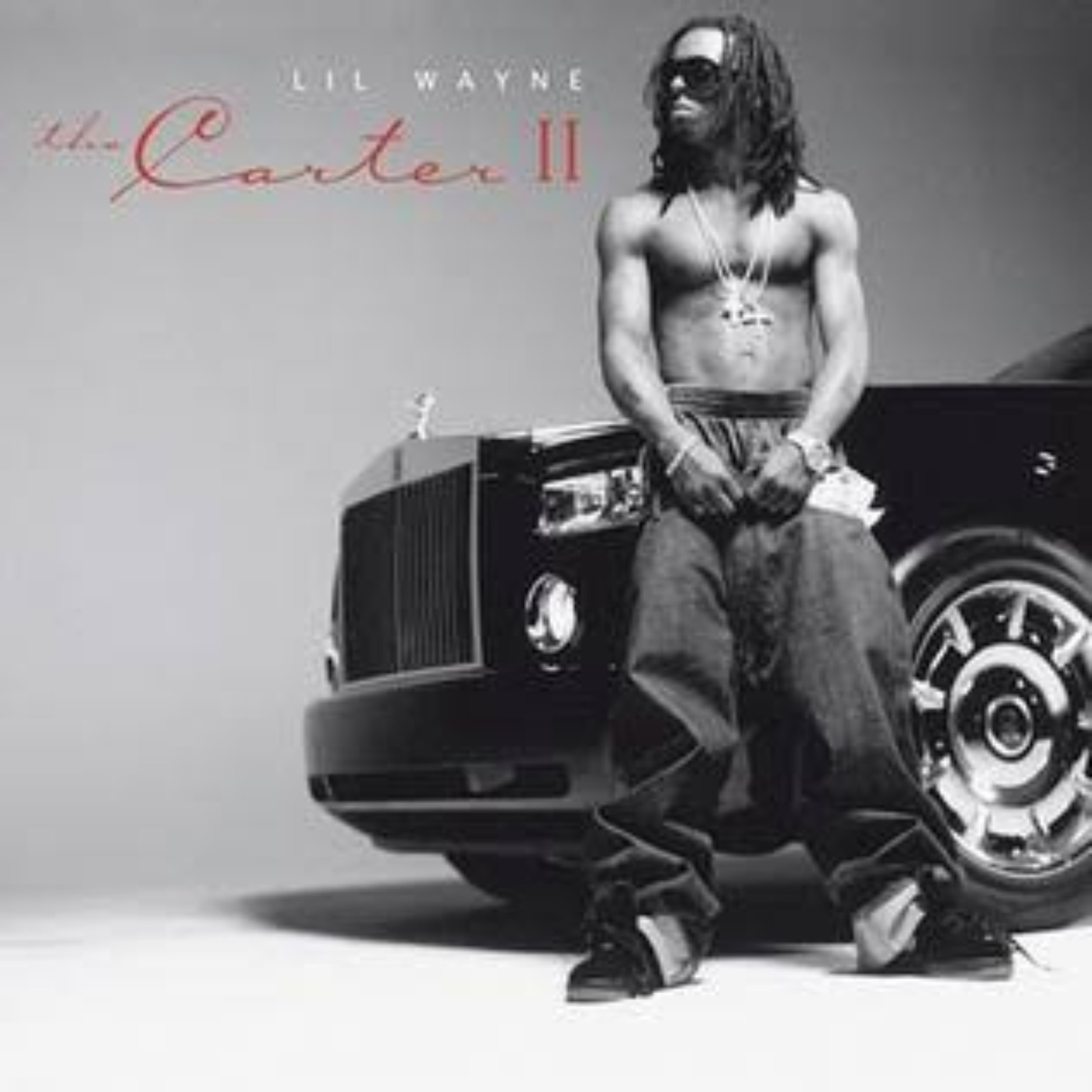
There are albums that confirm what we already knew about an artist. And then there are albums that force everybody else to reconsider the artist in front of them. Tha Carter II belongs to the second category. For 4 Da Kulture, this is Wayne's best studio album: the defining bridge between a young Cash Money prodigy and the rapper who would dominate conversation for the rest of the decade.
THE RECORD / THE 4DK PERSPECTIVE
THE ALBUM THAT CHANGED THE QUESTION.
There is a difference between a rapper getting better and a rapper making the entire conversation move around him. Tha Carter II lives in that space. Wayne had been recording since adolescence, had hits with the Hot Boys, and had already sharpened his writing through solo albums and underground tapes. He did not discover the art of rapping in December 2005. What happened here was the moment all those years of development became impossible to ignore.
On Tha Carter, the music still carried the recognizable bounce and orchestration of the Cash Money empire. By the sequel, the production palette was broader and less predictable. Wayne was no longer being asked only to be the youngest voice in a legendary Southern crew or the star of a particular label. He was testing whether he could command a record as an MC, regardless of who made the beat, where the inspiration came from, or whether the song had the ingredients of a radio single.
The answer arrives immediately. Five minutes of “Tha Mobb.” A triptych of connected “Fly” records. The delirious confidence of “Money on My Mind.” The arena-sized argument of “Best Rapper Alive.” And when the album slows down, the bruised humanity of “Hustler Musik.” We still hear a hungry artist assembling a complete identity, not a star coasting on a formula.
THE CONTEXT / THE 4DK PERSPECTIVE
NEW ORLEANS WAS CHANGING. SO WAS RAP.
The album arrived December 6, 2005, just months after Hurricane Katrina and the catastrophic failures that followed in New Orleans. Wayne's city was dealing with displacement and grief even while Southern hip-hop was taking the national spotlight. It would be misleading to call Tha Carter II a full Katrina concept album; much of it had been recorded before the disaster. But the experience enters the project's world, especially the FEMA reference on “Feel Me,” and it changes the atmosphere around its release.
The wider Southern rap landscape was crowded with contenders making different claims on the future. T.I. had helped make his King of the South argument into a career. Young Jeezy's Thug Motivation 101 had turned icy trap production, street detail, and hustle-as-motivation into a movement. Houston was commanding national attention through chopped-and-screwed culture and a new wave of mainstream hits. Wayne's move was to make the argument about pure rapping without leaving the South behind.
That point matters at 4DK. We are not telling a story in which Wayne became worthy of lyrical respect by escaping a Southern sound. New Orleans rap already had masters of rhythm, storytelling, language, and personality. What Tha Carter II did was show one of those artists could reinvent his delivery against soul samples, reggae accents, R&B, hard street drums, and rock-derived spectacle, then carry it all with the same Southern accent.
THE TRANSITION / THE 4DK PERSPECTIVE
NO MANNIE FRESH SAFETY NET.
Mannie Fresh had given Cash Money an unmistakable identity and produced the bulk of 2004's Tha Carter. His absence from the follow-up was not a small personnel change. It meant losing the sound that had helped introduce Wayne to the world, just as Wayne needed his next album to feel bigger than anything he'd done. A lesser artist might have spent the whole record searching for a replacement Mannie Fresh beat. Wayne treated the change like an opening.
The Heatmakerz brought lush drama to “Tha Mobb” and “Receipt.” The Runners alongside DJ Nasty and LVM helped drive the nervous forward motion of “Money on My Mind.” Bigg D gave “Best Rapper Alive” an outsized musical stage. T-Mix and Batman supplied connective tissue across songs including “Fly In,” “Hustler Musik,” and “Fly Out.” Young Yonny and Matlock helped build unexpected corners; Robin Thicke transformed “Shooter” into a guitar-led detour; Cool & Dre provided a different kind of release on “Get Over.” These are collaborators, not a single all-controlling house sound.
That diversity could have made a 77-minute album feel scattered. It mostly does the opposite, because Wayne is the through-line. He can hit the smallest spaces between snares, ride behind the drum, lean into a drawl, pull a punch line out of an unexpected image, then sound wounded over a warm chord. He is the center of the arrangement, and that was the point.
THE STRUCTURE / THE 4DK PERSPECTIVE
WHY THE ALBUM FEELS LIKE A BUILDING YOU WALK THROUGH.
The three short “On tha Block” skits interrupt the run, but the more revealing structural decision is the recurring “Fly In” / “Carter II” / “Fly Out” thread. Those songs function like recurring hallways through the same house. The first introduces its mood, the title cut revisits the premise from another angle, and the last lets the record end where it began without simply repeating itself.
The sequence is not perfect. Twenty-two tracks is a lot of ground. There are moments when the features or late-stage tough talk feel less fresh than Wayne's best solo material. But the length is also part of the record's appeal: an artist pushing through nearly every environment he could imagine, insisting that the bars could make each new setting coherent. The deepest cuts do not play like leftovers. They explain the connective tissue between the singles.
THE RECORDS WE KEEP GOING BACK TO · ORIGINAL 4DK SCORES PRESERVED
THE 4DK PICKS.
A favorite is not always the song carrying the largest historical argument. We are keeping both parts of our Wayne conversation intact: the records we personally replay first and the songs that tell the most complete story about the artist.
01
4DK FAVORITE • 10/10
MONEY ON MY MIND
This is the one we always come back to first. Not because it has the most elevated subject matter on the album, but because beat selection, momentum, delivery, and Wayne's imagination all lock in at once. The drums snap, the low end keeps the song moving, and the hook sets up a rhyme performance that seems capable of veering anywhere. Wayne punches forward and sideways. He sounds rich in personality even while he is talking about money.
Its location on the album is almost unfair to the competition. After the sprawl of “Tha Mobb” and the cinematic “Fly In,” he drops into this hard, elastic pocket and immediately follows it with “Fireman.” Two different versions of superstar energy, back to back. The song shows why the disappearance of the old Cash Money production template was not a loss of identity. It was proof he could establish one wherever he wanted.
Our original 4DK review had this as the favorite and gave it a 10. That still stands. You can point to more serious Wayne records or more widely recognized singles, but for this album's marriage of a ridiculous beat and a rapper absolutely certain of his powers, this one is hard to beat.
02
THE MISSION STATEMENT • 10/10
BEST RAPPER ALIVE
“Best Rapper Alive” is more than a boast placed in the center of a rap album. It is Wayne publicly setting the terms of his own evaluation. The arrangement feels built for spectacle, but he is not leaning on celebrity, a feature, or a radio hook to make the point. He's asking to be judged by the force and inventiveness of his writing. He treats the title like a challenge he has already accepted.
We have consistently called this the album's most important song, even while choosing “Money on My Mind” as our favorite. That is not a contradiction. Favorite means the record we throw on first. Mission statement means the record without which the album loses part of its identity. The intensity here explains the album's central ambition better than any interview quote could.
By 2007, after Dedication 2, the feature appearances, and Da Drought 3, the title was a live hip-hop debate. In 2005, it was Wayne writing his own campaign platform in rhyme. That historical position gives the song extra weight. It captured an artist right before the culture began catching up to his self-image.
03
THE HUMAN CENTER • 9.9/10
HUSTLER MUSIK
The album would be easier to dismiss as nonstop chest-puffing if “Hustler Musik” did not exist. Here Wayne sounds capable of admitting pressure, frustration, responsibilities, and emotional distance. His drawl settles into the warmth of the production. The melody is memorable, but the story inside it matters more: trying to hold on to people and keep moving when the work and the streets keep pulling you away.
In our earlier 4DK piece, we talked about how relatable that strain feels, especially when a man is trying to explain himself to his partner and the explanation never quite closes the distance. That is the record's emotional reach. It doesn't demand that the listener approve of every decision in the story. It lets us hear a person trying to live with those decisions.
This is why we rate Wayne as more than a punchline machine. The same voice that can produce wild images and technical fireworks can make a bruised feeling land over five minutes. It is an essential piece of the album's range and one of his most complete records.
04
THE OPENING BARS • 9.4/10
THA MOBB
Opening an album with more than five minutes of concentrated rapping and no blockbuster hook is a statement about trust. Wayne assumes we are going to listen because the performance deserves it. “Tha Mobb” arrives with lush Heatmakerz drama, but the instrumental is not doing all the emotional work. He never sounds desperate to fill the space. He works through it, changing pressure and cadence as if the track is a sparring ring.
That confidence is important because the opening comes before any of the commercial material. It is our first announcement that this is a rap album first. There is no long introductory speech promising a new level. There is Wayne proving it in real time. Even the title reminds us of his New Orleans foundation while the production stretches far beyond a regional recipe.
We originally rated it 9.4, not a perfect 10. That score isn't a knock; it reflects how high the peaks get later. As an opening statement, “Tha Mobb” is one of the most effective decisions of the entire record.
05
OH NO • HIT EM UP • RECEIPT
THE DEEP-CUT CASE
“Oh No” deserves more room in the Wayne conversation. The sample and the drum pocket give him a lively stage, but the real event is how much control he has of the words. He can make a loose idea sound inevitable because the delivery is so elastic. It is one of our favorite examples of a track that would have carried an entire lesser album but can hide halfway through this one.
“Hit Em Up” supplies another kind of physical momentum. The sharper attack, harder rhythmic edges, and willingness to get abrasive make it necessary after the record's smoother stretches. Our original review singled it out among the essential cuts; that judgment still makes sense when revisiting the complete sequencing.
And “Receipt” reveals the production story in miniature. Soul music is not pasted onto Wayne as prestige decoration. The Isley Brothers sample opens a softer route for him to be playful, romantic, insecure, and self-aware without giving up his edge. Together, these three records explain why a track-by-track listen matters. The album's greatness does not live in singles alone.
ORIGINAL 2005 ALBUM SEQUENCE · 22 TRACKS INCLUDING THREE SKITS
TRACK BY TRACK.
This is the entire album, not just its singles and our four favorites. The skits remain unrated; each full song retains the original 4DK scorecard. Timings reflect the standard 2005 sequencing and vary by a second or two between editions.
01
Tha Mobb
The Heatmakerz
An opening five-minute argument about who Wayne had become. The dramatic soul production makes room for long verses instead of demanding a chant-along hook. Listen for how his rhythm changes without the backing track needing to change very much: he leans forward on one run, relaxes into the beat on another, and finds new ways to punctuate a thought. It is an important placement choice. Before the hits, the experiments, and the features, the record asks the listener to deal with Wayne as an MC. The opening credits the New Orleans upbringing while signaling a wider lyrical ambition.
02
Fly In
T-Mix & Batman
The first part of a structural trilogy that gives the album a setting rather than just a list of songs. Its restrained, cinematic tone serves a purpose: Wayne sounds like he is entering the building that shares his name. The track does not chase single status or try to tell a complete story. It sets the pressure level and lets him rap straight into the atmosphere. Pay attention to how the cadence plays against the production; it is a short song, but it teaches you how the longer album will move. That construction pays off when “Carter II” and “Fly Out” return later.
03
Money on My Mind
The Runners / DJ Nasty / LVM
Our outright 4DK favorite. Here the movement of the beat is inseparable from Wayne’s command of the microphone. He finds new rhythmic angles, absurdly memorable verbal turns, and a forward rush that never feels forced. The subject matter might be familiar, but the personality is not. He uses a subject as basic as money to show off cadence and invention; it feels less like a shopping list of status symbols than a rapper playing with the language. Coming this early in the track order, and immediately before “Fireman,” it is the moment the album declares how confident its best material will be.
04
Fireman
DVLP & Filthy
The breakout single could have been a trap: chase a hit and sand down the intricate rapping. Instead, Wayne turns a siren-powered, punchy beat into both a club record and a flex of technical skill. The hook is simple enough to stick instantly. The verses give listeners a reason to replay it after the hook has done its job. That balance helped introduce this new Wayne to audiences who had not been following the tapes. The song also carries the grit of the Hot Boys years into a different era: same city, sharper delivery, a more commanding center of gravity.
05
Mo Fire
Young Yonny
A stylistic left turn into dancehall and reggae coloration, lighter on its feet than the songs around it. There is real musical curiosity here. Wayne does not treat the groove as a novelty; he loosens his flow and adjusts to the pocket, showing that the new production mix is meant to expand him rather than merely replace Mannie Fresh. In our original scorecard it sits just below the highest tier. That does not mean it should be skipped: the variation is crucial to the album’s pacing. Without these different textures, the 77-minute runtime could become oppressive.
06
On tha Block #1
Interlude
A quick scene break. It offers very little standalone listening value, which is why we leave the skits unrated, but an album with a strong identity often uses small transitions to remind listeners they are somewhere specific. This one keeps the feeling of a neighborhood and a continuous narrative space alive between records. On streaming, it is easy to skip. On a CD or a burned copy played in order, the interruption helps build the world.
07
Best Rapper Alive
Bigg D
The central thesis written as a challenge. The dramatic, almost stadium-sized backing gives Wayne a platform, but he is the spectacle. This song does not merely ask for a title; it tries to earn that title through the delivery. The writing feels competitive, relentless, and self-aware, like he is responding to every critic who still remembers the youngest Hot Boy instead of the MC in front of them. We distinguish it from “Money on My Mind” for a reason: that one is our favorite; this one tells us what the album means. The mixtape run that followed would give his claim a much larger audience.
08
Lock and Load
T-Mix & Batman · feat. Kurupt
A West Coast pairing that makes sense on paper: Kurupt’s pedigree connects Wayne to another region’s technical tradition. The tougher bounce adds variety and emphasizes that Wayne can exist beyond New Orleans production. But the song is not as imaginative or as emotionally necessary as the best material. In the original 4DK review we identified it as one of the two weakest full songs. That remains a fair judgment, even while recognizing its role in widening the album’s palette. Not a bad track—just a less urgent one in a project with unusually high peaks.
09
Oh No
Young Yonny & Matlock
One of the record’s true sleepers. Wayne attacks the sampled groove as if he has more bars than the allotted running time could hold. He does not need a major guest or a complicated structure; the excitement comes from the changing rhythm of his voice and the density of the phrasing. This is the type of deep cut that helped create the belief that Wayne could rap over almost anything. Our earlier write-up called it underrated, and we stand by that. On a surface listen it is easy to rush past, but on a full replay it feels like the album quietly revealing another 9.8-level performance.
10
Grown Man
T-Mix & Batman · feat. Curren$y
One of the project’s warmer side rooms. A young Curren$y appears without distracting from the fact that this is Wayne’s record, and the smoother production gives both artists a different attitude to work with. There is humor and flirtation in the material, but its function is larger: it breaks up the sustained attack and lets the album breathe. A shorter record might not need it. A 77-minute record does, and Wayne proves that range matters as much as technical aggression when he is trying to become a complete album artist.
11
On tha Block #2
Interlude
A second brief transition, linking the sides of the record and reminding the listener that the Carter universe has its own hallways. It is not designed to be a song, so rating it would miss the point. Its tiny runtime barely registers in isolation; in a continuous listen it is another stitch in the sequencing. These skits can feel expendable during playlist listening, but the album was built for an era when a CD had a beginning, a middle, and an end.
12
Hit Em Up
DVLP & Filthy
Aggression returns at full volume. There is something almost percussive about Wayne’s attack here: he can drive a line into the drums, pull back, and make the next entry sound like a fresh challenge. We named it among the essential cuts in the original review because it makes clear the album is not dependent on soulful production to sound inspired. The hard edge is part of the portrait. The mid-2000s Southern field was crowded with magnetic voices, and this performance sounds like someone determined to prove his voice could cut through any of them.
13
Carter II
T-Mix & Batman
The middle passage in the “Fly In” / title song / “Fly Out” structure. Its compact length gives Wayne enough space to reintroduce the project’s self-image without slowing its progress. This is not a blockbuster moment, and that is a strength. By returning to a consistent mood, he makes the record feel authored rather than assembled from separate producer sessions. It is also another example of how comfortable his writing had become: nothing about the performance sounds like he is reaching for approval.
14
Hustler Musik
T-Mix & Batman
The emotional center. After so much bravado, Wayne lets pressure, regret, ambition, and distance into the room. The soulfulness is not just in the instrumental; it is in the way he sings and raps from inside the feeling. The song’s emotional logic is complicated: it is possible to recognize a person’s struggle without approving all the decisions that led there. That tension is why it lasts. Our 4DK discussion has always returned to how the record can speak to trying to explain a hard life to someone you love. Its power comes from refusing an easy explanation.
15
Receipt
The Heatmakerz
One of the album’s most convincing arguments for the production change. The Isley Brothers-based soul backdrop brings tenderness into a world often dominated by power talk. Wayne finds an elastic, occasionally disarming voice that can sound boastful and vulnerable in the same passage. He is not a perfect romantic narrator; the contradictions are part of what makes the performance human. “Receipt” would be a major talking point on an average rap album. Here it shares space with even more towering records, which is evidence of the project’s depth rather than a reason to overlook it.
16
Shooter
Robin Thicke · feat. Robin Thicke
A brave musical detour that could have felt out of place and instead strengthens the album. Built around Robin Thicke’s guitar-driven “Oh Shooter,” it introduces a rock-and-soul texture, a different kind of tension, and a hook that makes Wayne’s words hit against a wider musical backdrop. The subject of violent imagery and the way rap is judged becomes especially pointed in this setting. The guest is central to the sound but not the meaning. Wayne’s ability to own such an unusual arrangement is exactly what the broader production palette was supposed to demonstrate.
17
Weezy Baby
Deezle · feat. Nikki
A swaggering late-album entry that has more personality than its place in the scorecard might suggest. Nikki’s presence changes the vocal texture, while Wayne keeps sliding through the rhythm as if confidence itself is a mode of delivery. The reason it falls below the essentials is not that it lacks energy. It is that the album has already offered so many sharper or more surprising uses of that energy. On a 22-track record, some songs can work perfectly well and still land in the second tier.
18
On tha Block #3
Interlude
Barely more than a breath, and intentionally so. This third short interlude acts like a reset before the closing stretch. We do not rate it as if it were a full song. Its presence is another marker of the album’s CD-era architecture: the record wants the listener to move through a world, not treat every individual minute as an isolated single.
19
I'm a Dboy
T-Mix & Batman · feat. Birdman
Birdman brings Cash Money family history into the final stretch. The pairing matters symbolically: Wayne is making an album that sounds increasingly independent of the label’s old production identity without pretending that the relationship has vanished. But musically it is the other track we marked as a regular skip in our prior scorecard. The chemistry and subject matter do not deepen the album the way the strongest songs do. That does not erase the importance of Wayne’s bond with the Cash Money story; it simply means legacy alone cannot lift a song into the top tier.
20
Feel Me
DVLP & Filthy
One of the most important contextual records on the album. The reference to FEMA lands against the real devastation of Hurricane Katrina, but it does not transform every song here into a disaster response. The difference matters. Wayne’s recording process and the city’s 2005 history overlapped, and this song lets that moment intrude upon a larger project about ambition, survival, and identity. The delivery still has his usual confidence, yet the backdrop gives the words a gravity a purely celebratory song could not have. On replay, the historical moment is impossible to completely separate from the music.
21
Get Over
Cool & Dre · feat. Nikki
A softer, reflective landing that reinforces how far the album has traveled sonically. Cool & Dre’s arrangement brings another shade of Southern soul and a calmer sense of scale. Wayne adjusts rather than forcing the relentless tempo of earlier cuts onto a record that is asking for patience. Nikki adds the right contrast. We prefer the more forceful material near the beginning, but this stretch shows an album artist who understands contrast. A great record does not have to reach maximum volume every time it wants to matter.
22
Fly Out
T-Mix & Batman
The final movement closes the circle established by “Fly In” and revisited through “Carter II.” This is a satisfying musical idea: a long, varied album still wants to tell the listener that every room has belonged to the same building. Wayne does not need a giant finale or a final guest appearance to drive the point home. He leaves with the identity he spent 77 minutes assembling. It is the kind of finish that improves the full-album listening experience in ways that single-track streaming can miss.
THE LEGACY / THE 4DK PERSPECTIVE
FROM THE HOT BOYS TO A COMPLETE SOLO ARTIST
Wayne’s career did not begin with Tha Carter II, and the album should not be used to erase everything he built before it. He was a teenager when Cash Money’s national run turned New Orleans into a mainstream force. His early solo records and the first Carter each contributed to the artist heard here. The breakthrough is one of proportion: a member of a great regional movement becoming a singular, nationally competitive MC without disowning that movement.
One overlooked measure of his growth is how little the guest list controls this album. Kurupt, Curren$y, Birdman, Robin Thicke, and Nikki each supply a different shade, but no feature defines its best stretches. The album’s center of gravity is the same voice in different rooms. That made possible the kind of Wayne release people would later hear as a pure test of lyrical stamina.
THE LEGACY / THE 4DK PERSPECTIVE
THE TWO-YEAR EXPLOSION THAT FOLLOWED
There is a difference between what this album achieved on release and the legend that grew afterward. In 2005, it was a major statement, not yet the culmination of a global superstar run. In 2006 and 2007, Wayne flooded the culture with mixtapes, guest verses, freestyles, and stylistic experiments until the scale of the claim “Best Rapper Alive” changed.
We keep returning to Dedication 2, “Cannon,” the “Upgrade U” freestyle, “We Takin’ Over,” and Da Drought 3. The “Upgrade U” performance in particular is a favorite in our Wayne discussions, but it is a later mixtape freestyle, not a Tha Carter II album cut. Keeping that chronology straight makes the case for the record stronger: the album was the launching point, and the tape run supplied the proof. Wayne’s style then influenced a generation of punchline-heavy, mixtape-trained, genre-flexible rappers.
THE LEGACY / THE 4DK PERSPECTIVE
SOUTHERN HIP-HOP DID NOT NEED PERMISSION
The mid-2000s were not a moment when one city or one artist magically invented the South’s dominance. Atlanta’s trap explosion, Houston’s renewed commercial presence, New Orleans’s longstanding Cash Money and No Limit movements, and the earlier work of OutKast, UGK, Scarface, and many others built that ground. Wayne’s contribution was a different kind of escalation: an unapologetically Southern MC making the battle for lyrical supremacy impossible to confine to coastal stereotypes.
He was recording over sounds that drew from Harlem-style soul samples, Southern drums, dancehall, R&B, and rock drama. His voice stayed distinctly New Orleans throughout. The victory was not erasing place; it was bringing place into new spaces. That is why we still rank the album among the most consequential Southern rap releases of its era.
THE LEGACY / THE 4DK PERSPECTIVE
THE CARTER ARGUMENT — GREAT ALBUM, DIFFERENT KIND OF PEAK
At 4DK, we put Tha Carter II above Tha Carter and Tha Carter III when we are ranking Wayne’s Carter albums. The first Carter is the old Cash Money-to-new Wayne transition and an essential production-era landmark. The third is the enormous superstar event. The second is where writing, hunger, sequenced material, and the producer transition converge most completely.
But Wayne’s career is too broad to reduce to studio albums. Once the mixtape catalog enters the conversation, the answer to “his best project” gets more complicated. Sometimes the creative freedom of a tape lets a rapper take bigger risks than an album designed to anchor a major release. That distinction has been central to our own Wayne debates, and we are not sacrificing it for a clean slogan.
THE ORIGINAL 4DK SCORECARDTHE NUMBERS.
RAPPING / LYRICISM9.8SEQUENCING / COHESION9.7PRODUCTION9.5CONSISTENCY / REPLAY9.3IMPACT / LEGACY10.0
OVERALL / CLASSIC9.6