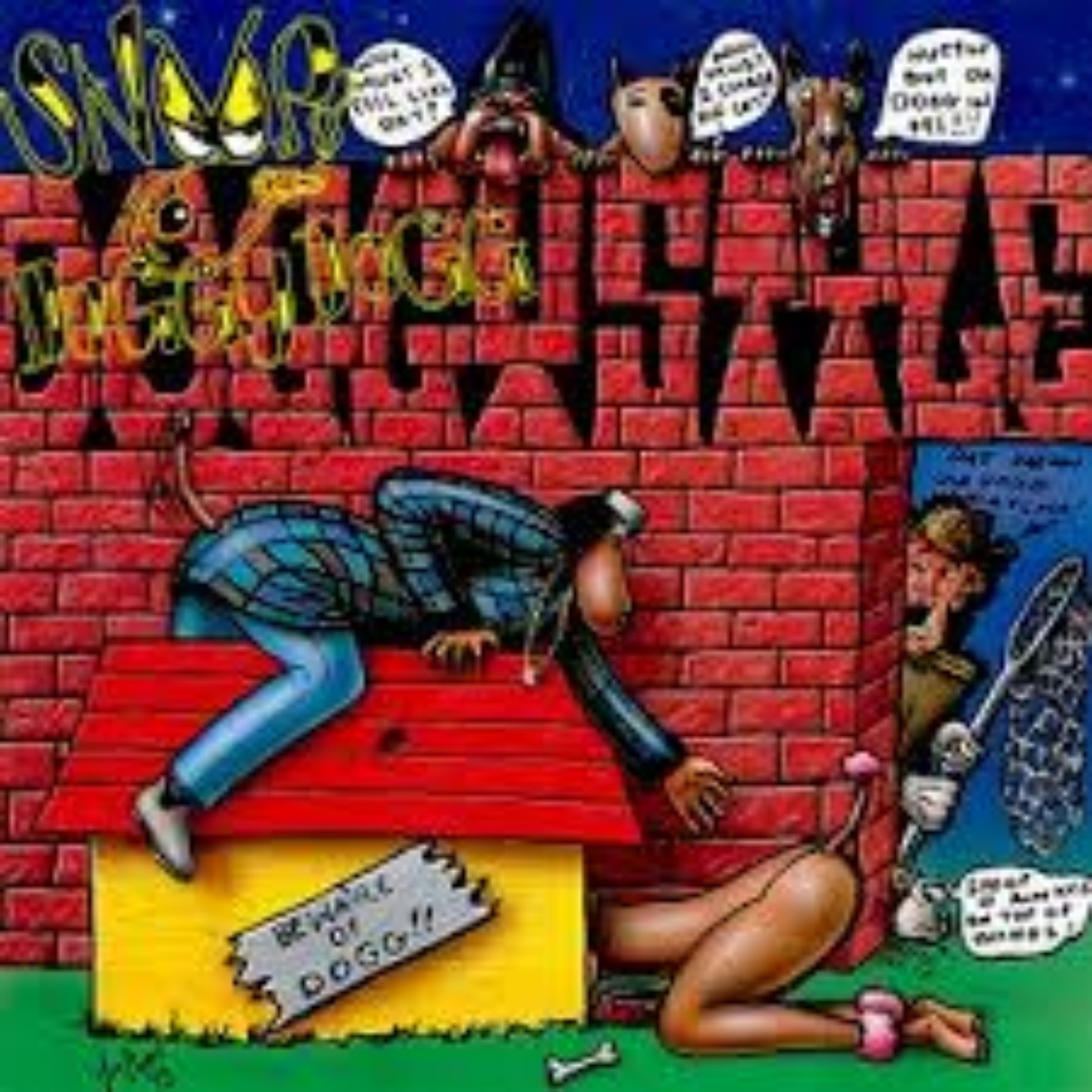
 THE ORIGINAL COVER · 1993
A DEBUT THAT ALREADY SOUNDED LIKE A MOVEMENT.
We can call Doggystyle a debut, but we cannot talk about it as if Snoop Doggy Dogg arrived out of nowhere in November 1993. The world had already heard that voice all over The Chronic. The real question was whether he could stretch it into an album that belonged to him.
Most young rappers would have had to introduce themselves from scratch. Snoop had a different problem. Dr. Dre's 1992 solo record had already turned him into one of the most recognizable voices in the country, and anticipation was sitting on his shoulders before the first track played. It is a rare position: becoming a star before your official debut while still being expected to prove you can carry an entire project.
That pressure could have pushed the record toward a safe collection of singles. Instead, Doggystyle behaves like a carefully staged world. The party records, the storytelling, the menace, the radio skits, the crew appearances and the moments of genuine musical tenderness all feel as though they were made to live under one roof. This is why the album still deserves long-form attention. Its classics did not come together by accident.
It is also important to separate invention from mastery. Snoop and Dre did not invent funk, and Doggystyle did not single-handedly create G-funk. The architects they drew from had been building those grooves for decades, and The Chronic had already established a blockbuster template. What Doggystyle did was give that language a personality so immediately identifiable that it traveled far beyond its local setting.
DEATH ROW WAS THE CENTER OF THE CONVERSATION.
In 1993, Death Row was more than a label with a hot record. It had developed a recognizable sound, visual language and roster identity. The production carried the polish of a major operation, but the performances still seemed connected to the streets and personalities that shaped the music. Snoop was the perfect figure at the center of it: tall, relaxed, melodic, funny, charismatic and capable of sounding ominous without increasing his volume.
His Long Beach identity mattered. This was not generic West Coast packaging. The drawn-out syllables, humor, neighborhood references and storytelling rhythms carried a particular sense of place. Yet the music was expansive enough to make a listener thousands of miles away feel invited. That is a big part of its commercial story. Doggystyle debuted at No. 1 on the Billboard 200, becoming a landmark for a solo rap debut. The attention was enormous, but the real achievement was that the album had the material to justify it.
The project also arrived in a tense public environment, with gangsta rap regularly placed in national arguments about censorship, criminality and responsibility. The music itself was more contradictory than either its loudest supporters or loudest critics always admitted. Celebration existed next to anxiety. Storytelling shared space with bravado. The treatment of women could be ugly, while the musicianship was often extraordinary. A serious 4DK retrospective has to hold those truths together. Admiration without examination is nostalgia; examination without listening misses the art.
A NUMBER-ONE DEBUT. A MURDER CASE. AT THE SAME TIME.
There is no responsible way to tell the story of Doggystyle without explaining what was happening outside the studio. On August 25, 1993, 20-year-old Philip Woldemariam was shot and killed during a confrontation at Woodbine Park in the Palms neighborhood of Los Angeles. Snoop, whose legal name is Calvin Broadus, was driving a Jeep; his bodyguard, McKinley Lee, fired the shots. Snoop faced a murder charge as his first solo album prepared for release. These were not rumors that surfaced years after the classic had been made. This was national news while the album was coming out.
The timing is difficult to imagine now. On November 23, 1993, Snoop released one of the most anticipated rap debuts in history. It sold approximately 803,000 copies in its first week and entered the Billboard 200 at No. 1. Meanwhile, he was facing a potentially life-altering criminal prosecution. To fans, he was becoming the coolest voice in music. Away from the records, the possible consequences were frighteningly real. The larger debate over gangsta rap, authenticity and the relationship between lyrics and lived experience had suddenly reached a courtroom.
Prosecutors and defense lawyers offered sharply different explanations of the confrontation. The prosecution argued that the men pursued Woldemariam; the defense argued that Lee fired in self-defense after perceiving a gun threat. A jury acquitted Snoop and Lee of first- and second-degree murder in February 1996. The jury deadlocked on voluntary manslaughter, and prosecutors decided the following month not to pursue a retrial. That legal sequence matters: the murder acquittals and the later decision to drop the unresolved manslaughter charges are separate events.
So does the fact that a person died. Philip Woldemariam should not become a nameless plot device in the mythology of an album. His death had consequences for a family, regardless of the outcome of Snoop's trial. We can take the circumstances seriously without pretending to know what the jury could not establish, and without turning another person's life into a promotional hook.
Listening to the album in that context changes the tension around it. The sunny grooves do not erase the danger of its setting, and the darkest songs are no longer easily dismissed as fantasy. But a fictional song is not evidence about a criminal case, and Snoop's public persona is not a substitute for a trial record. The power of this moment is the collision: a young artist at his commercial peak, a violent death, the machinery of celebrity and a country arguing about what rap meant.
DRE BUILT THE SOUND. SNOOP MADE IT FEEL EFFORTLESS.
There is a reason the beats still sound expensive without relying on noise. Dr. Dre's production is full of separation. The bass has room to move; the keyboard lines have character; the drums hit with a physical weight that somehow never forces the rappers to shout. Synthesizers stretch notes, voices float in from the edges and old soul or funk ideas are refashioned into new arrangements. Nothing feels overcrowded. Snoop works in the space rather than wrestling it.
His great gift on this album is economy. He slides words around a pocket, stretches a vowel, pauses at the right moment and changes the mood without appearing to change gears. A listener can be entertained by the sound of the delivery before paying attention to the individual bars. That isn't a weakness in the writing. It is performance craft at a very high level. Tha Shiznit, Gz and Hustlas and Gin and Juice show different versions of the same control.
Then there is the supporting cast. The Lady of Rage adds aggression. Nate Dogg's hooks make the music even more melodic. Kurupt, Daz and Tha Dogg Pound keep the album from becoming a one-voice exercise. The Dramatics bring the weight of an older soul tradition to Doggy Dogg World. George Clinton's presence underlines how intentionally this music connects itself to P-Funk. Snoop is the star, but the supporting voices are a crucial part of what makes the environment feel complete.
Great albums have recognizable songs. Landmark albums have a recognizable world. Doggystyle has both.
THE WEST DIDN’T JUST HAVE A SOUND. IT HAD A NEW CENTER OF GRAVITY.
To understand the significance of Doggystyle, begin before it existed. California rap was already diverse: Ice-T's stark narratives, N.W.A.'s confrontational records, DJ Quik's funk experiments and the broader Southern California scene had built a language of their own. Parliament-Funkadelic, the Ohio Players and decades of Black popular music provided musical DNA long before anyone attached a new genre label. The Chronic crystallized a version of G-funk for an enormous audience in 1992. Doggystyle took that vocabulary into another gear in 1993.
That difference matters. Dre's synthesizer leads, muscular drums, deep bass and spacious arrangements were not background decoration. They made records breathe. Funk had always prized groove, but this version also left a wide lane for a rapper whose flow was relaxed rather than shouted. Snoop could glide through the bassline, turn a vowel into a hook or make a neighborhood observation sound like a punchline. The chemistry made a regional sound accessible without sanding off every regional detail.
On Who Am I? (What's My Name?), the P-Funk connection is almost a banner over the entrance. Gin and Juice demonstrates how the neighborhood party could become an international singalong. Tha Shiznit and Gz and Hustlas prove the album would still be formidable without its giant singles. And Doggy Dogg World lets old-school soul voices share space with a new West Coast star. These different textures are why the project feels larger than a beat tape with a famous rapper attached.
The immediate effect was a change in scale. A California rap album could sound unapologetically local and still move roughly 803,000 copies in its opening week. After The Chronic announced the Death Row sound, Doggystyle proved the sound could support a superstar's entire debut and carry a broader cast of voices alongside him. That opened room for more commercially visible West Coast identities, even though the West was never one uniform style or one record label.
Our own West Coast album ranking reflects that history: The Chronic is our No. 6, while Doggystyle reaches No. 2. That's not denying who laid the foundation. It's recognizing what Snoop did with it. Dre helped build the language; Snoop made it feel natural enough that the world started speaking it.
“LODI DODI” WAS A SALUTE ACROSS COASTS.
One of the album's smartest cultural moments is also one of the easiest to misunderstand. Lodi Dodi traces back to Doug E. Fresh and Slick Rick's 1985 La Di Da Di, an East Coast storytelling landmark built around rhythm, character voices, mischief and a rapper who could make an ordinary scene feel cinematic. Snoop did not choose an anonymous old record to borrow from. Slick Rick was one of his formative influences. This was an artist showing the people who shaped his imagination.
Listen to how he approaches it. Where Slick Rick's version works through the interplay with Doug E. Fresh's beatboxing, Snoop places the familiar narrative attitude inside a polished, slow-moving G-funk environment. Nancy Fletcher's singing adds warmth. Snoop's drawl changes the timing and the setting; he lets the words hang differently, and the California production gives the story a new physical shape. You hear an influence, not merely an imitation.
That is especially important when people tell the history of early-'90s hip-hop as if New York and Los Angeles were sealed-off artistic worlds. They weren't. Snoop's craft was fed by records from the other side of the country, and the debut he made famous contains an open acknowledgment of that debt. The same rapper whose voice helped define Long Beach could stop the album and salute one of New York's great storytellers without losing his own identity.
For us, Lodi Dodi is a key to the album's larger appeal. Snoop understood that you could be deeply regional and still belong to a much wider hip-hop lineage. His performance is playful, charismatic and effortlessly repeatable, but the deeper accomplishment is how naturally an East Coast classic becomes part of a West Coast masterpiece.
TRACK BY TRACK.
We are using the original 1993 19-part sequence, with its skits counted separately and the early-pressing cut Gz Up, Hoes Down included. Later CDs and streaming editions can combine or omit parts of the sequence. That difference is worth preserving when we discuss how the album was originally experienced.
Edition note: The most familiar current streaming edition lists fewer tracks because some interludes are folded into the songs and the track Gz Up, Hoes Down has a complicated reissue history. This is a retrospective of the original release sequence, not a claim that every edition has 19 numbered tracks.
Bathtub
1:50Before the album tries to impress anybody, it builds a room for the listener to walk into. The warm soul texture, laid-back conversation and sense of somebody inviting us into his world establish the record's most important principle: Snoop does not have to hurry. Even the introductory material moves to his internal clock. That relaxed pacing turns the album's skits into more than interruptions. We are entering a specific atmosphere, where humor, swagger and danger can occupy the same afternoon. A debut with this much anticipation could have opened with the loudest single; the choice to open conversationally tells us how confidently its creators understood the personality at the center.
G Funk Intro
2:24The Lady of Rage comes through with the force of somebody determined to steal the first real musical moment, while the George Clinton connection makes the funk lineage impossible to miss. This is one of the great things about Doggystyle: the project operates like a family gathering without losing the individuality of the people walking in. Dre's instrumental is elastic and bright, but the vocals make it competitive. The opening says Death Row's talent pool is deeper than one star. It also gives Snoop a runway. By the time he takes command, the audience has already been pulled into a functioning world rather than a collection of isolated features.
Gin and Juice
3:31This is how a song becomes bigger than its original setting. The drums are firm, the synthesizers glide, and Snoop makes an entire day sound like a story worth telling. He is not attacking the beat; he is leaning against it. The details of parties, neighborhood traffic and trouble never feel rushed because the cadence invites us to picture each scene. There is a smoothness to the arrangement that disguises how precisely everything is placed. It became a massive cultural shorthand for the West Coast sound, but the more impressive achievement is musical: decades later, the bassline and conversational hook still draw people in immediately. It is both an anthem and a lesson in how little a compelling rapper needs to force.
The scale of this song matters, too: it helped a recognizable Long Beach perspective become a nationwide pop-cultural phrase. The craftsmanship was not about abandoning the region to reach the mainstream. It was about turning the region's details into a melody and groove people everywhere could inhabit.
W Balls
0:36The exaggerated radio personality and quick-fire humor remind us that the album is designed like a broadcast from a particular place and moment. Some listeners skip skits in modern playlists, but the original sequence makes the point: these voices help tell us where we are between records. It is a brief transition, not an essential standalone song, yet its comic timing matters. The music keeps moving while the imagined radio dial helps the album feel inhabited by a community. Later digital versions may attach interludes to nearby songs, which is why we're treating the earliest 19-part sequence as our reference.
Tha Shiznit
4:03Take away the radio-ready hooks and you still have a devastating rapper. Tha Shiznit is one of the strongest cases for Snoop as a technician rather than just an instantly recognizable voice. He moves through the beat with ease, changing emphasis while maintaining an almost casual control over every bar. The groove feels slippery, as though the drums and bass are making room for the ends of his sentences. That creates replay value independent of nostalgia. The record captures what separates a cool-sounding performer from a great one: even when the subject matter is braggadocio, the phrasing itself is entertainment. This deserves to be mentioned in the same breath as the big singles whenever the album's highlights are debated.
Domino Intro
0:37Another scene-setting detour. The dialogue and street-corner energy can seem disposable when tracks are separated on a streaming app, but this album was sequenced to be experienced as a continuous ride. The voices, interruptions and comic pace reflect a hip-hop tradition of making records that feel like local radio and neighborhood storytelling. You are not meant to treat thirty-seven seconds as a conventional song. You are meant to hear the personalities between the songs. The skit also resets the temperature before Snoop returns to an earlier rap influence on the next cut.
Lodi Dodi
4:24Snoop's interpretation of the Slick Rick and Doug E. Fresh classic is not a throwaway cover. It demonstrates the bridge between the storytelling traditions that formed his approach and the G-funk production language shaping his future. He respects the playful, conversational architecture of the earlier record while making the delivery unmistakably his own. The melodic support adds warmth, and his drawl makes familiar phrasing sound like it belongs in a Long Beach afternoon. This is an important counterargument to the idea that Doggystyle is only a California style exercise. Snoop was listening to East Coast innovators, absorbing their techniques and translating them. The result is both homage and personality test.
We also hear how important the original La Di Da Di was to his own writing style. Slick Rick's casual scene-setting and shifts in vocal character helped show that storytelling could entertain without sacrificing craft. Snoop's remake moves that sensibility into a new city and generation, with Dre's groove and Nancy Fletcher's vocal framing giving it a different musical coat. That's hip-hop history happening inside the tracklist, not an unrelated sample reference.
Murder Was the Case (DeathAfterVisualizingEternity)
3:38Here the album's cartoonish humor and sunny imagery drop away. Snoop imagines death, temptation and the spiritual consequences of a life organized around violence. The premise is theatrical, but the tension works because his voice never needs to become frantic. Dre's production shifts toward dread, giving the song the feeling of a short film. In the larger album sequence, this is where the celebration stops feeling consequence-free. The juxtaposition matters: the same narrator who can make a party feel effortless can lead us into a nightmare. It's also a reminder that West Coast rap's blockbuster era contained moral questions beneath its larger-than-life imagery. The record's lasting power comes from that tension.
The distinction between this song and Snoop's pending real-life case has to remain clear. In the music, the narrator's near-death bargain is a deliberately fictional supernatural story; the legal case concerned Philip Woldemariam, who died in August 1993. The overlap in public attention was undeniably powerful, but the song is not a courtroom document. As art, it shows Snoop could create dread and emotional consequence within the same album that made cruising sound like a holiday.
Serial Killa
3:35The ensemble brings a harder edge into the record. RBX, the D.O.C.'s presence and Tha Dogg Pound expand the Death Row universe while the music turns colder and more confrontational. The contrast with the smooth singles is useful: G-funk is not simply a warm synthesizer and a singalong hook. It can also sound heavy, clipped and threatening. Snoop knows when to give other performers the space to change a song's texture. The guests are not interchangeable background decoration; their voices break the album's flow in a purposeful way. The subject matter is aggressive, but as an arrangement this is an effective shift in pace before one of the project's defining singles arrives.
Who Am I? (What's My Name?)
4:06This is an artist introducing himself to people who somehow already know exactly who he is. The P-Funk DNA, the gigantic groove, the memorable call-and-response and Snoop's unmistakable vocal imprint make the song a statement of identity. What is so striking is how little he changes his posture for the moment: even when the production announces a star, he delivers with the same loose command he uses on the album cuts. The record did more than create a hit. It gave Snoop a musical signature he could carry for decades. You hear the performer, the city and the production style in the first seconds. That's branding before anybody needed to call it branding.
If The Chronic introduced this voice to the country, Who Am I? made it unmistakably his. It lands like a public declaration that the featured guest is now the main event. We also hear the P-Funk roots of G-funk transformed into something with mass-market power without losing its elastic groove.
For All My Niggaz & Bitches
4:42Tha Dogg Pound and the Lady of Rage take a major role in keeping the back half alive, with contrasting flows pushing against a durable groove. We hear the collaborative machinery of the Death Row era in action. It is not just that Dre could assemble talented people around a star; the supporting cast understood how to make those appearances feel like part of the main record. Some of the gender politics and language have aged badly, and they should be acknowledged rather than waved away as an automatic requirement of the era. Musically, the cut illustrates the depth of the collective and how much the album benefits from varied vocal personalities.
Ain't No Fun (If the Homies Can't Have None)
4:07Nate Dogg's melodic presence, Warren G's relaxed delivery and Kurupt's sharpness help build one of the album's most instantly identifiable posse cuts. The groove is practically engineered for a room full of people to recognize within seconds. It also presents the clearest example of a problem that comes up when we examine the album honestly: the treatment of women is often crude and demeaning. Both truths belong in the retrospective. The vocal chemistry and hooks influenced generations of West Coast records; the attitudes in the lyrics deserve scrutiny. A classic should be strong enough to withstand that conversation. Ignoring one side would make our verdict less credible, not more.
Chronic Relief Intro
0:33A short comic reset reinforces the feeling of a continuous late-night radio program. The interludes do not all need to be favorites to serve a structural purpose. They help create breathing room between a crowded crew record and the richer soul textures about to arrive. In an era when listeners often pull favorite singles into playlists, the placement can be easy to overlook. Listening to the record front to back is the best way to appreciate how Dre and Snoop balanced movement with rest.
Doggy Dogg World
5:05The Dramatics bring a direct connection to older R&B, and that connection elevates this from a street-rap album track into something grander and more melodic. Tha Dogg Pound complements Snoop without breaking the groove's mood. Here the album sounds almost luxurious: voices layered over a measured pocket, allowing the chorus to breathe. The song makes explicit what is present throughout Doggystyle. This is not funk borrowed as window dressing; the musicians understand the emotional architecture of the source traditions. Snoop's relaxed charisma sits naturally inside that language. It's one of the most complete musical arrangements on the project and one of the strongest examples of Dre translating California rap into a full-bodied album sound.
Class Room Intro
0:43A brief bit of character work before the next full performance. Humor can be dated and some of the jokes are rougher to revisit now, but the underlying design is clear: Doggystyle uses skits to build a shared environment around its music. Rather than letting the second half become a collection of leftover songs, these scene changes give it the momentum of a loose narrative. The best way to hear the album is to treat these interludes as connective tissue, not competition for the singles.
Gz and Hustlas
3:51This is the kind of record that separates someone who knows the singles from someone who knows the album. The bassline pulses, the rhythmic space feels effortless and Snoop's phrasing is magnetic. He does not need a huge guest feature to carry the track. The record is funny, tough and breezy at the same time; that balance is his great skill during this era. Even the way his voice seems to drift across the instrumental is a deliberate musical effect. We could build a serious argument for Gz and Hustlas as one of Doggystyle's finest pure performances. It might not have the cultural footprint of the biggest radio records, but it captures the sound of the album without a wasted gesture.
Checkin' Intro
0:56The final interlude returns to the broadcast framing one more time. At this point the album has made its case: voice, community, humor, funk and danger all exist within a common sound. This short scene helps the closing run feel intentional, especially on the original pressing. The fragmented nature of later track listings can make this feel like an odd extra, but that's exactly why preserving the edition context matters when writing a historical track-by-track retrospective.
Gz Up, Hoes Down
2:22For collectors, this is a particularly revealing part of the album's history. The track appeared on early copies and disappeared from many later editions because of a sample-clearance issue. Its smooth, soul-derived sound fits naturally with the broader project, and the complicated release history shows how a record can change without the public always noticing. The subject matter carries the same macho attitudes seen elsewhere in the album, but the production demonstrates how deeply soul textures shaped G-funk's atmosphere. We include the song because our main reference point is the original 19-part pressing. If your digital edition omits it or has fewer track numbers, you are not imagining the difference.
Pump Pump
3:42Doggystyle does not close with a sermon or a tidy resolution. It signs off with movement, bass, and the hard-edged energy that made the Death Row roster feel like a scene rather than a solo act. The closing performance pushes back toward the street after the smoother, more melodic songs have shown the album's range. That is a fitting last move: Snoop's defining breakthrough was not choosing between funk, humor, menace, and pop accessibility, but learning how to inhabit all of them on the same project. When Pump Pump finishes, the record feels like a party that is going to keep rolling after we leave. That sense of a world continuing beyond the final track is part of the album's design.
THE FIVE RECORDS WE KEEP COMING BACK TO.
There is no pretending the singles are somehow less impressive because everybody knows them. Some records are familiar precisely because they were undeniable the first time. Yet the album's real depth becomes clear when the less celebrated songs sit alongside the hits.
A beat and voice that announce themselves in seconds. Identity made musical.
Neighborhood detail delivered like a party everybody can enter.
Effortless flow, shifting emphasis, elite control.
Fame and fantasy interrupted by consequence and fear.
The groove and cadence that make the deep cuts essential.
Guests and arrangement expanding the emotional range.
Those six moments are not six versions of the same song. Together they show why a project associated with a specific production style can sustain an hour of listening. We hear the anthem, the character study, the raw rapper, the story, the pure groove and the soul showcase. That range is the album's answer to anybody who tries to reduce it to a couple of radio hooks.
“MURDER WAS THE CASE”: A FABLE WITH REAL-WORLD WEIGHT.
The two biggest crossover singles could have led anyone to expect an album of nothing but party music. Murder Was the Case refuses that expectation. Its central story is fictional: a narrator is shot, confronts death and is tempted by a supernatural bargain that offers life at a terrible price. The drama works because Snoop sounds controlled, almost matter-of-fact, while the music turns colder around him. Instead of yelling about consequences, he allows them to creep into the song.
That performance reveals a different side of his talent. Snoop can tell a story without making the flow sound like formal acting. The menace is in his pacing; the horror is in the idea that a moment of violence could change everything. Dre's darker atmosphere makes the track feel like a miniature film. It is no coincidence that the premise later expanded into an actual 1994 short film, directed by Dr. Dre and Fab 5 Freddy, with a separate soundtrack that became part of the Death Row story.
The real-life legal case surrounding Snoop and the 1993 shooting made the record especially fraught to hear at the time. But that does not make the song a literal account of Philip Woldemariam's death, an admission or a prediction of the trial. Treating it that way confuses art with evidence. The responsible reading is more compelling: a fictional meditation on death was released while its creator faced a very real murder prosecution, and listeners heard the two narratives at once.
That tension also cuts against the idea that G-funk was only sunshine and cruising. The same record that made the everyday feel like a celebration could explore judgment, temptation, fear and a narrator's inability to outrun violence. Murder Was the Case gives Doggystyle gravity. It broadens Snoop's range and prevents an already entertaining album from becoming emotionally one-note.
A CLASSIC THAT DOESN’T GET A PASS ON EVERYTHING.
Hip-hop criticism sometimes treats historical importance as a shield. If a record sold millions, influenced a generation and sounded amazing, the discussion ends there. We don't see it that way. The strength of Doggystyle gives us a responsibility to address its weaknesses with the same seriousness we use to celebrate its genius.
The album's depiction of women is a major one. There is a difference between documenting the attitudes of an era and treating every attitude in those recordings as worth endorsing. Ain't No Fun is a classic example of phenomenal vocal chemistry and a deeply questionable lyrical perspective occupying the same record. For some listeners, that tension changes how much they can enjoy the album today. We should not dismiss that response or pretend the music only exists in the year it was released.
The gangsta-rap imagery also carries contradictions. Murder Was the Case complicates the idea of consequence-free street mythmaking, but other tracks revel in the very postures the story seems to question. That inconsistency is part of the album's world. It is not evidence that the music lacks craft; it is evidence that the world surrounding its characters is more complex than the cover and singles alone suggest. We can call the record essential without treating its every perspective as timeless.
THE WEST COAST BECAME A WORLDWIDE LANGUAGE.
Listen to what came after Doggystyle and you can hear parts of its architecture everywhere: the rolling basslines, elastic keyboard textures, hooks that blend rapping and singing, and an MC who lets personality do as much work as complexity. Its influence reaches across generations, from California artists proudly extending their lineage to pop and rap records that learned the commercial power of that musical ease.
Just as important, it turned Snoop into a superstar who did not need to imitate Dre's delivery to fit a Dre production. Their collaboration demonstrated that a producer could build a remarkably consistent environment around a voice with a completely different energy from his own. That is a rare creative partnership. Snoop's laid-back command and Dre's meticulous architecture do not cancel each other out. They make each other larger.
And the guests matter historically. Nate Dogg, Tha Dogg Pound, the Lady of Rage and the larger Death Row orbit made the sound feel social, competitive and collective. Doggystyle may sit under one artist's name, but the record captures an entire creative moment. That ecosystem helped lay the groundwork for the next stretch of West Coast rap, for better and worse, as its influence traveled beyond local borders.
The strongest evidence of an album's longevity isn't just whether listeners can recite its singles. It's whether the songs that never dominated radio still hold up when the marketing has faded. On that test, Tha Shiznit, Gz and Hustlas, Doggy Dogg World and the darker writing of Murder Was the Case make the argument for us. The album still functions as an album.
BEFORE SNOOP BECAME AN ICON, HE HAD TO BECOME SNOOP.
Looking backward from the present, Snoop Dogg's public identity can make the scale of Doggystyle hard to appreciate. He became a celebrity whose voice, humor and image reached well beyond rap. But none of that later recognition was guaranteed in 1993. What this record accomplished was more fundamental: it gave him a musical personality that millions of people understood immediately. You could identify him from a single stretched syllable or a half-smiling line over a bass groove.
He was already indispensable to The Chronic, but being Dr. Dre's most exciting collaborator is different from carrying your own album. On Doggystyle, Snoop proved the voice could sustain a full world. He could sound disarmingly funny on one song, effortlessly melodic on another, threatening on a third and genuinely haunted when the story demanded it. His laid-back delivery was not a lack of technical skill; it was a decision about timing, tone and how to command a beat.
Our West Coast Top 25 placed All Eyez on Me at No. 1 and Doggystyle at No. 2. That ranking respects different kinds of greatness. Pac's double album represented an enormous statement of ambition and personality; Snoop's debut represents one of the most coherent meetings of voice, producer, guests and moment that hip-hop has ever recorded. We can defend its placement without pretending it couldn't make an argument for the top spot itself.
The legacy also runs through artists who arrived later, not just through sampled keyboard tones. Doggystyle made effortless flow, vocal identity and world-building into standards a West Coast rapper could be judged by. Its hooks proved that melody and street specificity could travel together. Its posse cuts offered a snapshot of an entire movement. Even when future California artists rejected its sonic formula, they were still working in a landscape where the record had reset expectations.
There is a hard edge to that legacy too. The album reflects misogyny and the glamorization of street life that should remain open to criticism, and the real-world violence surrounding its release cannot be reduced to mythology. Holding onto the music's genius does not require romanticizing everything about its era. In our view, the more complete history makes Snoop's artistic breakthrough more significant, not less.
If we had to explain why Doggystyle never left the conversation, we'd start here: Snoop didn't need thirty years of celebrity to make this a classic. The classic gave him the foundation for everything that followed.
THE VOICE AND THE WORLD ARE INSEPARABLE.
Greatness here isn't just a matter of numbers or famous hooks. It's the rare alignment of star presence, unforgettable production, a supporting cast with personality and a sound so coherent you can recognize its world before Snoop finishes a sentence.
For all its flaws, Doggystyle remains a foundational rap album. It is funny without being harmless, melodic without being soft, commercially inviting without sounding anonymous. It can feel like a party, a street-corner conversation and a nightmare in the same sitting. More than three decades later, its musical fingerprints are everywhere, but very few records have reproduced its balance of technical precision and effortless personality.
We started The Album Files with Scarface's The Diary, a masterpiece built around consequence and inner conflict. Doggystyle offers a different kind of greatness: atmosphere, charisma and the power of a producer and rapper finding a perfect shared language. Two albums. Two different routes to permanence. That's exactly why this series exists.