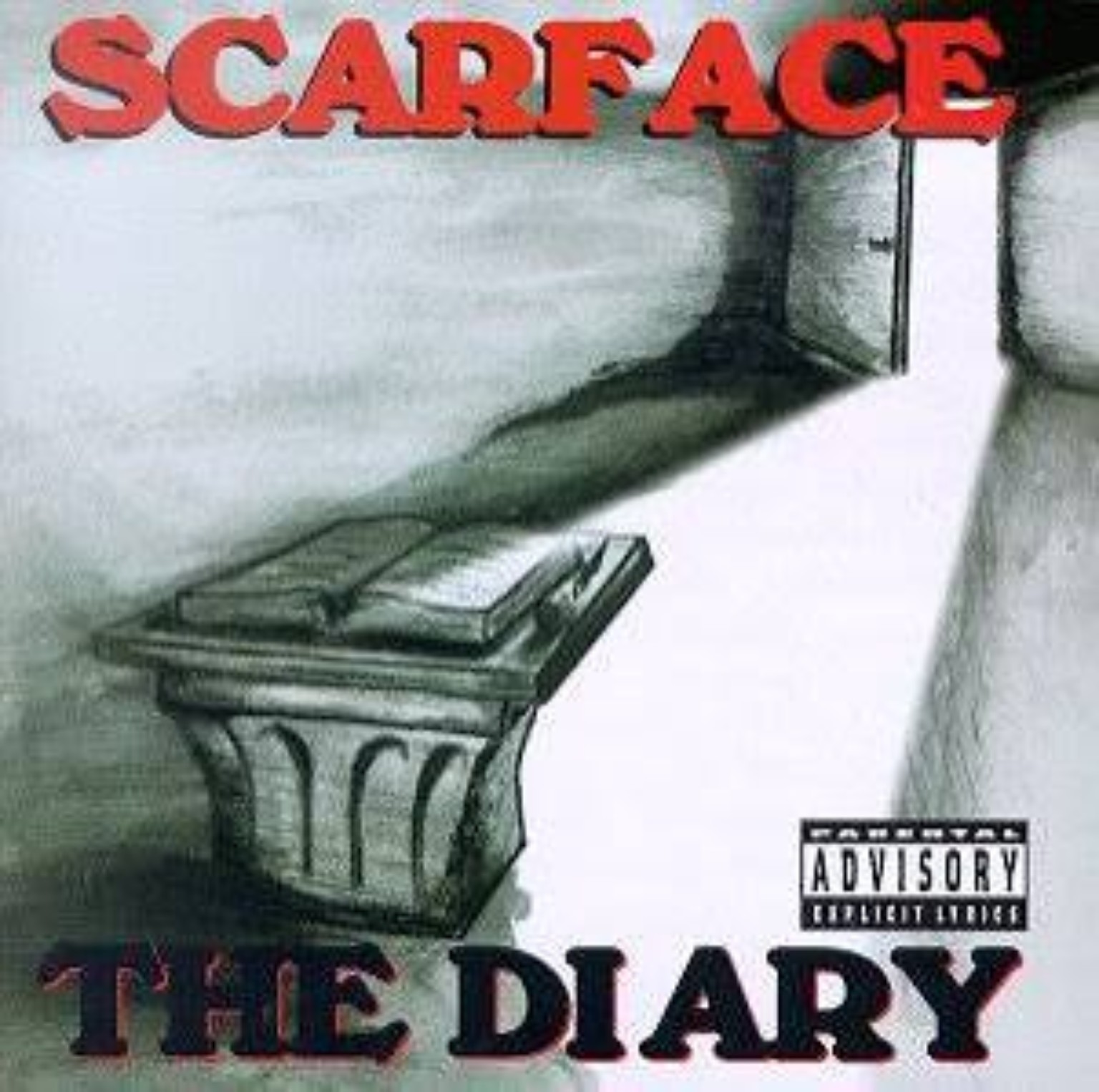
GREATNESS WITHOUT THE GLOSS.
By the fall of 1994, Scarface had already proven two things: he could hold his own inside the Geto Boys, and he had enough personality and writing ability to carry an album by himself. The question was whether he could concentrate everything that made him different into a record without a wasted moment. The Diary answers that question almost immediately.
It runs roughly 43 minutes. The beat-making is rich but rarely crowded. The stories are vividly drawn, yet the performance never feels like a rapper showing off how well he can tell stories. Scarface sounds as though he is letting us hear what will not leave his mind.
That distinction is why we put this album at No. 1 on our list of the 25 greatest Southern hip-hop albums. Historical importance is part of the case; it is not the whole case. The stronger argument is what happens every time we actually press play.
Scarface isn't asking us to admire the danger. He's asking whether we understand what it leaves behind.
The record contains bravado, violence, dark humor and an unmistakable street perspective. But the voice tying everything together is observant, sometimes weary, often haunted. He can make a threat sound convincing one moment and then show us why a life built around threats becomes a trap. That contradiction is the real subject of The Diary.
HOUSTON HAD ITS OWN STORY TO TELL.
It is easy to look backward and talk about Southern rap as though its national dominance had always been inevitable. In 1994 it wasn't. New York remained the center of countless hip-hop arguments, and California had changed the popular sound of rap. Houston was making its own records, building its own audience and telling its own stories long before anyone outside Texas decided to pay full attention.
Scarface had a head start in the argument. The Geto Boys had already brought Houston into national conversations, and his first two solo albums established a voice distinct from the group's more confrontational identity. After the larger, sprawling world of 1993's The World Is Yours, he came back with something tighter, sharper and more emotionally cohesive.
This is where The Diary becomes more than a regional landmark. Scarface did not have to sound like the East or West to reach people across the country. He trusted the particulars of his environment—its language, pressure, fear and contradictions—and let the emotion carry the story beyond Houston.
Nothing about his delivery is especially flashy. He does not race the beat to prove technical ability. The power is in timing, restraint and detail. Plenty of rappers make you picture the scene; Scarface can make you worry about the people inside it.
THE PRODUCTION LETS THE DARKNESS BREATHE.
The musical foundation belongs to an extraordinary circle: N.O. Joe, Mike Dean, Scarface himself and Uncle Eddie. The record's sound is full of low-end weight, mournful keyboard lines, guitars, uneasy melodies and drums that often seem to move at the speed of thought. The production is cinematic without constantly demanding attention.
N.O. Joe's fingerprints run through the tracklist, especially on pieces where the groove must carry tension without crowding the storytelling. Mike Dean helps give the record its musical depth and polish; the low tones and careful arrangement are central to the mood. Scarface's own production work means the writing and sound frequently feel conceived as one idea. Uncle Eddie's musicianship adds another layer to key moments, particularly on Hand of the Dead Body and Goin' Down.
That chemistry matters. I Seen a Man Die needs room for its tragedy. No Tears needs a hard, unsentimental edge. Jesse James and Goin' Down need movement. The production team understands the differences while still making everything sound as though it belongs to one album.
We also hear a crucial kind of discipline: no unnecessary guests, no obvious detour chasing the radio, no song that feels written for a marketing meeting. The most accessible tracks are still unmistakably Scarface. The sound is focused enough to hold the mood for 43 minutes without becoming monotonous.
TRACK BY TRACK.
We wanted this first installment to actually spend time with the music. Here's how all 13 selections move the story forward, from the opening scene to the final page.
Intro
1:07The opening plays like the first seconds of a crime drama: the scene is established before the real story begins. On a record this compact, even the framing matters. Scarface signals that we are entering a complete world, not just a stack of singles.
The White Sheet
3:53An ominous early statement that tells us what kind of record this will be. Rather than hide the ugliness behind bravado, Face uses the stark mood and deliberate pacing to make the consequences feel close. The production leaves enough room for his voice to dominate without turning the song into a lecture.
No Tears
2:26Short, cold and absolutely unforgiving. The clipped runtime is part of the effect: there is no lengthy introduction and no attempt to soften the emotional temperature. What makes it unsettling is how convincing Face sounds when he leans into detachment. That darkness makes the reflection elsewhere on the album hit even harder.
Jesse James
4:13Here the record opens up its outlaw-movie imagination. The performance has swagger, but it is carefully measured swagger: Face never needs a frantic delivery to sound dangerous. Listen to the space between the lines and the way the groove sustains the tension without overwhelming the writing.
G's
4:39A different side of the same Houston perspective. The pace is lived-in, the confidence unforced, and the attention to street codes keeps the album rooted in a specific world. As a bridge between the harder material and the mortality-centered centerpiece, it helps the sequencing feel intentional.
I Seen a Man Die
4:32This is the emotional center of The Diary, and one of the great narrative performances in Southern rap. Face follows a man trying to restart his life after prison, only for violence and old patterns to swallow the chance at change. The story has a beginning, a turn and a devastating end. More importantly, he never reduces that ending to spectacle: regret, loss and inevitability carry the weight. The mournful atmosphere makes the writing feel like testimony rather than entertainment.
One
4:43After the album’s heaviest story, “One” does not let the listener escape into a celebratory mood. The low-key intensity continues, while the rhythm gives Scarface space to revisit distrust, pressure and the choices that define survival. The track deepens the record’s consistency: the perspective stays human, even when the imagery grows hard.
Goin' Down
4:28A sharp change of pace without a break in character. “Goin’ Down” brings more movement and dramatic force into the sequence, reminding us how much range the production team finds within the album’s dark palette. The swagger returns, but it lands differently after “I Seen a Man Die”: every burst of adrenaline exists in a world where consequences are already established.
One Time
0:58An interlude that works as a reset, not an interruption. The brevity makes room for the album to turn toward a bigger argument about art, public perception and responsibility. This is a good example of why the 43-minute runtime matters: the connective tissue serves the momentum.
Hand of the Dead Body
4:39Scarface and Ice Cube challenge the habit of treating rap music as the source of the violence it reports. Devin the Dude contributes to the record’s vocal texture. The point is bigger than a feature pairing: two outspoken West and South voices push back against moral panic while keeping the record musically fierce. The bass-driven production and tense arrangement make the argument feel urgent, not academic.
Mind Playin' Tricks '94
3:40The title deliberately reaches back to a Geto Boys classic, connecting Face’s solo evolution to a landmark in his earlier catalog. Rather than repeating a winning formula for nostalgia, this version reinforces the themes of isolation, paranoia and psychological wear already present throughout The Diary. It sounds like a conversation between two points in the same artist’s life.
The Diary
2:23The title track is the album’s final substantial statement, bringing the writing back to the personal perspective behind all the menace and storytelling. By this point we have heard fear, bravado, anger and grief. The short closing song feels like the last page of a journal: it does not need to tie everything into a comforting ending.
Outro
1:30The closing passage lets the world of the record fade rather than end with another big hook. It matters because the album’s strongest effect comes from the sequence as a whole. Scarface leaves the listener with the atmosphere and questions the preceding tracks created.
THE DIFFERENCE BETWEEN VIOLENCE AND ITS COST.
There is a reason I Seen a Man Die has remained central to conversations about great rap storytelling. The narrator observes a man leaving prison with the possibility of a new life. The world does not make that fresh start simple. Old patterns and conflict pull him back, and by the end the possibilities have narrowed to tragedy and regret. Scarface refuses the easy escape of pretending the violence proves anybody won.
That is not the only perspective on the album, and we should not pretend every song carries the same moral. No Tears is harsher; Jesse James is more openly defiant. Part of the greatness is that Scarface lets those attitudes coexist. Human beings are not always consistent, and great writing about street life should not have to flatten them into a lesson.
Then there's Hand of the Dead Body. The Ice Cube collaboration pushes outward from individual behavior toward the public argument over rap itself. It asks what happens when the people documenting an environment become easier targets than the conditions that created it. Bringing Cube into that conversation makes geographic sense: different cities, shared frustration. Devin the Dude adds an important dimension to the record's voice without turning it into a crowded posse cut.
By the time Mind Playin' Tricks '94 arrives, the link to Scarface's earlier psychological writing is unmistakable. Paranoia is not a punchline here; it is what happens when fear becomes part of everyday life. Across the album, he gives weight to both the impulse and the aftermath, to the hard image a person projects and the uncertainty living behind it.
That is why we hear maturity even in the most ruthless material. Scarface's greatest instrument has always been his ability to make a listener believe he is telling us something he had to get off his chest.
THE RECORDS THAT MAKE THE CASE.
Choosing three songs doesn't capture the whole album, but it does explain its range. These are the selections we'd play for somebody who wants to understand why The Diary is our Southern No. 1.
And we're not overlooking the album cuts. The White Sheet establishes its tone. Jesse James shows how Scarface can hold a cinematic pocket without losing his voice. G's adds texture, while the title track turns the album back toward the intimacy its name promised.
WHY THE DIARY STILL HOLDS UP.
The album reached No. 2 on the Billboard 200 and earned platinum certification, but the commercial success is only one part of the story. More than three decades later, the production remains patient, the writing feels lived-in, and the sequencing avoids the sprawl that can weaken even gifted rappers' albums. It is a record we can revisit from front to back without wishing somebody had trimmed the middle.
Its importance to Southern hip-hop goes deeper than proving that a Texas artist could sell records. The Diary helped establish a model for the complete Southern rap album: cohesive atmosphere, firsthand detail, high-level musicianship and subjects bigger than just survival stories. It demonstrated that regional perspective could be specific and universal at once.
For us, the larger point is artistic. Scarface found a way to be uncompromising without pretending he had every answer. He could write about violence without reducing every character to a stereotype, and about fear without surrendering the strength in his delivery. That kind of balance is difficult in any era.
A classic has to survive the moment that made it. The Diary has. The beats do not require a nostalgic excuse. The stories do not need a lecture before they make sense. The voice remains unmistakable. And the best records are still capable of making us feel something.
ESSENTIAL.
NO DEBATE.
4DK CLASSIC · ALL-TIME SOUTHERN NO. 1
As an album, The Diary is the rare meeting of discipline and depth. It gives us a compelling central narrator, an extraordinary production team, a complete beginning-to-end journey and individual records that belong among Scarface's finest work. It is not flawless because every moment is pretty; it is great because it does not flinch when the world gets ugly.
We ranked it above Aquemini, Tha Carter II and every other album on our Southern Top 25 because its mix of storytelling, atmosphere, cultural significance and replay value remains that convincing. That's a 4DK judgment, not a mathematical fact—and this whole issue is our case for it.
Nearly thirty-two years later, the diary is still open. We’re still listening.