Skip to article
4 DA KULTURE • MUSIC • THE ALBUM FILES • VOLUME ONE
4 DA KULTURE
4DK CLASSICS • ISSUE 04 • KANYE WEST / 2005

LATE
REGISTRATION.

The Sophomore Album That Changed Hip-Hop’s Ceiling.

One masterpiece made Kanye West a star. The next one proved his imagination could reshape what a mainstream rap album was allowed to sound like.

From the victory parade of “We Major” to the political force of “Crack Music,” the slow-roll wisdom of “Drive Slow” and the diamond-bright bravado of “Diamonds from Sierra Leone,” this is the complete 4DK story.

AUGUST 30, 200521 TRACKS / INCLUDING SKITSNO. 1 • 4DK MIDWEST ALL-TIME2006 BEST RAP ALBUM
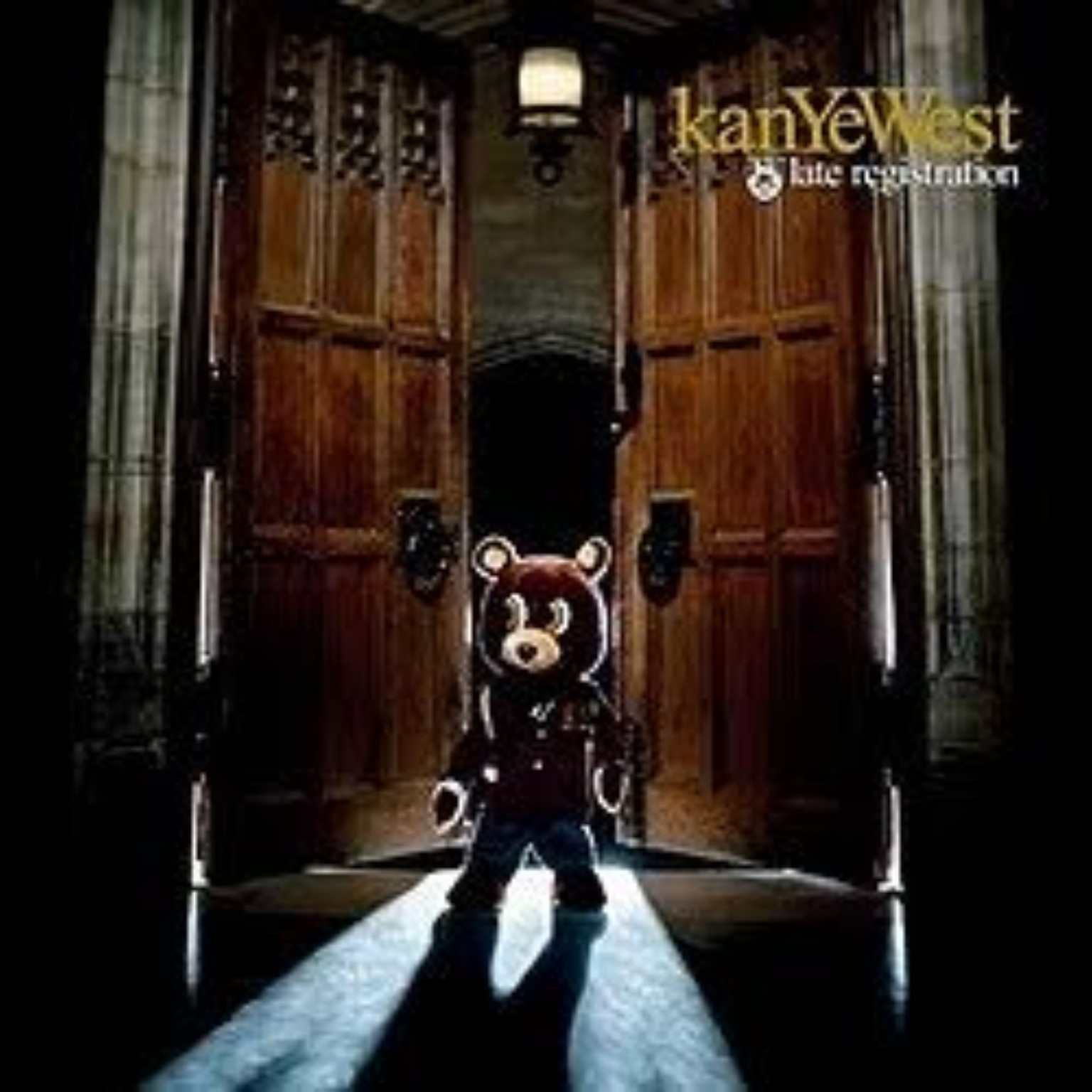
Original 2005 Kanye West Late Registration album cover, Dropout Bear standing between grand wooden doors
KANYE WEST • LATE REGISTRATION • ORIGINAL ALBUM ARTWORK
01 / THE SEQUEL TEST

THE SOPHOMORE ALBUM THAT COULD NOT AFFORD TO BE ORDINARY

By August 2005, Kanye West had already accomplished the unlikely part. The College Dropout made a successful producer into a solo rap star and challenged the idea of what a commercial hip-hop centerpiece had to sound or look like. It brought the soul samples, the school metaphors, the self-conscious humor, the family stories and the spiritual doubt together in one audacious debut. The album had sales, hits, Grammys and enough cultural resonance to ensure that the second record would be treated as an event. But success creates its own trap. An artist can repeat what worked and be accused of standing still, or chase change and risk losing the audience that believed in the first vision.

That is what makes Late Registration so important to our 4DK history of the era. Kanye did not record The College Dropout Part Two. He took the foundation—the pitched-up soul language, the ordinary-man perspective, the willingness to speak about religion and class—and gave it a larger architecture. He wanted a record that could sound intimate in headphones and immense coming through speakers. The difference between an interesting young artist and a long-term creative force is often whether he can make the second statement feel necessary. Kanye cleared that bar with room to spare.

The numbers put the pressure in perspective. The College Dropout opened with roughly 441,000 US copies. Late Registration, released August 30, 2005, debuted at No. 1 with roughly 860,000—nearly twice its predecessor. A big opening is not the same as a great album. We can all name blockbusters that stopped mattering once the promotion ended. But on this record, the sales reflected something deeper: the audience from the debut had stayed, and a wider audience had come to see what he would do next. His second Grammy for Best Rap Album followed in 2006, along with an Album of the Year nomination. The awards are part of the historical record; the music is what keeps the argument alive.

And we have to remember the moment. 2005 belonged to multiple competing visions of rap stardom. 50 Cent’s The Massacre was a massive commercial force. Jeezy’s Thug Motivation 101 was reshaping trap’s mainstream vocabulary. Common released Be, with Kanye crucial to its sound. The Game’s The Documentary was a West Coast event. Wayne was moving toward Tha Carter II at the end of the year, before the mixtape run that would transform his reputation. Kanye was not operating in an empty field. His achievement was forcing another kind of album—funny, political, vulnerable, luxurious, orchestral and still unmistakably rap—to stand at the center of that conversation.

02 / THE SOUND

SOUL SAMPLES WITH A BIGGER SKY OVER THEM

The most obvious creative shift was the collaboration with Jon Brion, whose background in richly arranged film music helped Kanye think beyond the standard loop. Listen to the strings swelling, the horns answering the vocals, the keyboard colors and the little changes that make each song feel like it has a second or third room behind the main beat. What we hear is not Kanye abandoning hip-hop production for an orchestra. It is an attempt to treat sampling, drums and live instrumentation as parts of the same language. The record is polished, but rarely sterile. Its most lavish moments still move with swing.

That distinction is critical because the industry loved reducing Kanye to the chipmunk-soul formula. The debut already showed much more range than that stereotype allowed, and Late Registration makes the reduction impossible. “Heard ’Em Say” finds power in restraint. “We Major” builds a world around horns and layered voices. “Roses” makes warmth and anxiety coexist. “Addiction” is subdued and slippery. “Crack Music” sounds like a protest rising out of the drums. “Gone” develops across its verses until the closing performance feels like a different scene from the opening.

The production team was bigger than the familiar Kanye–Brion headline. Just Blaze produced “Touch the Sky,” and Warryn Campbell, Devo Springsteen and others helped shape different parts of the album. That matters to our analysis: the sound is not the product of one man secretly playing every instrument. Kanye’s strength was in direction as much as beat-making—knowing who could help realize a vision, letting other voices matter, and still making a collection of different collaborators sound like one album. It was a major development in what a mainstream rap producer-artist could demand from the recording process.

The original cover tells the same story. The Dropout Bear stands between large wooden doors in an imposing school building. The figure that felt like an outsider on the first album now walks into a much grander institution, but the bear is still small compared with the architecture. There is victory here, yet there is also uncertainty. Kanye has gained access to the building; he has not stopped questioning who makes the rules. That is the album in one image.

03 / THE WRITING

BIGGER AMBITION, MORE CONTRADICTIONS, MORE HUMANITY

The version of Kanye we meet here can be hilarious, self-absorbed, politically provocative, tender and insecure within the same stretch of music. That is why reducing the early albums to production classics misses too much. On “Roses,” a family’s experience with health care cuts through the fame. On “Hey Mama,” the celebrity posture disappears entirely. On “Crack Music,” Kanye connects the story of Black popular music to systems of power and profit. Those observations are not all complete policy arguments, and his comparisons do not always resolve neatly. That is the nature of a songwriter making records in real time rather than writing a textbook.

At the other extreme, “Gold Digger” is brilliantly engineered popular music built around cutting, sometimes uncomfortable caricature. “Diamonds from Sierra Leone” celebrates personal victories; the remix asks the artist to examine what luxury may be hiding. The contradiction is not a flaw we need to erase to call the album a classic. It is the tension that makes it worth discussing. Kanye wants the chain, the recognition and the enormous stage. He also wants to ask how wealth is created and who suffers while stars celebrate it. That uneasy balance is one of the defining voices of mid-2000s rap.

We also hear a rapper becoming more comfortable beside the elite. He can hold court with Nas on “We Major,” take part in a massive Roc-A-Fella moment alongside Jay-Z on the “Diamonds” remix, and let Cam’ron and Consequence deliver strong verses on “Gone” without disappearing. Sometimes he wins with technical detail; sometimes he wins with a performance only he could give. The evolution from producer who happened to rap to fully formed star is the heart of this issue.

04 / 2005 IN REAL TIME

WHAT DID THIS ALBUM MEAN NEXT TO THE ERA’S ELITE?

To appreciate where Late Registration put Kanye, we have to place it next to the giants rather than pretending there was only one throne. Jay-Z had already established a remarkable run and announced a retirement from solo albums with The Black Album in 2003; in 2005 his legend was a measure every ambitious rapper could hear. Nas remained a lyricist’s lyricist. Eminem had set an extraordinary commercial and lyrical standard. 50 Cent was still an event-level mainstream force. In the South, T.I., Jeezy and Lil Wayne were writing different blueprints for the next era of influence.

Kanye did not simply outrap every one of those artists on Late Registration, and saying so would flatten what made them individually great. His breakthrough was changing the terms of the argument. He could compete in first-week sales, dominate radio, bring thoughtful album material into the mainstream and arrange songs as if he were scoring a film. The question was no longer whether the Roc-A-Fella producer deserved a microphone. It was whether anyone else was making a rap album with this particular combination of range, cohesion and scale.

The collaborations themselves underscored his position. “We Major” features Nas, while the “Diamonds” remix features Jay-Z—two towering figures whose rivalry had defined a major part of the preceding era. “Touch the Sky” introduced Lupe Fiasco to a much wider audience. Paul Wall and GLC brought distinct regional personalities to “Drive Slow.” Common’s brief solo showcase on “My Way Home” placed the album in conversation with socially conscious Chicago soul rap. The Game, Brandy, Jamie Foxx and Adam Levine further stretched its reach. This was not a random celebrity roll call; at its best, it was a statement that Kanye could bring multiple musical worlds into the same room.

By the end of 2005, the case for Kanye as one of hip-hop’s defining creative figures was no longer built on the promise of one dazzling debut. He had repeated, expanded and complicated the achievement. The records that followed would push in other directions, but Late Registration is where the argument shifted from arrival to staying power.

05 / THE MIDWEST DEBATE

WHY 4DK PUT IT ABOVE THE MARSHALL MATHERS LP

Our ranking is on record: Late Registration sits at No. 1 on 4DK’s all-time Midwest hip-hop albums list. Eminem’s The Marshall Mathers LP is No. 2, Common’s Like Water for Chocolate No. 3 and The College Dropout No. 4. That was not a casual choice or a dismissal of Detroit. We explicitly recognized Eminem’s lyrical advantage and how powerful his defining classic remains. But when we judged the complete musical experience—production, sequencing, themes, performances, atmosphere and long-term replay—we gave Kanye the narrow edge.

That is the distinction we want readers to understand. An album ranking is not a straight list of the best technical rappers, and it is not a sales chart with adjectives added afterward. We can admire Eminem’s command of language, intensity and historic cultural reach while finding more colors inside Kanye’s 2005 record. Late Registration can make room for “Roses,” “We Major,” “Drive Slow,” “Hey Mama,” “Gone” and “Crack Music” without losing its identity. Its weakest passages are mostly brief connective skits rather than a collapse of the musical vision.

If someone chooses The Marshall Mathers LP because the raw lyrical impact and social shock outweigh the arrangements here, that argument deserves to be heard. Our verdict is that Late Registration achieves more kinds of excellence inside one album. This is one of the rare ranking debates where the final order could change for somebody who emphasizes a different part of the craft. Our specific 4DK standard puts the music first without treating the writing as optional.

06 / THE LEGACY

THE RECORD THAT GAVE KANYE PERMISSION TO KEEP EXPANDING

The long-term impact goes beyond whether a younger producer directly copied a horn line or an arrangement. Late Registration helped normalize the idea that commercial rap could be elaborately orchestrated without sacrificing drums, hooks or the artist’s own slang. It showed that talking about family illness, education, class or religion was not incompatible with a massive radio single. It reminded major labels that a rap album could support sharply different emotional registers—and that those differences could be the selling point rather than a problem to hide.

The influence is not exclusive. Other artists had used live players, lush instrumentation, soul samples and serious themes before Kanye, and hip-hop’s musical range has always been broader than a single superstar. What this album did was concentrate those tools into a blockbuster in the center of the genre’s commercial life. That visibility matters. For a generation of producers and writers, it strengthened the case that ambition in arrangement could be rewarded rather than treated as excess.

The album also shaped how we interpret the next chapter of Kanye’s catalog. Graduation chased a more stadium-sized sound; 808s & Heartbreak later made vulnerability and melody central to an even stranger shift. Those albums are not simply copies of Late Registration. The connection is that this sophomore record proved Kanye was willing to rebuild the frame around himself whenever he thought the music demanded it. The first album opened the door. The second showed he was willing to redesign the room.

And a word about legacy in 2026: Kanye’s later public conduct and controversies have complicated how audiences engage with his music. We do not need to erase that context, nor pretend the 2005 record’s craft disappears because its creator’s story continued. Our role in the Album Files is to study what the album did, what it sounded like, what it meant in its time and which parts still hold up under serious listening. On those terms, Late Registration remains an essential rap classic.
07 / OUR DEFINING RECORDS

THE FOUR 4DK PICKS.

These are the four songs our 4DK conversation centered on—not simply the biggest singles. We’re looking at musical risk, lyrical perspective, replay value and what each record tells us about the complete album.

01
4DK EDITORIAL PICK • 10.0/10

WE MAJOR

The sound of limitless ambition

This is where the orchestral plan reaches full scale. A seven-plus-minute record on a major-label rap album should feel like a risk in 2005; Kanye makes it feel like the only possible length. The horns, repeated melodic figures, live flourishes and mounting energy create a celebration that builds rather than simply loops. Nas gives the track the gravitas of a veteran at the top of his craft. Really Doe adds texture and personality, and the backing vocals turn the refrain into a communal event. Even the way the song keeps moving after a normal single would have ended feels significant. Kanye is no longer asking for permission to make a strange or oversized rap record.

We keep returning to this song because it captures his transformation from hitmaker to album architect. It could have been another big feature track built to brag about the guest list. Instead, every voice works inside a deliberately lavish arrangement. Nas is not there as a trophy; his performance raises the standard. Kanye answers by making the production, momentum and atmosphere his own competitive advantage. This is the moment a production choice becomes an artistic argument.

02
4DK EDITORIAL PICK • 10.0/10

DRIVE SLOW

Midwest memories meet Houston’s pace

It is hard to find a record that makes a listener inhabit its title more completely. The beat glides. The horns sound worn-in, like a favorite record coming through old speakers. Kanye’s stories about early lessons and ambition unfold at a speed that lets each observation breathe. There is warmth here, but it is not naive nostalgia; the advice to slow down comes from recognizing that moving too fast can rob someone of perspective. GLC sounds at home inside that Chicago memory. Paul Wall arrives with the Houston drawl and car-culture imagery that make the whole collaboration feel like a genuine meeting of regional sensibilities.

This is also why we refuse to treat Kanye’s early work as simply East Coast-style soul rap dressed in Midwest clothes. On one of the album’s best records, he borrows the slow-rolling Southern temperament without abandoning the cadence of his own city. The result is relaxed but precise, sophisticated without sounding expensive for the sake of it. It is a record we can play for somebody who was not around in 2005 and immediately explain why this album still feels alive.

03
4DK EDITORIAL PICK • 10.0/10

CRACK MUSIC

The anger beneath the celebration

The drums hit with purpose and the crowd-like vocal responses create the atmosphere of public confrontation. The Game’s presence carries the record across regions, but Kanye’s arrangement is the main source of force. He looks at Black music as a product and a weapon, at the way a rebellious sound can become a lucrative business, and at how economic systems can profit from what they simultaneously condemn. This is not a perfectly tidy essay or a set of claims we are obliged to accept without critique. The writing makes bold comparisons because it wants the listener to feel the contradiction.

What elevates the track for us is how seamlessly the argument and production reinforce one another. The rhythm is relentless. The instrumental offers little softness or release, and the repeated voices make the song feel bigger than a single performer. While “Gold Digger” gave Kanye one of the era’s most irresistible singles, “Crack Music” proved that the blockbuster album could still have a confrontational backbone. It remains one of the clearest 4DK reasons for ranking the album so highly.

04
4DK EDITORIAL PICK • 10.0/10

DIAMONDS FROM SIERRA LEONE

Two versions, two angles on the same jewel

The original solo cut is our pick for Kanye in pure competitive mode. The Shirley Bassey sample is elegant and towering; the drums make it a rap record rather than simply a dramatic old-film moment. Kanye attacks the verses with urgency, turning his success, ambition and frustration into a showcase. It is the sound of someone who knows he can compete with the best voices in the genre while still controlling the sonic stage as a producer. The sample gives the performance stature before he even starts rapping.

The remix is vital to the full album and earns a 9.9 in our track list. Kanye turns outward toward the human cost of conflict diamonds, and Jay-Z brings another angle centered on the Roc family and status. That friction helps explain the album’s contradictions around consumption and conscience. We are not collapsing the solo and remix into one interchangeable song. The original wins as a standalone statement of ambition; the remix deepens the album’s conversation about what luxury can conceal. To understand Late Registration, we want both on the table.

08 / THE COMPLETE ALBUM

TRACK BY TRACK.
NO SKIPS IN THE CONVERSATION.

All 21 indexed selections are included in the original 2005 sequence. Both “Diamonds from Sierra Leone” versions are scored separately. The four skits receive scores for their storytelling and sequencing role, not as stand-alone songs. Scores are our editorial assessments for this Issue 04—subjective judgments, not historical facts.

01

Wake Up Mr. West

9.0/ 10
OPENING / SEQUENCING • 0:41

The curtain rises with an introduction that is more about theatrical purpose than bars. The record announces that the Dropout Bear is back, but not in the same classroom. Kanye begins with comedy and continuity: a recognizable voice and a familiar concept, arranged as the opening scene of something much bigger. We do not treat forty seconds like a standalone hit; we judge how effectively it sends the listener into “Heard ’Em Say.” On that level, it is exactly the scene-setting this album needs.

02

Heard ’Em Say

9.8/ 10
FEAT. ADAM LEVINE • 3:23

Kanye opens the proper songs with uncertainty rather than triumph. The warm, slightly uneasy piano sample and Adam Levine’s delicate hook create a tension between dreaming of progress and recognizing the barriers that keep people in place. He is concerned with inequality, faith, luck, and the promises society makes but cannot guarantee. It is a softer entrance than the album’s blockbuster singles would suggest, and that restraint makes the larger record feel earned. The Jon Brion-era ambition is here in miniature: layers and feeling without losing the beat’s unmistakably soulful identity.

03

Touch the Sky

9.9/ 10
FEAT. LUPE FIASCO / JUST BLAZE • 3:56

A great exception proves the album’s rule. Just Blaze handles the production, flips Curtis Mayfield’s “Move On Up” into a horn-powered victory parade and creates room for a young Lupe Fiasco to announce himself on a national stage. Kanye attacks the beat with an infectious sense of arrival. What matters is the combination: an established star sounding as excited as a newcomer, and a newcomer capable of standing beside him. It is one of the most joyful performances of Kanye’s first two albums and a reminder that a great producer knows when another producer has the right record.

04

Gold Digger

9.7/ 10
FEAT. JAMIE FOXX • 3:27

The unavoidable smash still works as an illustration of Kanye’s pop instincts. Jamie Foxx’s Ray Charles-inspired opening, the punchy groove and the sharp turns in Kanye’s verses made this record part of everyday culture. But we have to separate commercial brilliance from the full album’s highest artistic peaks. Its portrayal of relationships and money is deliberately provocative, sometimes cynical, and it has aged less gracefully than songs here that show greater empathy. As a hit, an arrangement and a piece of 2005 music history, its importance is undeniable. As a reflection of every dimension of this album, it is only one piece.

05

Skit #1

8.8/ 10
SKIT / SEQUENCING • 0:33

The fraternity-style Broke Phi Broke material brings the dropout concept back after a run of major singles. It is broad comedy, but there is a reason it exists: Kanye is still poking at the idea that social status, institutional credentials and collective approval determine a person’s worth. The skit briefly changes the pace before “Drive Slow” settles into its own world. We score it for the atmosphere and narrative rhythm it creates, not as if it were a three-minute song.

06

Drive Slow

10.0/ 10
4DK PICK / FEAT. PAUL WALL & GLC • 4:32

A perfect marriage of laid-back production and lived-in rap personality. The Hank Crawford-derived horn loop feels like a car moving through a city after midnight, while the drums give the record weight without ever rushing it. Kanye draws on memory, neighborhood lessons and the realization that growing up too quickly can cost you. GLC keeps the Chicago connection grounded; Paul Wall brings the slow-rolling Houston perspective and makes regional contrast feel natural instead of gimmicky. The title is a philosophy: pace yourself, listen, recognize what the journey teaches. This is one of our four essential 4DK picks and one of the album’s most immersive records.

07

My Way Home

9.3/ 10
COMMON / GIL SCOTT-HERON SAMPLE • 1:43

Common delivers the vocal performance on this brief, pointed piece, built around the voice and writing of Gil Scott-Heron. That matters in a 2005 album crowded with celebration: the song forces a look at addiction, poverty, dislocation and the connection between personal struggle and larger systems. It also reflects the Chicago creative ecosystem Kanye helped amplify, a world where Common and Kanye could move between thoughtful soul records and mainstream rap without sounding divided. Calling this track an interlude would undersell its thematic value; its short length is part of its power.

08

Crack Music

10.0/ 10
4DK PICK / FEAT. THE GAME • 4:30

One of the most forceful political records in Kanye’s catalog. The hard handclaps, massed voices and almost confrontational arrangement give the impression of a rally, but the writing is not simply slogan-based. Kanye draws connections among Black music, commodification, American drug policy, the entertainment industry and the appetite for both rebellion and spectacle. Some of the analogies demand scrutiny rather than uncritical agreement—that friction is part of why the record invites discussion. The Game adds a muscular West Coast presence, strengthening the sense that Kanye is speaking across regional lines. We rank it among our defining 4DK picks because the production and argument are equally impossible to ignore.

09

Roses

10.0/ 10
STORYTELLING CENTERPIECE • 4:05

This is how the album turns vulnerability into a statement about a wider society. An anxious family hospital visit becomes an indictment of a system in which care, money and attention can seem unequally distributed. Kanye does not hide behind a perfect rhyme scheme; the emotion drives the writing. The soulful warmth makes the situation feel intimate instead of abstract, and the small details remind us that the patient is somebody’s loved one before she is a case in an institution. “Roses” exposes the heart beneath the ego. It belongs in any serious conversation about Kanye as a storyteller, not only as a producer.

10

Bring Me Down

9.5/ 10
FEAT. BRANDY • 3:18

Brandy’s expansive vocal provides the emotional lift for a song about criticism, resentment and the price of public ambition. Kanye alternates between defensiveness and defiance, and the music makes that conflict sound cinematic rather than simply bitter. One of the biggest shifts from the debut is how much space the instrumentation occupies without burying the rapper. The grandness suits the subject: as Kanye’s platform grows, so does the number of people ready to question whether he belongs there. The song is less subtle than the record’s quieter moments, but its theatrical commitment is an asset.

11

Addiction

9.6/ 10
INTROSPECTIVE CUT • 4:27

A quieter, more complicated Kanye: tangled desire, bad habits and rationalizations described with enough humor to keep the song from turning into a lecture. The understated, jazz-colored atmosphere is central to its personality. Instead of a huge anthem or a chopped-soul celebration, we get a deliberately uneasy groove that moves in circles, mirroring the behavior he describes. It also complicates the idea that Kanye’s early music was always morally straightforward; he could critique himself while still being tempted by the same choices. Its sophistication grows with repeat listens.

12

Skit #2

8.7/ 10
SKIT / SEQUENCING • 0:31

The Broke Phi Broke comedy returns to interrupt the introspection, resetting the album’s school-themed frame before the much bigger public argument of “Diamonds from Sierra Leone.” The joke is intentionally repetitive, and that limits replay value as a separate track. Inside a twenty-one-part sequence, though, it reminds us that the album is constructed in chapters rather than just delivered as a stack of singles.

13

Diamonds from Sierra Leone (Remix)

9.9/ 10
FEAT. JAY-Z / 4DK PICK FAMILY • 3:53

This is a fascinating rewriting of an already powerful single. The Shirley Bassey sample still sounds like a spotlight hitting a diamond, but Kanye reframes the celebration of jewelry around the human cost of conflict diamonds. Jay-Z’s guest verse brings another dimension: his presence signals Kanye’s arrival in a room of elite rap voices while also shifting the song back toward Roc-A-Fella loyalty and rap legacy. Those different priorities create productive tension rather than a tidy moral essay. Taken next to the original version, the remix reveals an artist learning that the same instrumental can carry multiple arguments.

14

We Major

10.0/ 10
4DK PICK / FEAT. NAS & REALLY DOE • 7:28

A seven-minute celebration that never feels like somebody forgot to trim it. The glowing horn lines, rolling drums, expansive backing vocals and extended changes make the track feel like a parade turning into an after-hours jam. Nas arrives as a genuine lyrical heavyweight, not a decorative feature; Really Doe helps give the record its rolling, collective energy. Kanye refuses to treat the song as a narrow radio format. This is triumph as arrangement, the feeling of someone realizing his musical imagination no longer has to fit inside industry expectations. Our top-tier 4DK pick, and one of the clearest pieces of evidence that Late Registration is a musician’s rap album as much as a rapper’s album.

15

Skit #3

8.6/ 10
SKIT / SEQUENCING • 0:24

Twenty-four seconds that keep the college-comedy thread alive before the emotional turn into “Hey Mama.” The abrupt tonal transition is important: the record can joke about belonging to a fictional fraternity, then immediately become personal and sincere. It is not a highlight out of context, but the pacing helps the next song land with added gravity.

16

Hey Mama

10.0/ 10
EMOTIONAL CENTERPIECE • 5:05

Recorded while Donda West was alive, “Hey Mama” is a love letter rather than the retrospective elegy it would later become for many listeners. That historical distinction matters. The beat is tender, the memories are specific, and Kanye’s voice is full of unguarded gratitude for the person who believed in him before the plaques and award shows. The melody, sample and warm instrumental details leave room for sentiment without embarrassment. In 2005 this was a son thanking his mother; today its emotional weight is layered with everything the world learned afterward. One of his most human recordings, period.

17

Celebration

9.4/ 10
ALBUM CUT • 3:18

The mood loosens into a colorful, tipsy victory lap after the emotional intimacy of “Hey Mama.” Kanye’s writing leans playful, the vocal approach is less guarded and the beat makes the party feel almost theatrical. Not every celebration needs to be a masterpiece to serve a masterpiece of an album: this one gives the record breathing room before the dramatic final stretch. Its lightness is deliberate, and the contrast with “Roses” and “Crack Music” shows how much emotional territory the project covers.

18

Skit #4

8.8/ 10
SKIT / SEQUENCING • 1:18

The last Broke Phi Broke sequence pays off the recurring school joke and closes one of the album’s running story lines. Of the four skits, this one has more room to develop the gag, though the humor can feel extended when removed from the album context. The rating reflects its usefulness in preserving the arc: the college narrative has been about failure, social judgment and the pressure to prove yourself all along.

19

Gone

10.0/ 10
FEAT. CONSEQUENCE & CAM’RON • 5:33

A late-album reminder that Kanye is willing to share the floor with serious rappers and still compete. The Otis Redding sample establishes the emotional temperature, while Consequence and Cam’ron each bring a sharply defined voice. The arrangement unfolds in movements, keeping the track from feeling like a static loop. Kanye’s extended closing verse grows more urgent and inventive as it goes, making the song one of the record’s strongest demonstrations of pure emceeing. Anybody arguing that the production is the only reason Late Registration works has to explain how much of this record’s finish is driven by delivery, structure and lyrical personality.

20

Diamonds from Sierra Leone

10.0/ 10
4DK PICK / ORIGINAL SOLO VERSION • 3:58

The original solo single is a statement of skill and bravado with a towering Shirley Bassey sample. Kanye attacks the beat like he knows the arena has changed, moving between career pride, resentment toward doubters and the exhilaration of finally winning. The remix is more directly concerned with conflict diamonds; the original is stronger as a showcase for his individual voice and ambition. That difference is exactly why both versions belong in our analysis. This is one of our four picks, and arguably one of the most instantly recognizable Kanye productions of the era.

21

Late

9.8/ 10
HIDDEN CLOSER • 3:50

The hidden closer brings us back to the smart, funny, slightly anxious producer-rapper who first fought to be heard. After all the horns, guest stars and grand declarations, the album ends with humor and a soulful groove instead of a monument. Kanye considers the work of staying relevant and the cost of always arriving a little behind the clock. It is a beautiful way to close because it makes the second album sound like a transition rather than a destination: the world is bigger now, and so are the expectations for what comes next.

09 / THE 4DK VERDICT

A CLASSIC THAT
GOT BIGGER.

9.8/ 10 • 4DK CLASSIC

The argument for Late Registration is not that every skit is timeless or every perspective is beyond criticism. It is that Kanye answered one of the most difficult sophomore-album challenges in rap by making a record more expansive without losing the personality that made the debut connect. The hooks are huge, the production is richer, the emotional range is wider and the sequencing lets wildly different songs belong to one complete world.

We put it first among the Midwest’s greatest albums, narrowly ahead of The Marshall Mathers LP, because the total musical experience is extraordinary. We also hear it as the record that confirmed Kanye belonged in the top tier of his era—not simply as an inventive producer, but as an artist who could shape the direction of a genre. The College Dropout made everyone pay attention. Late Registration made them measure his next move against a new standard.

Our four 4DK picks—“We Major,” “Drive Slow,” “Crack Music” and the original “Diamonds from Sierra Leone”—are different kinds of greatness. Together they explain the album’s range: celebration, memory, confrontation and competition. That is why the legacy has held up.