12
SUNDAY NIGHT FOOTBALL • THE FULL 4DK FILM ROOMDALLAS HAS A PROBLEM. GREEN BAY HAS AN IDENTITY.
PACKERS 23 · COWBOYS 13
Green Bay 4–2 · Dallas 2–4 · Lambeau Field
Dallas came to Lambeau needing proof it could still trust its offense in a major game. Instead, the Cowboys scored nothing in the first half, turned two red-zone possessions into interceptions and spent the rest of Sunday night chasing a Packers team that looked far more comfortable in the moments that decide football games.
01 / THE OPENING DRIVE: GREEN BAY MADE THIRD DOWN LOOK LIKE FIRST DOWN.
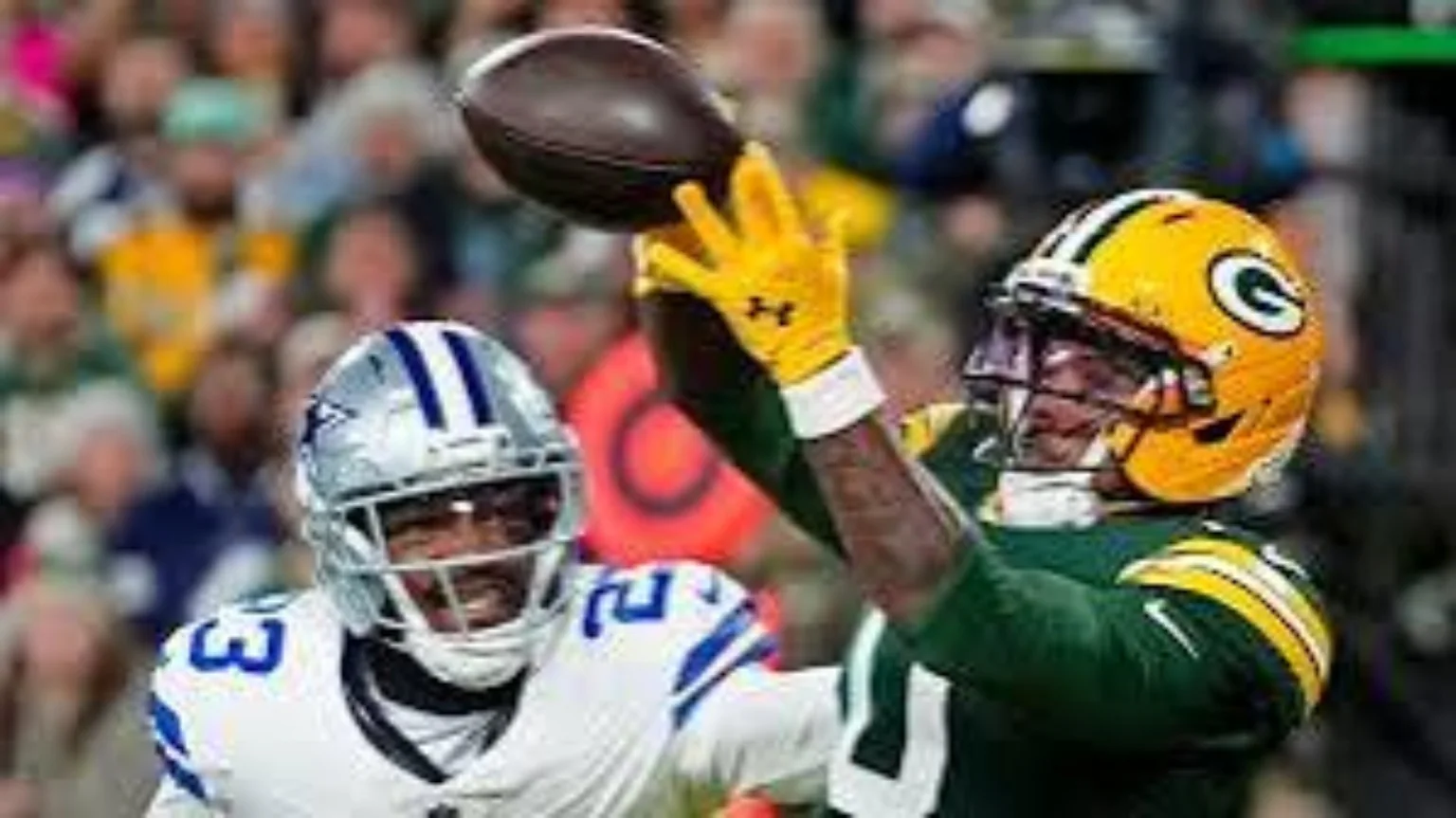
Jordan Love opened the game with the kind of possession Dallas spent the entire night trying to manufacture: fourteen plays, ninety yards, six and a half minutes, four third-down conversions and seven points. Christian Watson split open the middle for 27 yards on third-and-13. Matthew Golden attacked DaRon Bland down the sideline for 37. Pierre Strong Jr. turned a third-and-13 checkdown into a 14-yard conversion. And when Dallas finally got Green Bay into third-and-six near the end zone, Love put a nine-yard touchdown throw on Golden. This was more than an efficient script. It was Green Bay announcing that Dallas would have to win multiple downs to get off the field—and then watching Dallas fail the assignment four times on the first possession.
That sequence says plenty about the Cowboys defense, too. Dallas entered the night under scrutiny for its third-down coverage and its inability to consistently disrupt quarterbacks. The Packers did not need to break one spectacular 70-yard play. They repeatedly survived disadvantageous down-and-distance, used Watson's intermediate burst to move defenders and trusted Love to identify the answer. A team with Dallas's offensive weapons cannot keep asking its defense to survive long, clean opponent drives while its own possessions end in three-and-outs and mistakes.
02 / DALLAS GOT ITS OPENING. THEN THE RED ZONE TURNED INTO A TRAP.
Green Bay was not mistake-free. Dee Winters intercepted Love late in the first quarter, giving Dallas the ball on the Packers' side of the field. That should have been the moment the Cowboys settled down. CeeDee Lamb helped move the offense inside the 20, but an A-gap blitz brought Zaire Franklin through untouched to hit Prescott and force an incompletion. On the next snap, Evan Williams read the throw intended for Lamb and intercepted it. Dallas took a gift of field position and handed it straight back. That is the difference between a team capable of moving the chains and one capable of cashing in.
The same mistake resurfaced in the second quarter. Dallas found some footing with Javonte Williams on the ground and a 16-yard completion to George Pickens, but a holding penalty erased progress. Then, as Lamb slipped on the route, rookie Brandon Cisse secured Prescott's second interception of the night and returned it deep into Green Bay territory. Lamb's slip matters; not every interception is an identical quarterback error. But the larger pattern cannot be explained away. The Cowboys had two meaningful opportunities in scoring range and left with nothing. One quarterback mistake, one breakdown in spacing or timing, one untimely flag—it all landed on the same scoreboard: zero.
03 / SEVENTEEN TO NOTHING: GREEN BAY'S BEST FOOTBALL WAS SITUATIONAL.
Love's own numbers were hardly flawless, but he managed the decisive possessions with far better command than Dallas. After the first Prescott pick, Green Bay drove far enough for Trey Smack's 25-yard field goal. Watson worked open for a 38-yard gain and Golden nearly added a touchdown before dropping the ball. A possession that could have produced more still produced three. After the Cisse interception, Green Bay converted again, gained help from defensive pass interference, and Love pushed across the goal line on a one-yard keeper with 23 seconds remaining in the half. The Packers had turned Dallas's failures into a 17–0 lead by intermission.
The third-down story extended well beyond the first series. Love trusted Tucker Kraft on a pivotal fourth down, took what the defense gave him and let receivers create separation on routes that demanded quick decisions. Green Bay eventually converted eleven third downs on the night. Its offensive line and running game were not overwhelmingly dominant, but the passing structure kept drives alive. In a week defined by late mistakes around the league, Matt LaFleur's offense was organized enough to keep Dallas chasing the next stop without getting it.
04 / THE SECOND-HALF RESPONSE CAME. THE COUNTERPUNCH DID NOT.
The Cowboys were not completely shut out of the second half. After a Green Bay punt, Prescott found Lamb for 17 yards on a fourth-and-two slant and Javonte Williams eventually powered in from a yard to make it 17–7 with 9:19 left in the third quarter. That was the blueprint Dallas needed from the beginning: use manageable down-and-distance, let Lamb win cleanly at the sticks and involve the running back before the scoreboard forces every snap through the quarterback's arm.
But Green Bay had an answer ready. With the Packers facing fourth down near midfield, Kraft worked across the formation for a 14-yard catch that kept the next drive alive. A near-touchdown throw to Watson fell incomplete, yet Smack's 44-yard field goal still pushed the lead back to thirteen points. Later, Smack added a 29-yarder to make it 23–7. Dallas finally got a six-yard Prescott touchdown throw to Ryan Flournoy in the fourth, but the failed two-point attempt left the final margin at ten. The late score narrowed the result without changing who had dictated the important stretches.
05 / WHY DALLAS'S OFFENSE LOOKED SO BAD.
Start with the imbalance. Prescott threw 54 passes; Williams carried eleven times for 41 yards. Some of that disparity comes from playing from behind, and it would be too simple to pretend Dallas could have solved everything by running into a stacked front. Still, this team has allowed the offensive script to become the same weekly rescue exercise. When the Cowboys get behind schedule, Prescott is expected to throw them out of it. Defenses know the volume is coming, can threaten extra pressure and can crowd the timing of the in-breaking routes Lamb and Pickens need. The result is a quarterback accumulating completions without consistent scoring control.
The details were ugly: first-half penalties that created longer downs, missed assignments versus pressure, interceptions in the scoring area, and a snap that bounced off the motioning Jake Ferguson's hip. The passing game has the names, but it did not have rhythm. George Pickens led Dallas with six catches for 73 yards, while the offense struggled to stack explosive plays without stopping itself. The defense can no longer be treated as Dallas's only problem. Even against a quality opponent, thirteen points and a first-half goose egg are unacceptable for a team carrying Prescott, Lamb and Pickens.
Brian Schottenheimer deserves scrutiny because this goes beyond one quarterback's decisions. What is the base identity when opponents challenge the offensive line and disguise pressure? Why does a talented offense have so little margin for error near the goal line? And how much burden should Prescott carry when the run game has not become a consistent pressure release? The Cowboys' offensive staff acknowledged before this matchup that the group was still searching for an identity. Sunday night did not answer that search—it underlined the urgency of it.
06 / WHY GREEN BAY DESERVES MORE THAN A PASSING COMPLIMENT.
We give Green Bay credit for more than simply taking advantage of Dallas's mistakes. Jonathan Gannon's defense was disciplined enough to punish them: Franklin's pressure influenced the first interception, Williams finished it, and Cisse supplied the second takeaway even with key defenders unavailable. The coverage kept Prescott from repeatedly hitting Dallas's receivers in stride for the kind of chunk gains that change defensive play calls. The Packers forced the Cowboys to earn long drives, then turned those longer drives into opportunities for errors. On the other side, Love gave Golden a productive night and kept Green Bay's offense functional on money downs.
There are still things to clean up. Love completed 23 of 41 throws and was intercepted himself. Golden eclipsed 100 yards but let potential big scores slip away. Green Bay's ground game still has not shown the steady production that would make its offense truly complete; Pierre Strong Jr. gained only 28 yards on eleven carries. And settling for field goals instead of touchdowns can become dangerous when the competition improves. This wasn't a perfect offensive masterpiece. It was a professional win built on defense, third-down survival, opportunistic field position and the patience to protect a lead without panicking.
07 / TWO TEAMS, TWO VERY DIFFERENT DIRECTIONS.
Green Bay is 4–2, and the eye test finally matches a legitimate upward trend. Love has weapons who can stretch the field, Golden is developing into a reliable difference-maker, and the defense is taking the ball away even through injuries. But the Packers' next test is a bigger one: a trip to Detroit in Week 7. That is where a convincing home win over a flawed opponent needs to evolve into division-title-caliber football. We want to see more reliable rushing production, fewer missed scoring chances and the same third-down discipline against another physical NFC team. The record says they're in the race; the next stretch will tell us how dangerous they really are.
Dallas is now 2–4 and its next scheduled game is on the road in Philadelphia on Monday, October 26. That's a division opponent and, more importantly, a game the Cowboys cannot treat like another opportunity to talk about what this offense might become eventually. The NFC East remains unsettled, but an uneven division is not an invitation to waste October. Dallas is losing games in multiple ways: defensive inconsistency in some weeks, turnovers and broken offensive rhythm in this one. An 8–3 finish from here would get the Cowboys to 10–7. With eleven games left, that is possible in arithmetic and demanding in reality. They need sharper protection plans, a viable run-game foundation and a quarterback-receiver operation that stops burning red-zone possessions.
For Prescott, the standard remains high because the talent around him warrants it. We are not confusing two interceptions with a complete indictment of his career, and Lamb's slip contributed to one of them. But the value of veteran quarterback play is supposed to show up when things get complicated—not only when the pocket is clean and the offense is ahead. Dallas needed him and the staff to produce solutions. Green Bay produced more of them.