THE NEW YORK
YEARS.
The homecoming made Melo a bigger star. It also put every flaw, every roster decision and every playoff exit under the brightest possible light.
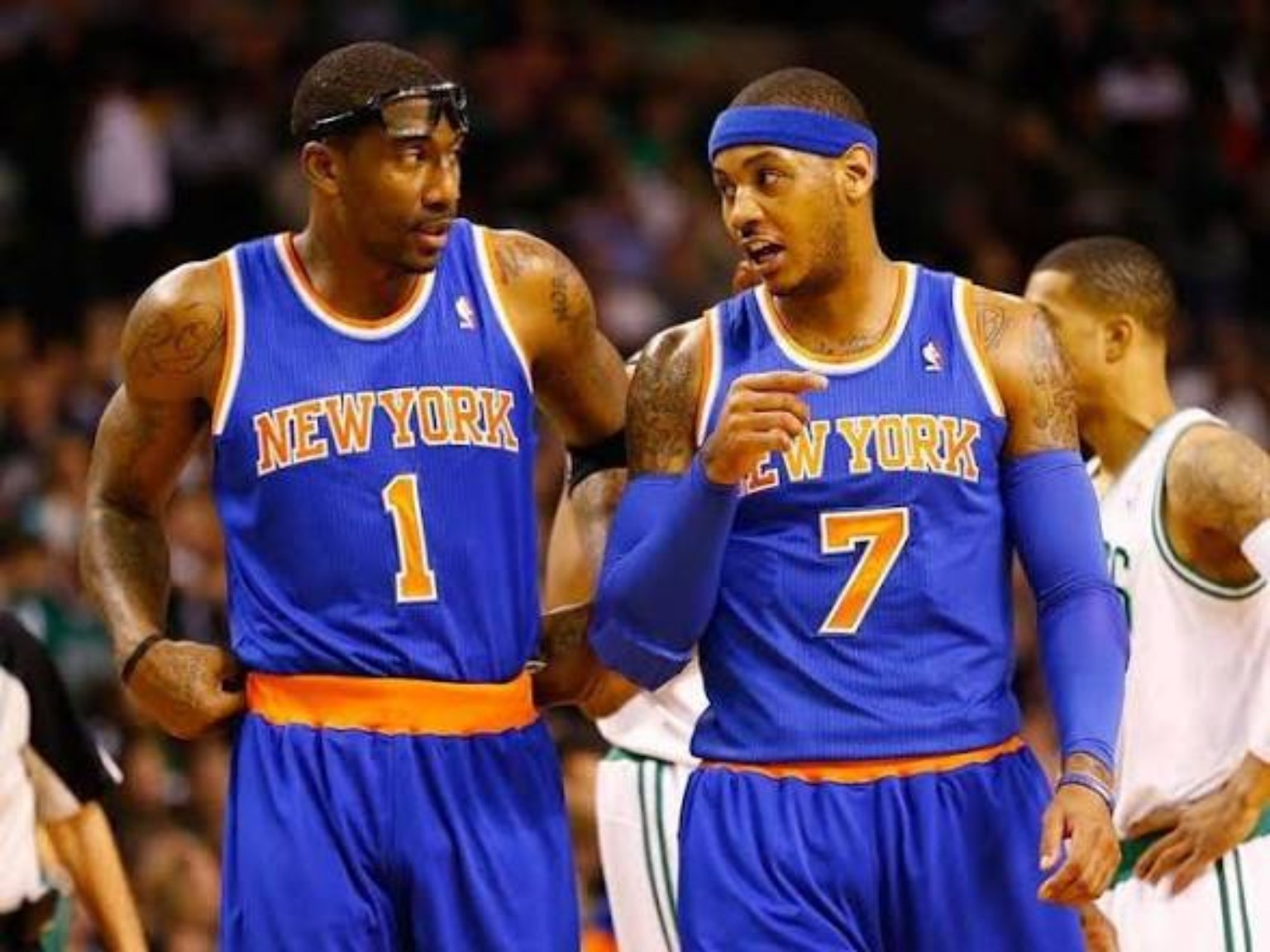
NEW YORK ALREADY HAD MOMENTUM.
Amar'e Stoudemire's first months in New York had already changed the energy around the Knicks. His run of eight straight 30-point games made the Garden feel relevant again.
Then Melo arrived at 26 — back home, entering his prime and carrying the expectations of a city that treats every basketball storyline like front-page news.
4DK viewed the pairing as a real playoff foundation, not a team ready to jump Miami overnight. A top-four type of East team felt realistic if both stars stayed healthy.
AMAR’E’S BODY CHANGED THE WHOLE PLAN.
The first version of the Melo-Amar'e vision never got enough healthy seasons to become what it was supposed to be. By 2013, Stoudemire was coming off the bench and Carmelo had become the unquestioned superstar of the franchise.
That matters when people evaluate what the partnership accomplished. The Knicks did not get years of prime Melo and prime Amar'e together. They got a shrinking overlap, then Melo carrying a larger and larger share of the burden.
A GREAT MOMENT WAS NOT NECESSARILY A LONG-TERM FIT.
Linsanity was a moment — one of the loudest short bursts the Garden has seen. Jeremy Lin became a household name in a matter of weeks.
But 4DK never saw the Melo-Lin basketball fit as something built to last. The media narrative around the story became almost as big as the basketball itself, and the locker-room dynamic was never going to stay simple.
The irony is that the best Knicks team of the Melo era came the next season, after Lin was gone.
2013 ARRIVED — THEN THE WINDOW CLOSED FAST.
The 2012–13 Knicks had the right kind of support: J.R. Smith scoring off the bench, Raymond Felton back at point guard, Jason Kidd adding steadiness, Tyson Chandler anchoring the defense and Iman Shumpert bringing perimeter toughness.
They won 54 games and earned the No. 2 seed. Then Indiana's size, Roy Hibbert's rim protection, Paul George's defense and a physical Pacers backcourt turned into a brutal matchup.
What came next is what makes the era frustrating. J.R. slipped, Felton was not the same, Chandler aged, Amar'e was a shell of his former self, and the Bargnani trade became another symbol of poor roster management. The promising start peaked in Year 3 and then fell off almost immediately.