4DA KULTURE
4DK CLASSICS · VOLUME II · ISSUE 09 · OCTOBER 2026
THE ALBUM FILES · ISSUE 09 · THE WEST

TO PIMP A BUTTERFLY.

Eleven years later, Kendrick Lamar’s fearless collision of jazz, funk, hip-hop and Black American life remains a masterpiece that refused to play by anybody else’s rules.

KENDRICK LAMAR · 201516 TRACKS · 78 MINUTES9.8/10 · MASTERPIECE
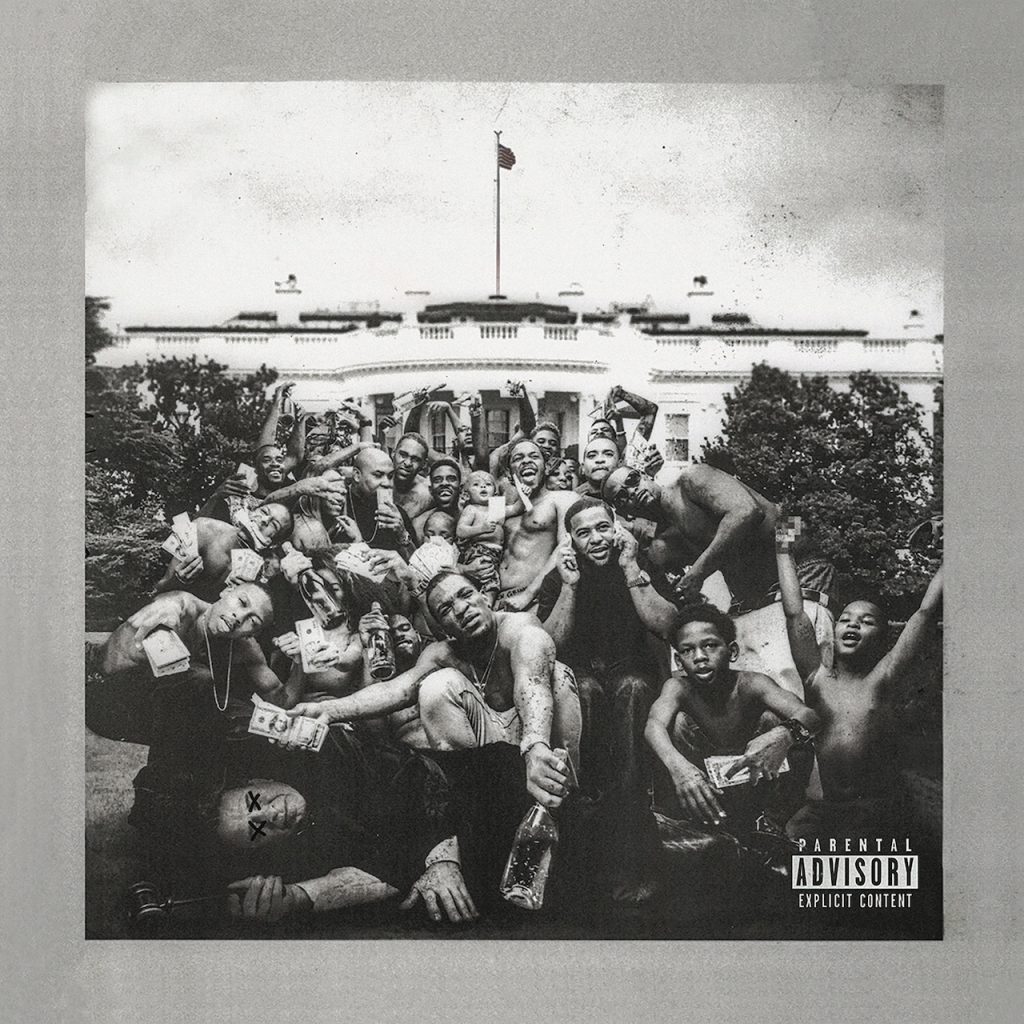
Official original black-and-white cover artwork for Kendrick Lamar's 2015 album To Pimp a ButterflyTHE 4DK VERDICT: 9.8/10
2015THE YEAR
16TRACKS ANALYZED
74DK PICKS
9.8/10MASTERPIECE
THE DEFINITIVE 4DK RETROSPECTIVE · 11 YEARS LATER

AFTER GOOD KID, WHAT NEXT?

Following good kid, m.A.A.d city, Kendrick Lamar could have taken the obvious route: bigger hooks, a cleaner radio formula, famous producers lined up for blockbuster singles. By 2015, he had already proven he could construct a deeply personal, cinematic rap album that connected outside of Compton. The question was whether he would repeat the blueprint or risk alienating the audience he had just won.

He took the risk. To Pimp a Butterfly is not a conventional victory lap. It is the sound of an artist examining the forces that helped lift him up while wondering what those same forces might take from him. Fame and exploitation. Community and survivor’s guilt. Black pride and the fractures inside Black life. Depression, faith, temptation, and the uneasy weight of being called a leader.

Eleven years later, that ambition still feels startling. Some tracks make you dance before revealing what they are really saying. Others barely pretend to be comfortable. And the sequencing makes nearly every detour matter. We gave this project 9.8/10 not because every track works as a traditional single, but because the album works as one of hip-hop’s most fully realized statements.

2012–2015: FROM THE GOOD KID TO THE VOICE OF A GENERATION

Look at where Kendrick stood between 2012 and 2015. good kid, m.A.A.d city had taken a rapper from Compton's TDE movement and placed him at the center of the national conversation. It was a vivid, accessible coming-of-age movie in album form: the family voicemails, the pressure of neighborhood life, the temptations of the street, the spiritual reckoning, the hits that brought in casual listeners without abandoning the story. That album gave Kendrick something most MCs spend an entire career chasing — a classic, a committed fan base, credibility with the purists and the expectation that his next move would define an era.

The expectation was bigger than just selling records. His competitive 2013 Control verse had helped reignite the debate about who could claim the throne. On television, on festival stages and in barbershop arguments, Kendrick was being discussed with the established elites rather than as somebody waiting for his turn. Meanwhile, hip-hop's commercial climate rewarded streamlined singles, melody-driven crossover records and carefully calibrated features. Kendrick had every reason to polish the winning formula; instead, he brought the musicians into the room and started pulling his own acclaim apart.

That choice becomes even more remarkable when we consider the shift in perspective after Kendrick traveled to South Africa in 2014 and visited places connected with the history of apartheid, including Robben Island. That experience shaped the record's questions about freedom, historical memory, identity and how much of the world he'd never been taught to see. What began as the challenge of following a classic became a much larger problem: how could he celebrate making it out of Compton without letting success detach him from the people, history and responsibility that made his voice matter?

In our view, this is the turning point between Kendrick the exceptional storyteller and Kendrick the fully realized album architect. He still tells stories, but the stories talk back to each other. He can be boastful in one scene and disgusted with himself in the next, spiritually searching after sounding certain, righteously angry yet unwilling to exempt himself from criticism. The record doesn't offer easy answers because its narrator is learning in public. That's why it has the lasting power of a great novel and the physical impact of a great rap album.

THE SOUND: A WHOLE BAND, NOT A CHECKLIST

Flying Lotus, Thundercat, Terrace Martin, Sounwave, Kamasi Washington, Robert Glasper and other musicians helped create a musical environment that feels alive. Horns push into one another. Basslines twist around the drums. Jazz phrasing crashes into G-funk and P-Funk. Soul harmonies interrupt Kendrick’s tightest rapping. The record’s palette can be gorgeous, abrasive, playful or exhausting, sometimes inside the same song.

It draws from the Black musical tradition without treating that tradition like a museum exhibit. George Clinton’s presence on “Wesley’s Theory” is a bridge between eras. The Knxwledge pocket on “Momma” gives the record underground texture. Ronald Isley’s contribution to “How Much a Dollar Cost” brings its moral reckoning into focus. Kendrick invited players with their own musical identities to help him make something that could not be reduced to a playlist of fashionable beats.

AN ENTIRE MUSICAL FAMILY TREE IN THE STUDIO

This wasn't simply a matter of putting a saxophone over programmed drums and calling it jazz rap. Listen to the way the musicians leave space for one another, how a bass note can be the hook, how horns feel like an argument in the room instead of a decorative flourish. The arrangements often shift under Kendrick's feet. He's expected to respond like a live frontman — sometimes improvisational, sometimes explosive, sometimes barely keeping his composure. The result is a living organism where the beat is allowed to challenge the rapper rather than merely flatter him.

Sounwave remained a connective force across sessions; Terrace Martin brought years of jazz musicianship and Los Angeles musical knowledge; Thundercat supplied basslines with personality; Flying Lotus opened the record's more disorienting possibilities. Kamasi Washington and Robert Glasper belonged to the larger creative circle helping turn this into a conversation between hip-hop and the Black music that came before it. Kendrick didn't abandon his roots for a prestige sound. He used a broader palette to reveal how much his roots already contained — Parliament-Funkadelic, soul, jazz, spoken word, dance music and the G-funk inheritance of California.

That's also why the album can be deliberately difficult. 'u' is supposed to lurch and hurt. 'For Free?' is supposed to race ahead of the listener. 'For Sale?' is supposed to seduce. We don't mistake those uncomfortable choices for poor execution: they are production decisions that serve the writing. The listening experience is constructed, not merely sequenced.

THE WEST COAST NEVER LEFT THE ROOM

Let’s get one thing straight: all that jazz experimentation does not mean Kendrick forgot Compton. “King Kunta,” “Hood Politics” and “You Ain’t Gotta Lie” carry California in their rhythmic DNA. When we heard “King Kunta,” our comparison went straight to DJ Quik and Mausberg — that late-’90s, early-2000s pocket where the bass, drums and voice are all part of the same bounce. That resemblance is part of the song’s creative lineage, not an accidental similarity.

The album often sounds like the West Coast talking to its ancestors: funk bands, spoken-word poets, the Isley Brothers, Snoop Dogg, and the memory of 2Pac. It asks what the next generation is supposed to do with all that history. That is a much bigger challenge than simply sounding nostalgic.

And on 'King Kunta,' our original DJ Quik/Mausberg comparison is more than a vibe we happened to hear. Kendrick has discussed Mausberg's DJ Quik-produced 'Get Nekkid' as an influence on that record; Sounwave has described simplifying a more elaborate early arrangement into something nastier and more direct. Kendrick carried the rhythmic memory of Compton into a project that otherwise seemed designed to avoid obvious formulas. That's the genius: the experiment isn't a rejection of Southern California's history. It's a conversation with it.

Put 'King Kunta' beside 'Hood Politics' and 'You Ain't Gotta Lie,' and you can hear three distinct Californias: the swaggering funk anthem, the neighborhood code and the laid-back advice from somebody who's seen what fake confidence can cost. Even the dreamier or jazz-heavy selections live in a geographic tradition where funk, street reportage and complicated Black pride have always overlapped. In this music, Compton is not simply a backdrop for the story. It is the musical accent.

THE ALBUM’S HIDDEN STRUCTURE

Listen to the emotional movement: “Wesley’s Theory” opens with the economics of success; “Institutionalized” brings the past into the room; “These Walls” sounds heavenly while telling a darker story; “u” collapses into self-accusation; “Alright” answers with survival. Lucy’s temptation hangs over “For Sale?,” and the road back to self-understanding winds through “Momma,” “Complexion,” and “i.”

Then there is that recurring poem, arriving in pieces until “Mortal Man” lays its argument out in full. You can enjoy individual records, of course. But this is an album that rewards being played from start to finish, exactly in order. The two interludes are NR as conventional songs for 4DK, but each earns 10/10 for sequencing and musical execution. That distinction is deliberate.

THE POEM, THE PAC CONVERSATION, THE POINT

The poem that gradually comes into focus is the key. Kendrick adds lines of it throughout the record until 'Mortal Man' finally gives us the complete thought and the imagined exchange with 2Pac. That makes the album's ending an interpretive tool for everything before it: a narrator who discovers wealth, temptation, fear, disconnection, humility, self-respect and the demand for leadership has been leaving us breadcrumbs all along.

That structure makes the pairs especially important. 'u' collapses into self-loathing; 'Alright' reaches for hope. 'For Free?' mocks the transactional logic of exploitation; 'For Sale?' makes temptation sound inviting. 'Complexion' and 'The Blacker the Berry' put affirmations of Black identity alongside anger and difficult questions about contradiction. 'i' reaches outward with hard-won self-love; 'Mortal Man' asks what happens when the public decides its heroes are only human. We hear the record less as sixteen isolated songs and more as one argument with sixteen chapters.
OUR MOST-PLAYED · OUR STANDOUTS · OUR PICKS

THE 4DK SEVEN.

Wesley’s TheoryKing KuntaInstitutionalizedThese WallsThe Blacker the BerryYou Ain’t Gotta Lie (Momma Said)Mortal Man

Seven different reasons this album endures: the fearless opening, California funk, institutional memory, soulful perfection, confrontation, hidden-gem replay value and one of the greatest closing statements in Kendrick’s catalog.

COMPLETE 4DK TRACK-BY-TRACK · ALL 16 RECORDS

EVERY TRACK.
EVERY WORD COUNTS.

These are the exact ratings we locked in through the 4DK listening session. The two interludes remain NR as conventional songs, with 10/10 sequencing scores. The overall album grade stays 9.8/10.

01
THE OPENING STATEMENT 4DK PICK ★

Wesley’s Theory

feat. George Clinton & Thundercat
9.4/ 10

Kendrick doesn’t waste a second announcing that this will not be a sequel to good kid, m.A.A.d city. A Boris Gardiner fragment opens the door; then Flying Lotus and Thundercat pull us into a dense P-Funk universe with George Clinton in the building. The bass twists, the arrangement refuses to stay still, and Kendrick sounds ready to attack a whole new canvas.

The song is catchy enough to move to, but the subject is anything but light: the machinery waiting to profit when a young Black artist finally gets paid. Our first reaction was the same one we had while rating it: the beat and introduction are hard, and the experiment starts immediately. This sets up the butterfly’s central struggle — what fame can give you, and what it can take away.

The title itself is an alarm bell. It's a play on the way a breakout success can be immediately surrounded by people with plans for his money, his image and his future. The narrator imagines what he'll buy and how quickly that wealth might become leverage against him. The track's shifting voices and slippery bassline dramatize that loss of control: just when one groove feels settled, something else is demanding attention. Even before we reach 'King Kunta,' Kendrick has established the album's central tension between the artist and the system around him.

The detail we want readers to hear is the production philosophy. Flying Lotus and Thundercat don't supply a neat backdrop; they create a fast-moving musical world that Kendrick must navigate. George Clinton's presence isn't a cameo tossed on a single to impress record collectors — it connects a 2015 rapper to a funk lineage that helped define Black musical imagination. Our 9.4 isn't a knock on the experiment. It's recognition that this is a brilliant, hard-hitting opening whose importance becomes even clearer when you finish the album and return to track one.

02
THE JAZZ POETRY BREAK

For Free? (Interlude)

NR10/10 SEQUENCING

Treating this like a normal single misses the point. Robert Glasper’s restless piano and the band’s stop-start intensity make the arrangement feel like a spoken-word session that escaped the stage and went straight into the studio. Kendrick’s phrasing is frantic, theatrical, deliberately excessive — and completely in control.

We are leaving it not rated as a conventional song, while giving the musical execution and placement a perfect 10. Following “Wesley’s Theory,” it expands the album’s argument about exploitation and worth. The poetry, the jazz tribute, the raw performance energy: this is the kind of interlude that makes the next track hit harder.

The rapid-fire argument is partly about the narrator's intimate relationship, but the language of being bought, valued and entitled to labor clearly reaches beyond one couple. Money becomes power, and power becomes a claim on another person's body, talent and time. That's a sharp second chapter after a song about the financial machinery of success. Kendrick is taking the language of negotiation and turning it into performance art, with a pianist and ensemble that refuse to stand still long enough for easy listening.

It's important to respect what the track is trying to be. We aren't forcing a conventional hook-and-verses rating onto a miniature piece of jazz theater. The way the horns and piano collide with Kendrick's phrasing is the point; the abrupt theatricality opens a different door into the concept. For the published 4DK grade, this stays NR as a standalone song and a full 10/10 for its musical execution and placement.

03
THE WEST COAST ANTHEM 4DK PICK ★

King Kunta

9.6/ 10

Here comes the bassline, the drums and the attitude. Sounwave and the musicians strip the funk down to something direct and nasty, while Kendrick steps into the song with his chest out. It’s one of the album’s most immediate records, but the swagger comes with a larger argument about who gets to hold power — and who tries to cut that power down.

Our 4DK comparison was to an updated DJ Quik and Mausberg record, and the connection runs deeper than a casual resemblance: that era of California funk helped shape the track’s direction. It sounds like a lineage being passed forward, not nostalgia for nostalgia’s sake. An undeniable single that still feels tied to the larger concept.

'King Kunta' is also Kendrick's answer to the question of whether the new musical direction can still produce an actual anthem. It can. The bassline, handclaps and sharp changes create that drive-through-Compton energy, while the title invokes a figure associated with resistance and the complicated relationship between Black strength and exploitation. He sounds untouchable in one breath and fully aware of the forces trying to diminish him in the next. You don't have to decode every line to feel the record, and that's a major part of its greatness.

Our favorite detail is the bridge between generations. When we compared this record to DJ Quik and Mausberg, we were hearing the way that era's funk and streetwise confidence reappears in a modern setting. Kendrick himself has credited Mausberg's 'Get Nekkid' as an influence. This wasn't an accidental callback; it's proof the experiment was rooted in local memory. 9.6/10: one of the album's hardest singles, and the moment the whole project lets loose without sacrificing its point.

04
THE MIND NEVER MOVED OUT 4DK PICK ★

Institutionalized

feat. Bilal, Anna Wise & Snoop Dogg
9.9/ 10

One of the strongest songs Kendrick has ever written. The beat is gorgeous, the bars are surgically precise, and the shifting voices make the story move like a movie. Bilal’s soulful presence gives the hook exactly the right atmosphere; Anna Wise and Snoop Dogg add texture without pulling attention away from the story.

Kendrick examines the feeling of stepping into elite rooms while still carrying the conditioning of where you came from. Material success doesn’t erase fear, loyalty conflicts, pride or survival instincts. That truth resonates beyond rap. For us, this is a personal favorite and the first near-perfect score of the record. It’s an extraordinary combination of message and musicality.

Here Kendrick places people from the world he came from inside environments where money is no longer the immediate problem, only to discover that old instincts don't vanish when the address changes. It's an uncomfortable premise, because the story refuses to reduce anyone to either a victim or a villain. Fear, survival, entitlement and disorientation all exist at once. Kendrick knows enough to describe the contradiction, but not enough to fix it with a speech. That honesty gives the verses their gravity.

Bilal's voice is crucial to the emotional temperature: warm, intimate, almost consoling against writing that can turn severe without warning. The supporting vocals and Snoop's presence make the arrangement feel connected to generations of West Coast storytelling. This was one of our strongest picks from the beginning — not simply for the subject matter, but because the bars and beat are perfectly matched. At 9.9, it's a near-perfect deep cut and one of the clearest examples of Kendrick being fully in his bag.

05
THE PERFECT BLEND 4DK PICK ★

These Walls

feat. Bilal, Anna Wise & Thundercat
10.0/ 10

This one is flawless to our ears. The warm bass, layered harmonies and irresistible groove make it one of the smoothest Kendrick records ever, and its placement immediately after “Institutionalized” is beautiful. Bilal, Anna Wise and Thundercat help create a silky musical surface that almost convinces you you’re hearing a carefree love song.

But then the writing pulls you deeper into the consequences of intimacy, incarceration, revenge and guilt. The sweetness of the production intensifies the darkness rather than hiding it. It’s easy to enjoy casually and rewarding to study closely. A banger, a perfect spot on the album, and our first 10/10.

The title's metaphor is doing several jobs at once: walls of intimacy, walls of prison, the emotional compartments people construct and the boundaries between action and consequence. That complexity sits underneath music that could pass for pure late-night soul. Kendrick's trick is to make the story feel pleasurable until the moral implications sharpen. A lesser writer might make the beat somber to signal the darkness. He trusts the audience to hear the contradiction for itself.

Listen again after 'Institutionalized.' The two records share an interest in how environments shape choices, but 'These Walls' brings the consequences down to a human level. Its sweet surface becomes inseparable from the bitter history inside the verses. Bilal, Anna Wise and Thundercat make the record breathe; Kendrick uses that breathing room for devastating narrative detail. 10/10 here isn't nostalgia or charity — the songwriting, groove, sequencing and replay value all earn it.

06
A BREAKDOWN ON RECORD

u

9.5/ 10

We are not going to pretend this clicked immediately. The opening half is chaotic, his delivery almost unbearable by design, and the song can be difficult to sit through until you understand why it sounds that way. Kendrick is performing a breakdown, not polishing away its rough edges.

Then comes the switch. The more intimate second half lets the self-accusations settle into focus, and the arrangement makes the pain easier to follow without making it less intense. Coming after the lushness of “These Walls,” the transition suddenly feels essential. It took repeated listens for us to unlock it — and that’s part of the genius.

This is the track that shows why To Pimp a Butterfly can be emotionally taxing by design. The opening vocals break into agitation instead of finding a clean pocket; the voice cracks as self-accusation builds. It's supposed to sound like a man losing the ability to maintain the image he's presenting to the world. Where the opening half can feel erratic on first listen, the second half's altered setting and looser pace force us to sit with the shame and regret behind that performance.

We want to keep our original reaction in this review because it matters: this took time to grow on us. We needed repeat listens and the perspective of the beat switch to hear the architecture beneath the chaos. But the final arrangement makes the disorder make sense. That's the kind of risk a 9.8 album can take, and it's why 9.5 is a strong score rather than a compromise. This is genius that doesn't make being heard easy.

07
HOPE WITH THE WORLD ON ITS SHOULDERS

Alright

9.7/ 10

After “u” turns inward toward despair, “Alright” pushes outward toward survival. The Pharrell and Sounwave production is lively and propulsive, giving Kendrick a sound that can command a festival crowd without disconnecting from the album’s jazz and funk language. The verses remain sharp even as the hook lifts everything around them.

The record became a powerful expression of hope during a period of protest against racial injustice. That cultural role is real, but so is the music itself: one of Kendrick’s defining classics, a record that resonates in a real way. The move from “u” to “Alright” may be the record’s most emotionally important two-song sequence.

The impact begins with its placement. Coming after Kendrick's interior collapse, the music has to perform a recovery without pretending the causes of his pain have disappeared. The drums, bright instrumental stabs and hook give the song movement; the verses keep pain, temptation and social pressures in view. This isn't a fantasy that everything is fine. It's an insistence that survival is possible in a world determined to test it.

Then the song leaves the album and enters public life. In the 2015 protest climate, crowds used 'Alright' as a declaration of endurance in the face of police violence and systemic injustice. That doesn't erase its personal dimension; it shows how a deeply individual performance can become communal language. Our 9.7 accounts for both sides: the undeniable record you can play loudly and the historically resonant statement that people carried beyond speakers and stages.

08
LUCY ENTERS THE ROOM

For Sale? (Interlude)

NR10/10 SEQUENCING

This interlude floats instead of charges. The voices are feather-light, the arrangement is psychedelic and the whole atmosphere feels seductively unreal. We hear some André 3000 and The Love Below-era experimentation in that willingness to blur soul, theater and dream logic.

But the beauty has a purpose: Lucy represents temptation, the forces trying to lure Kendrick toward a different understanding of success. The lushness is the bait. Like “For Free?,” we are leaving the interlude NR as a standard song and handing out a 10/10 for its concept, sound and sequencing.

Lucy's invitation isn't delivered like a frightening monster. That's precisely the trick. The soft harmonies and psychedelic textures make temptation attractive, almost nurturing. As Kendrick moves through the record's world, the cost of success increasingly appears not as an obvious threat but as a comforting promise: take this deal, take this shortcut, become who the machine wants. The arrangement itself performs the temptation before the words explain it.

Our comparison to André 3000's more adventurous material comes from that sense of an artist refusing the usual boundaries between song, skit, theater and dream sequence. It's not a claim that he produced or performed here; it's a lineage of fearless formal experimentation we can hear. Just like 'For Free?,' this remains NR as a standalone song, with a 10/10 sequencing and concept grade. Take it away and the next stretch of Kendrick's self-examination loses a crucial turn.

09
WHAT SUCCESS DOESN’T TEACH YOU

Momma

9.3/ 10

“Momma” eases into a dusty pocket, with Knxwledge’s feel for off-center rhythm setting a different pace. The groove is understated, almost conversational, allowing Kendrick to unravel ideas rather than hammer them home. It sounds grounded after the dreamscape of “For Sale?”

The message is all about the difference between accumulating knowledge and understanding where you belong. Reconnecting with Africa complicates the narrator’s certainty: he can know plenty about fame and still have more to discover about his identity and heritage. A soulful, introspective track that rewards careful listening. We landed at a strong 9.3/10.

One of the album's most meaningful shifts happens here: for much of the song, the narrator lists knowledge almost as an accomplishment, then encounters a perspective that exposes the limits of what he knows. Returning to Africa doesn't automatically grant enlightenment. Instead, it highlights what fame can obscure and what distance from home can distort. The title works emotionally as well as literally: this is a search for origins, but also for the humility to keep learning.

Musically, Knxwledge's dusty, off-center pocket is a big part of the song's identity. The beat doesn't chase the grandeur of the album's most dramatic pieces. It keeps the story close to the ground. At 9.3, this is one of our comparatively lower-rated full songs, yet its conceptual importance is enormous. When the album is played straight through, 'Momma' helps connect the seductive abstraction of 'For Sale?' with the very real structures of neighborhood and industry power that come next.

10
COMPTON POLITICS, INDUSTRY POLITICS

Hood Politics

9.8/ 10

This is a record Southern California listeners can feel in their bones. Kendrick shifts from a loose opening into a hard, bouncing instrumental and starts talking the language of neighborhoods, affiliations, reputations and loyalty. The hook is playful, but nothing about the underlying power dynamics is simple.

The genius is how he connects hood politics to the politics of rap — the alliances and betrayals can look familiar even when the stakes and settings change. We hear a straight-up West Coast banger here, not a dry social-science lesson. The beat hits, the bars land and the cultural specificity gives it an extra layer for anyone who knows Los Angeles.

That neighborhood vocabulary is not decoration. The song is interested in how loyalties get negotiated, how reputations travel, how somebody can rise into new environments and still be evaluated according to an old local code. Then Kendrick applies the same logic to rap's social hierarchy — crews, rivals, public statements, power, alliances. It's funny in places, pointed in others and extremely specific to California without requiring every listener to have grown up there.

We have to preserve our actual reaction: if you grew up in Cali or spent time in Los Angeles, this hits a different nerve. The hook is a banger; the beat has that bounce; the perspective comes from somebody who knows the rules he's describing. The song even helps rescue the record from becoming too abstract: after big philosophical questions, here's a fully lived-in voice with local specificity. 9.8/10 — personal history, music-industry critique and pure replay value all in one record.

11
THE PRICE OF PRIDE

How Much a Dollar Cost

feat. James Fauntleroy & Ronald Isley
9.8/ 10

A short encounter between Kendrick and a man asking for money becomes an examination of compassion, arrogance and spirituality. The storytelling works because Kendrick initially allows the narrator to sound justified. He’s protective of what he earned. He questions the stranger’s motives. We are invited to sit with that discomfort.

Then the final revelation changes the meaning of the encounter entirely. Ronald Isley’s voice and the restrained, almost sacred feeling of the music give the conclusion extraordinary weight. No giant chorus is needed when the story itself delivers the blow. This is master-level writing — a 9.8 that earns every decimal.

The structure is why the storytelling lands so hard. Kendrick doesn't introduce himself as an obvious villain. His distrust feels plausible; his reasoning is familiar; he presents the request as something he has a right to dismiss. The song patiently lets that self-justification develop until the final answer reveals a spiritual dimension that was present all along. It's a reminder that storytelling can be a form of moral confrontation without surrendering complexity.

The low-key arrangement matters as much as the twist. Ronald Isley's presence gives the piece a soulful, almost sacred quality, while James Fauntleroy adds to its mournful atmosphere. Nothing is overproduced to distract from the exchange. At 9.8, we hear this as one of Kendrick's finest short-story performances: a small situation with enormous implications, and a lesson that the listener has to discover at the same moment as the narrator.

12
MORE THAN SKIN-DEEP

Complexion (A Zulu Love)

feat. Rapsody
8.9/ 10

Kendrick addresses colorism and inherited ideas about beauty over a soulful groove, and Rapsody meets the moment with a verse that expands the conversation rather than repeating his perspective. The softness of the instrumental might make this one easy to overlook the first few times.

We needed repeated listens to appreciate how the theme connects to the wider album. It’s thoughtful, sometimes subtle, and less instantly gripping than the surrounding heavyweight songs — which is why we landed at 8.9/10, not because the message lacks force. Huge respect to Rapsody for bringing such a strong presence to the record.

Placed here, 'Complexion' also widens the lens. The album has spent considerable time with Kendrick's individual anxieties; now the writing asks how inherited hierarchies of skin tone can damage people who are otherwise facing the same struggles. The record doesn't solve a centuries-old problem. It makes colorism visible inside an album already concerned with what freedom, identity and collective dignity might mean.

Rapsody is not on the song merely to confirm Kendrick's viewpoint. Her contribution brings a different voice and gives the discussion texture. The track isn't built for the instant shock of 'The Blacker the Berry,' which follows it, and our 8.9 reflects that it took us more than a few plays to appreciate fully. That doesn't diminish its place here: the musical restraint and the contrast with the next track make its position in the sequence essential. Shoutout to Rapsody for rising to the occasion.

13
RAGE, IDENTITY & CONTRADICTION 4DK PICK ★

The Blacker the Berry

9.7/ 10

Kendrick attacks this record with ferocity. The drums land like a warning, the vocal performance is relentless and the song refuses to make its confrontations comfortable. This is one of the project’s hardest songs sonically, and one of its most politically charged lyrically.

It speaks directly to racism and the contradictions Kendrick sees around and within himself. That final turn is meant to provoke, not neatly equate different forms of violence or excuse systemic injustice. Following “Complexion,” its anger hits with even greater force. We gave it 9.7 because the writing is powerful and the record is a certified banger.

Kendrick chooses force because he wants the track to feel like an argument nobody can politely walk away from. The hook and verses push racial caricatures, pride and fury against a punishing instrumental. But the record is deliberately uncomfortable in another direction, too: its closing perspective forces Kendrick's anger to turn inward. The point is not that personal harm and state violence should be treated as equivalent; the song dramatizes an unresolved contradiction inside someone trying to be honest about his own community.

We also need to say plainly: this record bangs. Its confrontational ideas are inseparable from the physical impact of that production and his aggressive performance. The sequencing after 'Complexion' makes the contrast sharper — affirmation and fury, healing and accusation, existing in the same project. This one was an immediate 4DK pick and earns 9.7/10 because the music hits as hard as the ideas.

14
THE HIDDEN WEST COAST GEM 4DK PICK ★

You Ain’t Gotta Lie (Momma Said)

9.4/ 10

Give this one its flowers. The beat has a warm, rolling bounce, Kendrick sounds comfortable in the pocket, and the whole record carries the easygoing feel of great California music. It’s the kind of deep cut that can slip past listeners drawn to the album’s louder, more celebrated moments.

But its advice is essential: stop performing somebody else’s version of yourself. After an album full of temptation, identity crises and the pressure of expectations, that message hits with the wisdom of somebody bringing you back to earth. One of our seven 4DK Picks and a 9.4/10 hidden gem.

There's a real difference between confidence and performance, and Kendrick lets the song's relaxed groove underline it. After several of the album's heaviest confrontations, this sounds like somebody from home cutting through the noise with practical wisdom. You don't need to exaggerate your success, change your voice or invent a persona to be accepted. That advice can sound simple, but within an album about an artist being pulled toward different versions of himself, it's a necessary correction.

It's also the kind of cut that illustrates why ranking songs purely by obvious hits misses a lot of great album music. The bass and drums settle into an effortless California pocket, and Kendrick never has to force the vocal to carry it. 9.4/10, hidden gem status. This was one of our personal favorites from the start because the message and the beat can both stand on their own, and because the song lets the listener exhale without stepping outside the album's story.

15
THE ANSWER TO “u”

i

8.7/ 10

The Isley Brothers foundation gives “i” a celebratory, uplifting spirit. The album version bends that energy into a staged live setting, complete with crowd sounds, interruption and Kendrick stepping forward to address the room. It sounds less like a finished pop single and more like a communal moment unfolding in real time.

As a piece of the album, that choice matters: where “u” tore the narrator apart, “i” reaches for self-love. We appreciate the intention and the musicianship, even if it isn’t one of the tracks we return to most. 8.7/10 for the song; an even bigger place in the album’s architecture.

The contrast with 'u' is one of the record's clearest ideas. Earlier, Kendrick had collapsed under self-hatred; now he tries to voice the opposite, with an Isley Brothers-derived groove that connects self-love to another generation of Black soul music. But the album version deliberately refuses to be a simple radio replay. The simulated live crowd, the interruption and the extended address make this less a self-contained single than a staged community encounter.

That structural ambition deserves respect even when the record isn't one we revisit as often as the harder album cuts. Our 8.7 is intentional: it isn't the peak of the album for us sonically, but its emotional placement is indispensable. By the time the song finishes, Kendrick has done more than talk himself back toward hope. He's prepared the ground for the question 'Mortal Man' will ask: what does a community do with somebody it decides to follow?

16
THE ULTIMATE CLOSING ARGUMENT 4DK PICK ★

Mortal Man

10.0/ 10

Twelve minutes, and none of the ambition feels wasted. Over an expansive, soulful arrangement Kendrick asks what loyalty really means when an artist, a leader or a public figure falls short of the image people built around them. He questions fame, responsibility, trust, betrayal and the almost impossible expectations placed on people asked to represent something larger than themselves.

Then the imagined conversation with 2Pac, constructed from archival interview audio, makes the album’s conversation across generations explicit. It’s an audacious creative decision, and it lands because the themes have been building since track one. The poem threading through the record finally comes into view. Our strongest comparison is to Kendrick’s early The Heart Parts 1–3 — except “Mortal Man” feels like the extended, fully realized statement those intimate reflections were leading toward. The song, the sequence, the Pac exchange: 10/10, genius from start to finish.

The real achievement is that the conclusion doesn't simply replay a summary of themes. Kendrick asks how much public support is worth once an artist becomes difficult, contradictory or disappointing. The record questions the habit of turning Black public figures into symbols too large for any human to carry. Its extended runtime lets those questions breathe, and the performance feels conversational rather than engineered for a single. That's where we hear a clear connection to The Heart Parts 1–3: Kendrick confronting the audience and himself without hiding behind a radio format.

Then the edited archival 2Pac interview enters the room. This is not a newly recorded meeting between the two artists; Kendrick assembled an imagined exchange from Pac's recorded words. That distinction makes it more powerful, not less. The questions reach from one California generation to the next, with the same anxieties about representation, struggle and whether the people will still listen. The long poem, slowly revealed throughout the album, finally resolves; the silence at the end is a deliberate part of the statement. 10/10: the song, the construction, the Pac conversation and that extended Heart-series feeling all meet at the perfect ending.

4DK BONUS FILE · THE 2016 COMPANION RECORD

THE BUTTERFLY'S UNFINISHED CHAPTERS.

The eight-track untitled unmastered. isn't a replacement or alternate running order for To Pimp a Butterfly. It's a raw window into the same creative world — and one of the best ways to hear how far Kendrick was willing to push the experiment.

KENDRICK LAMARuntitled
unmastered.
2016 · 8 recordings · THE SESSIONS CONTINUE

NOT A REISSUE. THE CREATIVE LAB LEFT OPEN.

When untitled unmastered. arrived in March 2016, Kendrick wasn't repackaging his classic with bonus tracks and claiming it was a new definitive edition. He released eight pieces of unfinished material connected to the sessions that produced To Pimp a Butterfly. He deliberately left their titles as numbers and recording dates. The roughness is part of the appeal: these ideas still have the urgency of music being shaped rather than the finality of an album whose narrative is already locked.

That distinction makes it a fascinating companion. To Pimp a Butterfly gives us sixteen chapters organized around a developing poem, a reckoning with success and a closing conversation with 2Pac. untitled unmastered. lets us hear more of the paths Kendrick and his collaborators explored: apocalyptic imagery, loose studio energy, social commentary, rhythm experiments, and flashes of soul and funk that could have fit into the same universe without necessarily belonging in the final sequence.

THE RECORDS THAT EXPAND THE WORLD

“untitled 02” is one of the clearest examples of how many voices Kendrick could fit inside one performance, swinging between spiritual anxiety, money talk and knotty rhythmic changes. “untitled 03” continues the conversation about race, economics and the different ways people are told to understand their value; Kendrick had performed an iteration of it on television before the companion project appeared. These aren't polished radio singles. They're concept-heavy sketches with enough musical life to stand alone.

“untitled 05” is especially rewarding for listeners who love the denser jazz side of Butterfly: the restless ensemble, Thundercat's bass presence, additional voices and a mood that refuses to settle. Pieces of it entered Kendrick's 2016 Grammy performance. “untitled 06” moves in a warmer soul direction, with CeeLo Green's vocal presence and a different kind of musical ease. The variety is proof that the band's approach was never restricted to one texture.

Then “untitled 07” stretches across distinct sections, from the insistent “levitate” passage to raw studio material. It's an interesting reminder that some of the best creative choices arrive before a track is completely cleaned up. And “untitled 08” brings back the lively funk and street-level momentum that made songs such as “King Kunta” so replayable — Kendrick had performed it in a different setting before it was officially released here.

WHY ITS EXISTENCE CHANGES HOW WE HEAR THE MASTERPIECE

For us, the companion record makes To Pimp a Butterfly look even more intentional. There was enough music in that creative period to make a second project, yet the original sixteen-track sequence feels precisely chosen. The unfinished pieces demonstrate the sheer range of possibilities the team was considering; the classic album demonstrates the discipline it took to commit to one larger argument.

We wouldn't call untitled unmastered. “To Pimp a Butterfly Part Two,” and we wouldn't pretend these eight songs were designed to replace the finished album's material. We'd call it the studio door left open. If the official album is the feature film, this is the collection of compelling scenes, musical experiments and alternate roads that shows you how much work went into making that movie. You appreciate both more after hearing them together.

THE IMPACT · THE INFLUENCE · THE ELEVEN-YEAR TEST

MORE THAN A RAP ALBUM.

In 2015, the easy move was to build another blockbuster. Kendrick made something with more brass, more poetry, more unresolved questions and fewer concessions. That decision mattered. It showed that a mainstream rap superstar did not have to choose between mass attention and complete musical ambition.

Its reception proved the work could connect beyond the audience that expected another collection of Compton stories. “Alright” became a real-world protest anthem. The album later won the Grammy for Best Rap Album, and its presence in the Album of the Year conversation underscored how far this particular sound had traveled.

But awards alone cannot explain the legacy. There is a generation of listeners who discovered jazz players, funk innovators and new kinds of rap arrangements because this album opened the door. There is also a generation of artists who saw that an album could carry politics, spirituality, theater and deep self-examination while still being unmistakably hip-hop.

For us, the enduring achievement is how personal the big ideas remain. Kendrick is not floating above the issues he addresses. He implicates himself. He sounds frightened, arrogant, funny, conflicted, inspired, exhausted and hopeful at different points. The contradictions are not a weakness in the concept — they are the concept.

And the ending makes the influence of 2Pac impossible to separate from Kendrick’s own mission. We hear “Mortal Man” as an expanded cousin to the early The Heart records: that direct, searching form of communication now attached to a sprawling album-long argument about what it means to speak for people without pretending you have every answer.

Eleven years later, To Pimp a Butterfly remains a demanding listen in spots — and a rewarding one for exactly that reason. Not every great album has to meet you halfway. Some ask you to grow into them.

The commercial result matters because it rebuked the safest industry assumption. This was a sonically challenging rap album filled with jazz, difficult emotions and intricate concepts, yet it debuted at No. 1 on the Billboard 200 and moved about 324,000 traditional album copies in its first U.S. week. Instead of shrinking Kendrick's audience after the breakthrough, his refusal to make a predictable sequel expanded the idea of what a major-label rap album could be. The success didn't make the music less demanding; it proved that listeners were willing to follow a demanding artist.

The Grammy recognition followed, with To Pimp a Butterfly winning Best Rap Album at the 2016 ceremony and competing for Album of the Year. But the bigger cultural record isn't an award tally. It's the way 'Alright' became inseparable from protest, how the album's artwork and language entered conversations about Black life, and how a rapper from Compton stood before a national audience bringing a band, a poem and unresolved questions rather than a single easy message. Its public life kept evolving after release.

We also think its musical influence is sometimes oversimplified. It wasn't the first rap album to draw on jazz, funk, soul or Black political traditions — decades of artists had built that foundation. Its achievement was to bring those traditions together at enormous mainstream scale while still sounding personal and unmistakably of its own era. For a younger listener, the album could serve as an introduction to Thundercat, Terrace Martin, George Clinton, Robert Glasper, Kamasi Washington or the older funk and soul vocabularies living beneath the surface. For longtime hip-hop heads, it sounded like old doors opening into new rooms.

The most important legacy, though, is artistic permission. After a nearly universal breakthrough, Kendrick made the harder record instead of the safer one. The rough edges, the spoken-word detours and the uncomfortable perspective shifts became part of the achievement. Eleven years later, we can still argue over which songs hit hardest — and our track scores prove we do — but the wider verdict holds: this album changed the conversation about how complex, uncompromising and culturally consequential a rap superstar's work could be.

And untitled unmastered. strengthens that story rather than distracting from it. Those rough companion recordings reveal the abundance of ideas surrounding the final album. The fact that Butterfly still feels so coherent tells us the real genius wasn't simply creating great music. It was knowing exactly which music belonged in the story, where it belonged, and why.

THE FINAL WORD · 4 DA KULTURE

AN UNDENIABLE MASTERPIECE.

Our verdict is 9.8/10. Two flawless records in “These Walls” and “Mortal Man,” an extraordinary run of near-perfect material, two brilliantly placed interludes, and a closing statement that ties the entire journey back to Compton, California and the voice of 2Pac. We gave the album its flowers because it earned them — track by track, idea by idea, all these years later.

NEXT UP: ISSUE 10 — RAEKWON, ONLY BUILT 4 CUBAN LINX…

9.8/ 10 · 4DK CLASSIC