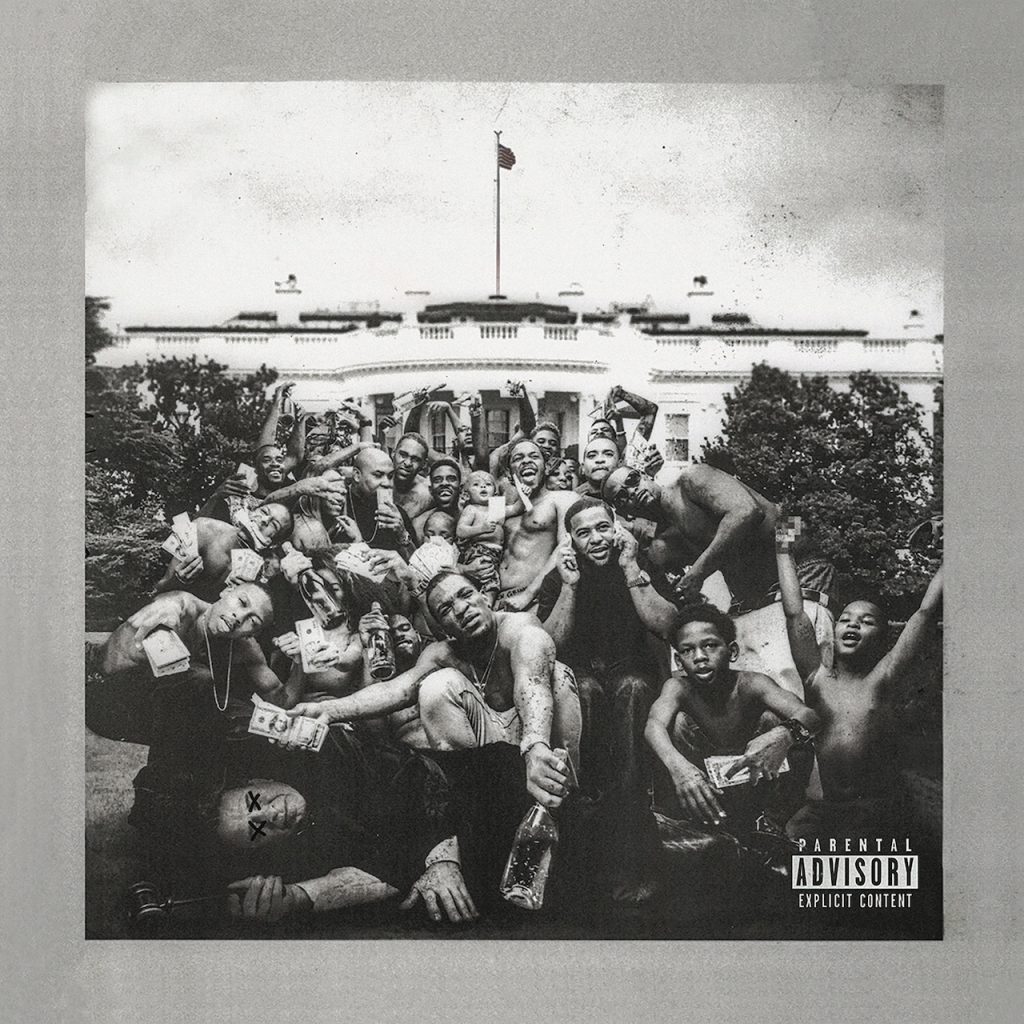
THE DEFINITIVE 4DK RETROSPECTIVE · 11 YEARS LATER
AFTER GOOD KID, WHAT NEXT?
Following good kid, m.A.A.d city, Kendrick Lamar could have taken the obvious route: bigger hooks, a cleaner radio formula, famous producers lined up for blockbuster singles. By 2015, he had already proven he could construct a deeply personal, cinematic rap album that connected outside of Compton. The question was whether he would repeat the blueprint or risk alienating the audience he had just won.
He took the risk. To Pimp a Butterfly is not a conventional victory lap. It is the sound of an artist examining the forces that helped lift him up while wondering what those same forces might take from him. Fame and exploitation. Community and survivor’s guilt. Black pride and the fractures inside Black life. Depression, faith, temptation, and the uneasy weight of being called a leader.
Eleven years later, that ambition still feels startling. Some tracks make you dance before revealing what they are really saying. Others barely pretend to be comfortable. And the sequencing makes nearly every detour matter. We gave this project 9.8/10 not because every track works as a traditional single, but because the album works as one of hip-hop’s most fully realized statements.
2012–2015: FROM THE GOOD KID TO THE VOICE OF A GENERATION
Look at where Kendrick stood between 2012 and 2015. good kid, m.A.A.d city had taken a rapper from Compton's TDE movement and placed him at the center of the national conversation. It was a vivid, accessible coming-of-age movie in album form: the family voicemails, the pressure of neighborhood life, the temptations of the street, the spiritual reckoning, the hits that brought in casual listeners without abandoning the story. That album gave Kendrick something most MCs spend an entire career chasing — a classic, a committed fan base, credibility with the purists and the expectation that his next move would define an era.
The expectation was bigger than just selling records. His competitive 2013 Control verse had helped reignite the debate about who could claim the throne. On television, on festival stages and in barbershop arguments, Kendrick was being discussed with the established elites rather than as somebody waiting for his turn. Meanwhile, hip-hop's commercial climate rewarded streamlined singles, melody-driven crossover records and carefully calibrated features. Kendrick had every reason to polish the winning formula; instead, he brought the musicians into the room and started pulling his own acclaim apart.
That choice becomes even more remarkable when we consider the shift in perspective after Kendrick traveled to South Africa in 2014 and visited places connected with the history of apartheid, including Robben Island. That experience shaped the record's questions about freedom, historical memory, identity and how much of the world he'd never been taught to see. What began as the challenge of following a classic became a much larger problem: how could he celebrate making it out of Compton without letting success detach him from the people, history and responsibility that made his voice matter?
In our view, this is the turning point between Kendrick the exceptional storyteller and Kendrick the fully realized album architect. He still tells stories, but the stories talk back to each other. He can be boastful in one scene and disgusted with himself in the next, spiritually searching after sounding certain, righteously angry yet unwilling to exempt himself from criticism. The record doesn't offer easy answers because its narrator is learning in public. That's why it has the lasting power of a great novel and the physical impact of a great rap album.
THE SOUND: A WHOLE BAND, NOT A CHECKLIST
Flying Lotus, Thundercat, Terrace Martin, Sounwave, Kamasi Washington, Robert Glasper and other musicians helped create a musical environment that feels alive. Horns push into one another. Basslines twist around the drums. Jazz phrasing crashes into G-funk and P-Funk. Soul harmonies interrupt Kendrick’s tightest rapping. The record’s palette can be gorgeous, abrasive, playful or exhausting, sometimes inside the same song.
It draws from the Black musical tradition without treating that tradition like a museum exhibit. George Clinton’s presence on “Wesley’s Theory” is a bridge between eras. The Knxwledge pocket on “Momma” gives the record underground texture. Ronald Isley’s contribution to “How Much a Dollar Cost” brings its moral reckoning into focus. Kendrick invited players with their own musical identities to help him make something that could not be reduced to a playlist of fashionable beats.
AN ENTIRE MUSICAL FAMILY TREE IN THE STUDIO
This wasn't simply a matter of putting a saxophone over programmed drums and calling it jazz rap. Listen to the way the musicians leave space for one another, how a bass note can be the hook, how horns feel like an argument in the room instead of a decorative flourish. The arrangements often shift under Kendrick's feet. He's expected to respond like a live frontman — sometimes improvisational, sometimes explosive, sometimes barely keeping his composure. The result is a living organism where the beat is allowed to challenge the rapper rather than merely flatter him.
Sounwave remained a connective force across sessions; Terrace Martin brought years of jazz musicianship and Los Angeles musical knowledge; Thundercat supplied basslines with personality; Flying Lotus opened the record's more disorienting possibilities. Kamasi Washington and Robert Glasper belonged to the larger creative circle helping turn this into a conversation between hip-hop and the Black music that came before it. Kendrick didn't abandon his roots for a prestige sound. He used a broader palette to reveal how much his roots already contained — Parliament-Funkadelic, soul, jazz, spoken word, dance music and the G-funk inheritance of California.
That's also why the album can be deliberately difficult. 'u' is supposed to lurch and hurt. 'For Free?' is supposed to race ahead of the listener. 'For Sale?' is supposed to seduce. We don't mistake those uncomfortable choices for poor execution: they are production decisions that serve the writing. The listening experience is constructed, not merely sequenced.
THE WEST COAST NEVER LEFT THE ROOM
Let’s get one thing straight: all that jazz experimentation does not mean Kendrick forgot Compton. “King Kunta,” “Hood Politics” and “You Ain’t Gotta Lie” carry California in their rhythmic DNA. When we heard “King Kunta,” our comparison went straight to DJ Quik and Mausberg — that late-’90s, early-2000s pocket where the bass, drums and voice are all part of the same bounce. That resemblance is part of the song’s creative lineage, not an accidental similarity.
The album often sounds like the West Coast talking to its ancestors: funk bands, spoken-word poets, the Isley Brothers, Snoop Dogg, and the memory of 2Pac. It asks what the next generation is supposed to do with all that history. That is a much bigger challenge than simply sounding nostalgic.
And on 'King Kunta,' our original DJ Quik/Mausberg comparison is more than a vibe we happened to hear. Kendrick has discussed Mausberg's DJ Quik-produced 'Get Nekkid' as an influence on that record; Sounwave has described simplifying a more elaborate early arrangement into something nastier and more direct. Kendrick carried the rhythmic memory of Compton into a project that otherwise seemed designed to avoid obvious formulas. That's the genius: the experiment isn't a rejection of Southern California's history. It's a conversation with it.
Put 'King Kunta' beside 'Hood Politics' and 'You Ain't Gotta Lie,' and you can hear three distinct Californias: the swaggering funk anthem, the neighborhood code and the laid-back advice from somebody who's seen what fake confidence can cost. Even the dreamier or jazz-heavy selections live in a geographic tradition where funk, street reportage and complicated Black pride have always overlapped. In this music, Compton is not simply a backdrop for the story. It is the musical accent.
THE ALBUM’S HIDDEN STRUCTURE
Listen to the emotional movement: “Wesley’s Theory” opens with the economics of success; “Institutionalized” brings the past into the room; “These Walls” sounds heavenly while telling a darker story; “u” collapses into self-accusation; “Alright” answers with survival. Lucy’s temptation hangs over “For Sale?,” and the road back to self-understanding winds through “Momma,” “Complexion,” and “i.”
Then there is that recurring poem, arriving in pieces until “Mortal Man” lays its argument out in full. You can enjoy individual records, of course. But this is an album that rewards being played from start to finish, exactly in order. The two interludes are NR as conventional songs for 4DK, but each earns 10/10 for sequencing and musical execution. That distinction is deliberate.
THE POEM, THE PAC CONVERSATION, THE POINT
The poem that gradually comes into focus is the key. Kendrick adds lines of it throughout the record until 'Mortal Man' finally gives us the complete thought and the imagined exchange with 2Pac. That makes the album's ending an interpretive tool for everything before it: a narrator who discovers wealth, temptation, fear, disconnection, humility, self-respect and the demand for leadership has been leaving us breadcrumbs all along.
That structure makes the pairs especially important. 'u' collapses into self-loathing; 'Alright' reaches for hope. 'For Free?' mocks the transactional logic of exploitation; 'For Sale?' makes temptation sound inviting. 'Complexion' and 'The Blacker the Berry' put affirmations of Black identity alongside anger and difficult questions about contradiction. 'i' reaches outward with hard-won self-love; 'Mortal Man' asks what happens when the public decides its heroes are only human. We hear the record less as sixteen isolated songs and more as one argument with sixteen chapters.