4 DA KULTURE · ALBUM FILES · VOLUME II FINALE · ISSUE 10
4DA KULTURE
VOLUME II · ISSUE 10 · THE GRAND FINALE

THE
PURPLE
TAPE.

Raekwon's Only Built 4 Cuban Linx…. Bars on top of bars. Ghostface as co-star. RZA's genius behind the boards. A full-length crime film with a New York heartbeat.

“KNOWLEDGE GOD” INTO “CRIMINOLOGY” IS PERFECT SEQUENCING. AND THAT RZA PRODUCTION? GENIUS.

RAEKWON · AUGUST 1, 1995 · WU-TANG / LOUD / RCA
ORIGINAL 18-TRACK EDITION · 4DK REVIEWED OCTOBER 2026
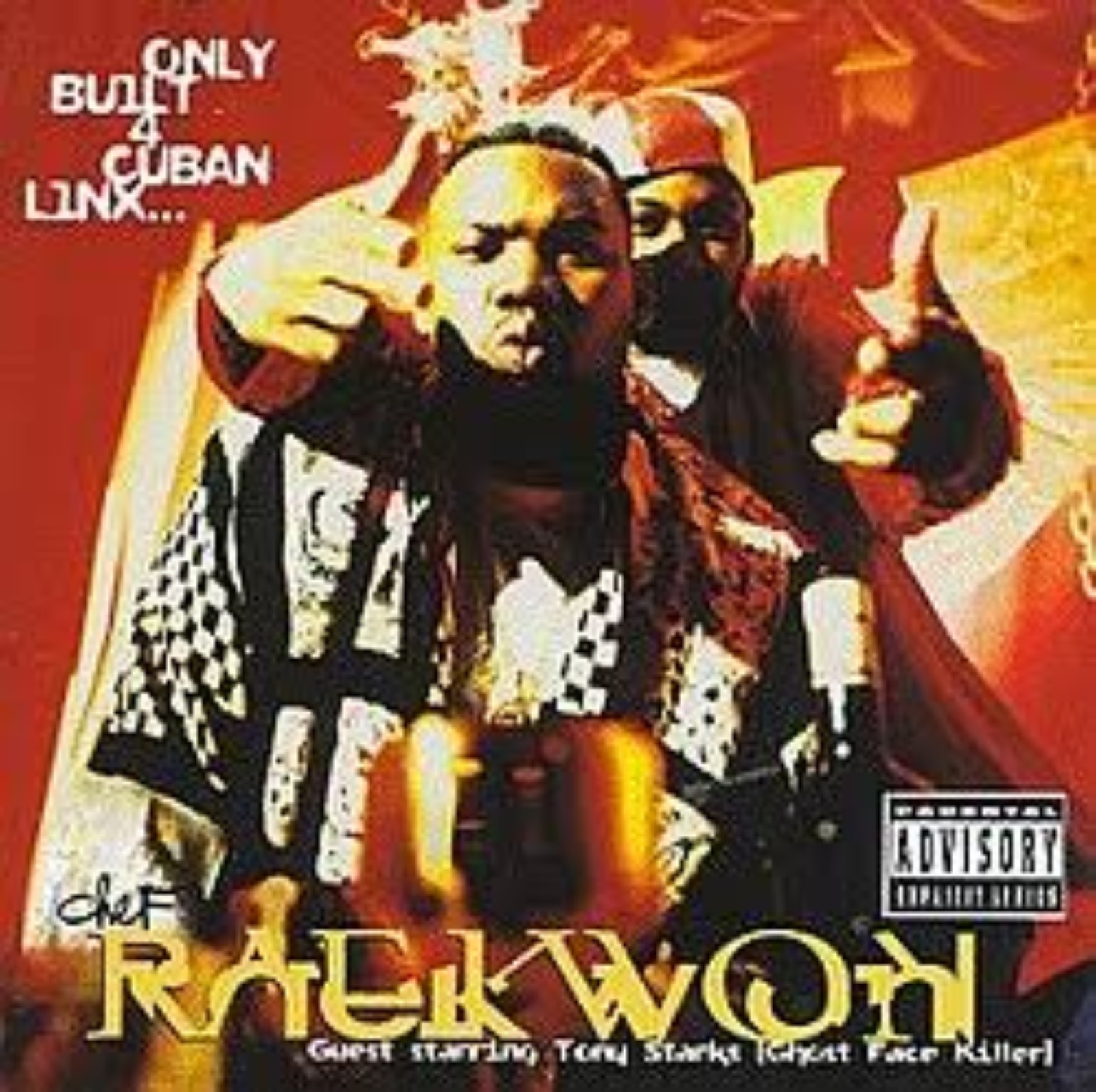
Original Raekwon Only Built 4 Cuban Linx album artwork
RAEKWON · ONLY BUILT 4 CUBAN LINX… · THE PURPLE TAPE · 1995
9.6/104DK album rating
18Full track studies
05Perfect 10s
1995New York classic
THE 4DK OPENING WORD · THE PURPLE TAPE IS A MOVIE YOU CAN HEAR

Some rap classics are remembered for the songs. Others are remembered for the sound. This one constructed an entire language, a cast of characters, a city, and a sense of consequence. Thirty-one years later, Raekwon, Ghostface, and RZA still make us feel like we have just walked into the middle of something dangerous.

PART ONE · THE COMPLETE 4DK ESSAY

BEHIND THE
PURPLE TAPE.

New York in 1995. Two MCs with one vision. A producer directing with sound. The influence that lasted for decades.

ACT 01 · THE OPENING ARGUMENT

1995 WAS A WAR FOR NEW YORK’S IMAGINATION.

By August 1995, New York rap was not looking for a savior. Nas had already released Illmatic. The Notorious B.I.G. had turned Ready to Die into an enormous statement. Mobb Deep had made Queensbridge sound freezing cold on The Infamous. Wu-Tang had exploded out of Staten Island with Enter the Wu-Tang (36 Chambers), and Method Man and Ol’ Dirty Bastard were already building separate identities. A rapper stepping into that climate needed more than another collection of hard verses. He needed a point of view that listeners could recognize from a single drum pattern, a skit, or a couple of bars.

Raekwon did something audacious: he made a solo debut that felt like a feature-length street film. Only Built 4 Cuban Linx…, released August 1, 1995, didn't pretend that survival and aspiration belonged in cleanly separated chapters. It connected robberies, alliances, designer tastes, prison sentences, neighborhood politics, fear, luxury, and friendship. The characters could sound invincible on one record and exposed on the next. The language was thick with Staten Island and New York street detail; it demanded repeat listens rather than explaining every reference for the casual visitor.

At the center sat three essential architects. Rae supplied the eyes of a precise narrator: detailed, economical, and fluent in the codes of his environment. Ghostface Killah functioned as the co-lead rather than an occasional guest, all emotion, acceleration, left-field images, and restless charisma. RZA produced the entire original album, giving the two voices a visual language made of soul fragments, ominous loops, dialogue, raw drums, and eerie open space. None of those ingredients worked in isolation. The production made the stories look bigger; the stories made the production feel dangerous.

Our 4DK verdict is a definitive 9.6/10. That number is an editorial judgment, not a spreadsheet average. The astonishing part is the sustained quality: five tracks earned perfect 10s in our listen, and two more came within a tenth. We can acknowledge that some interludes and long-form stretches make the album less streamlined than a shorter record while still insisting that its total world-building is precisely why the Purple Tape survives.

ACT 02 · THE CENTRAL PARTNERSHIP

RAE WAS THE CAMERA. GHOST WAS THE FIRE.

The cover says Raekwon, but the listening experience tells you immediately that this is a two-man drama. Rae's verses often feel like a camera tracking people through an environment: he notices the clothes, the money, the places, the schemes, the small tells that suggest something is about to go wrong. He doesn't stop to decode every phrase. His confidence comes partly from trusting the listener to catch up. That density is not a weakness to edit out; it's the language of his world being preserved rather than flattened.

Ghostface attacks the same world from the opposite emotional angle. Where Rae can sound almost detached, Ghost can go from furious to funny to wounded within a verse. His high-pressure delivery makes ordinary narrative transitions feel like sudden plot twists. Together, they supply what a great crime film needs: not merely events but friction between personalities. Ghost's extended presence is also why ‘Wisdom Body,’ a Ghost solo showcase, never feels like an interruption of Rae's record. It belongs to the dramatic architecture.

There's also a crucial historical fact behind the chemistry: the duo didn't emerge as carbon copies of one another. Their backgrounds and styles differed, and the bond was formed through the larger Wu-Tang network. By the time this album arrives, they sound less like artists trading guest features than two people who understand each other's timing. Hear the back-to-back impact of ‘Knowledge God’ and ‘Criminology,’ the shifts inside ‘Rainy Dayz,’ and the force of their exchanges on ‘Ice Cream.’ The album repeatedly uses their contrast as a form of musical arrangement.

That partnership would echo forward into Ghostface's Ironman and their later collaborations. But our focus stays here: in 1995, they helped turn the Wu-Tang solo format into a world with its own characters and continuity. That is why Cuban Linx remains simultaneously a Raekwon classic, a Ghostface breakthrough, and a triumph of the Wu-Tang system.

ACT 03 · THE PRODUCER AS DIRECTOR

RZA DIDN’T JUST MAKE BEATS. HE SCORED THE WHOLE MOVIE.

RZA's genius here is not reducible to dusty drums or chopped soul, even though he could build an entire career on those sounds alone. He understands when a beat needs to rush, when it needs to hover, and when an uncomfortable loop should be allowed to repeat until the MC fills it with meaning. The friction between beauty and menace makes the production vivid: a warm melodic fragment can feel luxurious on ‘Ice Cream,’ sorrowful on ‘Heaven & Hell,’ or spectral on ‘Verbal Intercourse,’ depending on the cadence and context around it.

‘Criminology’ is the album's acceleration point, the hard snap of a DJ-minded breakbeat against Ghost's ferocity. ‘Guillotine (Swordz)’ offers another kind of discipline: open space and a memorable, strange musical figure, with enough room for four rappers to attack from different angles. ‘Rainy Dayz’ lets emotion hang over the drums. ‘Glaciers of Ice’ adds a restless intensity around its vocals and its famously stylish conversation about customized Clarks. Each track has its own temperature, yet none sounds imported from a different album.

RZA's use of recorded conversation and movie dialogue deserves as much attention as the instrumental work. The spoken pieces aren't merely jokes before the next song; they establish ambition, betrayal, codes of behavior, and the feeling of listening in on a life already in motion. The cinematic influence of John Woo's The Killer informs the record's buddy-crime structure. The album doesn't have a screenplay in the traditional sense, and every lyric is not meant to be literal plot. What it does have is a consistent imaginative setting that makes the tracks feel linked.

RZA was also an expert editor of personalities. U-God introduces a different edge on ‘Knuckleheadz.’ Inspectah Deck and GZA widen ‘Guillotine’ without distracting from the leads. Cappadonna's expressive rush injects another neighborhood perspective on ‘Ice Water’ and ‘Ice Cream.’ Nas enters the atmosphere of ‘Verbal Intercourse’ without a conventional pop hook to soften the encounter. Method Man gives ‘Ice Cream’ the type of chorus that people remember for decades. We hear RZA as producer, casting director, and sequence designer all at once.

ACT 04 · THE WORLD OF THE PURPLE TAPE

LUXURY, SURVIVAL, AND THE COST OF THE COME-UP.

To hear Cuban Linx only as a celebration of organized crime is to miss the tension inside it. Yes, the album speaks in the vocabulary of chains, expensive drinks, designer footwear, scheming, and underworld hierarchy. Its fictional alter egos and extravagant references helped establish a style that subsequent rappers would explore. But underneath the surface is a recurring awareness of who gets left behind, who ends up incarcerated, which relationships break under pressure, and what ambition demands from people who don't have many good options.

‘Incarcerated Scarfaces’ names that reality directly. ‘Rainy Dayz’ moves the listener away from invulnerability and toward the emotional exhaustion surrounding street life. ‘Heaven & Hell’ places hope and despair inside the same composition. And ‘North Star (Jewels)’ offers the perspective of an older voice, making the final minutes feel less like a victory parade than an opportunity to consider where all the hustle is supposed to lead.

That duality also complicates the album's relationship to aspiration. The luxury details are vivid because the narrators understand the deprivation behind them. A new pair of Clarks or a splash of expensive champagne becomes more than consumption; it represents a visible sign that someone has risen above circumstances. Yet the music keeps hinting that display does not remove danger. The album presents aspiration in the language of its protagonists, and our job as listeners is to hear the brilliance of the art without mistaking its fictional violence for advice.

The Purple Tape was literally made to stand out, with its distinctive purple cassette design turning a physical format into part of the identity. Long before modern album rollouts were built around mood boards and interconnected videos, this project had a recognizable color, soundtrack, slang, characters, and cinematic direction. It wasn't just what you heard; it was a world you entered.

ACT 05 · THE 1995 CHESSBOARD

HOW THIS RECORD CHANGED THE MAFIOSO-RAP CONVERSATION.

Crime narratives existed long before Raekwon. Kool G Rap and others had already pushed cinematic, richly detailed street rap into hip-hop's bloodstream. Calling Cuban Linx the invention of mafioso rap would erase those foundations. What it did was give the style an especially influential album-length language at precisely the moment when New York hip-hop was producing some of its most durable work. The characters carried across tracks; the luxurious details shared space with neighborhood specificity; the entire project was guided by one sonic imagination.

The following year's Reasonable Doubt made Jay-Z's hustler perspective central to a landmark debut, while Nas's It Was Written expanded his own cinematic and mafioso-inflected approach. Both are distinct artistic achievements, not copies of the Purple Tape. The broader change was that ambitious street albums could be luxurious, narratively immersive and technically dense without sacrificing authenticity. Raekwon helped prove the format could carry an audience for nearly seventy minutes.

And the influence isn't limited to mafia names or references to expensive champagne. Listen for the larger blueprint: a solo star giving a frequent collaborator co-lead billing; interludes used as scene changes; a producer constructing one coherent sonic geography; a deliberate tension between street danger and soul beauty; and verses packed with local detail that reward decoding. Elements of that blueprint became normal in subsequent East Coast and mainstream rap records. In 1995, the way they fit together here was a breakthrough.

Some records leave behind famous singles. Others leave behind methods. Cuban Linx did both, which is why ‘Ice Cream’ can remain an undeniable hit while songs like ‘Knowledge God’ and ‘Guillotine’ inspire the kind of obsessive beat-and-bar arguments that keep classic rap alive.

ACT 06 · THE 4DK PICKS

THE RECORDS WE KEEP COMING BACK TO.

We came into this listen already knowing that ‘Knowledge God’ and ‘Criminology’ were our two personal favorites. Revisiting the entire record only sharpened the reason: their sequencing is practically a filmmaking lesson. The first creates suspense through detail and atmosphere; the second detonates that tension with Ghostface's force and a rhythm that feels like a chase sequence. Back to back, they demonstrate Rae, Ghost and RZA's core strengths without needing a grand explanation.

‘Guillotine (Swordz)’ earned another 10, and not merely because the verses are elite. That RZA beat belongs in our conversation about favorite hip-hop instrumentals of all time. Inspectah Deck and Ghostface are the two performances we're singling out, but the entire four-man sequence is a genuine posse-cut standard. ‘Ice Cream’ is a full-on classic, one of Raekwon's defining hits. We hear its smoothness and Method Man's unforgettable hook as a cousin to the Wu-Tang formula that made ‘C.R.E.A.M.’ indelible—not the same subject, but the same gift for making a soulful loop into permanent rap memory.

Then there is ‘Heaven & Hell,’ another perfect 10 and perhaps the album's clearest proof that the Purple Tape can be emotionally devastating without abandoning its street language. ‘Incarcerated Scarfaces’ and ‘Wu-Gambinos’ both landed at 9.9. Cappadonna's ‘Ice Water’ appearance gets a separate salute: Cap was hard as hell on that record, not a ceremonial guest. ‘Verbal Intercourse’ at 9.8 is still one of the essential intergenerational New York collaborations, with Nas stepping into Wu-Tang's world without a forced compromise.

Those scores don't diminish the rest. ‘Rainy Dayz,’ the ‘Can It Be All So Simple’ remix, ‘Glaciers of Ice,’ ‘Wisdom Body,’ ‘Spot Rusherz,’ and the ending all play roles in what makes the whole experience work. For 4DK, the ranking of the standout records is personal, but the recognition of the album's depth is nonnegotiable.

PART TWO · 18 RECORDS · NO SKIPPED ANALYSIS

EVERY TRACK.
EVERY BAR.

Original album sequence. Individual ratings locked by 4DK. Interludes are unrated but fully discussed.

01/ 18
THE PROLOGUE · THE PLAN BEFORE THE ACTION

Striving for Perfection

Raekwon & Ghostface Killah

INTRONARRATIVE

The opening is a mission statement disguised as an overheard conversation. Before there is a single big single or a famous posse cut, the two central characters talk about where they're trying to go. The stakes aren't abstract creative ambition; they are the anxiety of men determined to find a way out of a situation that can swallow them. That is a perfect entry point for a project where the desire to ascend and the temptation to take dangerous shortcuts never stop colliding.

RZA's underlying concept treats Rae and Ghost like two people considering one last score before leaving the street behind. We don't need to take each later track as a literal scene in a tightly plotted movie to understand the purpose of that framing. From the first minute, every celebration of money carries the shadow of how the money might be obtained. The project's title starts to feel less like a fashion reference and more like a pact between people who believe their fortunes are tied together.

There is also an artistic declaration in the intro. Wu-Tang's communal reputation did not automatically guarantee that Rae could make a great full-length solo project. A record like this had to earn its own identity. Instead of announcing the album with a radio hook, the group lets personality, dialogue, and world-building open the door. We're leaving this unrated as a narrative introduction, but its role is essential: it makes the rest of the album feel like the consequences of a decision rather than a disconnected playlist.

02/ 18
THE FIRST HEIST · BROTHERHOOD UNDER PRESSURE

Knuckleheadz

Ghostface Killah & U-God

9.4/ 10

And now the opening credits end. ‘Knuckleheadz’ drops us into action with a harsh, insistently rhythmic beat and three MCs who sound as if the situation is already moving faster than they can control. Rae establishes the setting with his hard-edged slang and measured authority; Ghost brings the volatile personality that makes the record feel unstable in a thrilling way; U-God adds a lower, heavier presence that cuts through their contrast. It is rugged music, but the parts have a clear dramatic purpose.

The song's conceptual twist is the most revealing detail. RZA viewed the scene as a crew dividing up proceeds while mistrust enters the room, and he imagined U-God's character being killed off. That isn't a literal historical event; it's part of the album's constructed story. Suddenly the title isn't just a generic insult. It's a warning about what happens when money and ego start testing a supposedly unbreakable partnership. This is the kind of small narrative mechanism that gives the Purple Tape its cinematic reputation.

Our 9.4 recognizes how effectively the record gets the album moving. We hear the early Wu-Tang roughness in the drums and the urgency, but also a more deliberate sense of scene. Even in the chaos, RZA leaves enough sonic air for each personality to register. A lot of albums open with a collection of names and promises; this one immediately places those names inside a story where the stakes could get ugly.

03/ 18
THE SLOW-BURN CRIME SCENE · 4DK FAVORITE

Knowledge God

Raekwon

10.0/ 10
4DK PERFECT 10 · PERSONAL FAVORITE

Here's the first of our two personal favorites, and the point where Rae's gift for visual writing truly announces itself. ‘Knowledge God’ moves like a crime sequence observed in close-up. Rae fills the verse with people, motives, settings, and dense terminology, yet the performance is not frantic. He lets the listener lean into the details. The suspense comes from the sense that everyone in the scene recognizes some of the danger, but nobody can be certain who is about to make the next move.

Rae has described approaching the song almost like writing a letter that developed into a full criminal situation. That explains its peculiar intimacy: the listener feels less like an audience being entertained and more like somebody who accidentally got access to private information. The controlled delivery matters as much as the individual punch lines. He sounds confident because he knows exactly where the camera is pointed, and the vocabulary gives the environment texture that a more generic story would lose.

RZA's production is masterfully unsettling. The loop doesn't attempt to overwhelm Rae with a giant melodic event; it establishes an atmosphere and holds it, allowing tiny rhythmic and tonal details to become part of the suspense. That restraint makes every shift in cadence feel significant. It's a beat you remember for its mood as much as its notes, precisely because the sound and the story feel inseparable.

We gave this a 10, and we're not hedging. It's one of the finest examples on the album of a rapper making dense lyrical construction feel like a visual art. More importantly, its placement ahead of ‘Criminology’ is inspired. This is the tense surveillance sequence; the next record kicks the door in. You cannot fully explain either one without acknowledging the way they work as a pair.

04/ 18
THE EXPLOSION · 4DK FAVORITE

Criminology

Ghostface Killah

10.0/ 10
4DK PERFECT 10 · PERSONAL FAVORITE

The opening attack changes the temperature instantly. Where ‘Knowledge God’ feels like a carefully constructed plan, ‘Criminology’ sounds like that plan bursting into action. RZA built the record with a breakbeat-minded approach, inspired by the physical urgency of old DJ tapes. That pulse is vital: the track doesn't coast on mood. It lunges forward and asks the MCs to keep up. The result has the frantic charge of a chase scene without needing an actual screen.

Ghostface answers with a performance that is impossible to treat as a routine feature. His imagery arrives fast, his personality refuses to be contained, and his delivery gives the beat an almost explosive extra layer of percussion. Raekwon brings a different sort of command, making his verse a controlled counterweight. You hear the two men competing for the listener's attention without stepping on each other's identity. It's not just chemistry because they get along; it's chemistry because the contrast is electric.

The behind-the-scenes detail deepens the record's place in the Wu-Tang story. RZA has described Ghost requesting a breakbeat-style track, and Ghost has recalled developing the verse while traveling with the crew in San Francisco. In the finished song, that creative urgency is audible. Nobody sounds overly polished or distanced from the performance. The delivery has the raw voltage that polished imitation cannot replicate.

For 4DK this is a 10 and one of the album's two definitive favorites alongside ‘Knowledge God.’ The sequencing is as important as the standalone excellence. One is dark preparation, the other release; one stays almost clinical, the other surges with emotion. Those two beats are a compelling argument that RZA was composing scenes, not just instrumentals. ‘Criminology’ gives us the full cinematic movie feeling we come to this album for.

05/ 18
THE COST OF THE LIFE · RAE ALONE

Incarcerated Scarfaces

Raekwon

9.9/ 10
4DK 9.9 · ESSENTIAL DEEP CUT

After two huge records, the album doesn't surrender momentum. Instead, ‘Incarcerated Scarfaces’ lets Raekwon do something almost harder than matching a marquee guest: hold the entire frame alone. His three verses are relentless, full of specific images and street-grounded expression, but the song is not merely technical exhibition. Its emotional anchor is visible in the title. Jail is not an abstract punch line in this universe; it is part of the environment's ongoing reality, the cost that follows the stories about money and ambition.

Rae has explained that the record was written with people serving prison time in mind. The production story is revealing too: RZA has said the instrumental may originally have been intended for GZA, but Rae heard it and rapidly claimed it for his own writing. That kind of studio instinct can determine the character of an entire record. The result sounds made for Rae because his approach is perfectly matched to the beat's patient, repeating pressure.

Listen to the structural confidence. The hook is memorable without turning the song into a singalong, and the verses pile scene upon scene without depending on a guest interruption. Rae's control of phrasing makes complicated vocabulary sound conversational. There is a clipped matter-of-fact quality to his rapping that invites the listener to picture the action rather than marvel at an obvious performance stunt.

9.9/10. This is nearly flawless solo Raekwon. We hear the lyricist, the storyteller, and the neighborhood observer in one place. Coming after ‘Knowledge God’ and ‘Criminology,’ it makes the early stretch of the album almost absurdly strong while also introducing the consequences that the more glamorous tracks might tempt a listener to forget.

06/ 18
THE WEATHER TURNS · STREET LIFE HAS EMOTIONAL WEIGHT

Rainy Dayz

Ghostface Killah & Blue Raspberry

9.8/ 10

‘Rainy Dayz’ is where the album makes an important emotional pivot. The beat doesn't charge like ‘Criminology’ or stalk like ‘Knowledge God’; it hangs in the air, allowing the sadness in its musical language to become impossible to ignore. Blue Raspberry's vocal presence softens the entry point without erasing the tension. Her contribution sounds like a person trying to reach across the noise, while Rae and Ghost answer from inside a world where normal intimacy is constantly disrupted by urgency and danger.

Rae and Ghost don't simply switch from violence to self-pity. They bring complicated ideas about relationships, financial pressure, pride, and their own self-justifications into the song. Some of those perspectives are not flattering, and that's part of why the track is worth close listening rather than blind celebration. It captures people attempting to rationalize choices while the emotional cost is already visible. The sadness isn't separate from the swagger; it exposes what swagger has been hiding.

There is a remarkable creative contrast in the song's history: Raekwon has remembered writing material for it by the water in Barbados, while the finished music creates a sense of enclosed city weather and inward pressure. RZA has spoken about the personal closeness of the material, and the weight of that feeling explains why he lets the record breathe instead of decorating every second. The arrangement trusts a voice, a loop, and an atmosphere to do the emotional work.

Our 9.8 reflects how crucial this song is to the album's emotional range. Without it, the Purple Tape could be mistaken for an unbroken sequence of tactical bravado. With it, the characters gain doubt, and the record becomes richer. The sequencing after the aggressive first stretch makes that shift hit harder. This is not an intermission from the film; it's the moment the viewer begins to understand the consequences.

07/ 18
FOUR SWORDS · ONE OF OUR FAVORITE RZA BEATS EVER

Guillotine (Swordz)

Ghostface Killah, Inspectah Deck & GZA

10.0/ 10
4DK PERFECT 10 · ALL-TIME BEAT · DECK + GHOST STANDOUTS

This is a posse cut in the purest, most competitive sense: four MCs with four clearly distinguishable weapons, and no one willing to bring a weak verse. Inspectah Deck's opening is a masterclass in control and attack. His technical precision keeps the lines sharp even as the delivery moves quickly. Ghostface is the opposite kind of spectacle: emotion, flamboyant detail, pressure, and a sense that he might make the verse turn left at any moment. Their contributions are the two we're highlighting most in the final 4DK verdict, because the energy they establish is astonishing.

Raekwon steps into the frenzy with his characteristic density, giving the record the unmistakable flavor of the album's central narrator. GZA arrives with the cold calculation of a closer who doesn't need to raise his voice to change the temperature. The order matters: the track never sounds like four separate files pasted together. Each verse resets the energy for the next and makes the collective feel more formidable. It is a classic demonstration of why Wu-Tang's variety was a strength rather than a cohesion problem.

And then there's that beat. For our ears, ‘Guillotine’ is one of the greatest instrumentals RZA ever constructed and one of our personal favorite hip-hop beats, period. The arrangement is surprisingly open; a strange, memorable melodic figure keeps cutting through a rhythmic foundation that refuses to get in the rappers' way. RZA has discussed experimenting with an unusual keyboard-and-sampler interaction to achieve the music's distinctive feel. The result sounds slightly off-center in the best possible way—an atmosphere you recognize immediately, even without a vocal.

10/10. This is the album's ultimate lyrical exhibition, and the type of record that makes arguments about the best posse cuts in hip-hop worthwhile. We are giving Deck and Ghost serious flowers, while making clear that the track works because every MC contributes and RZA gives all of them a battlefield worthy of their rhymes.

08/ 18
BACK TO THE BEGINNING, WITH NEW SCARS

Can It Be All So Simple (Remix)

Ghostface Killah

9.8/ 10

Revisiting a song associated with 36 Chambers could have been an exercise in nostalgia. Instead, this remix feels like the characters returning to an earlier neighborhood after the story has changed them. The soulful atmosphere is familiar, but the performance inhabits it differently. Rae and Ghost no longer sound like they are simply introducing the listener to their corner of the Wu-Tang universe. The storytelling is more personal, more patient, and marked by lived experience.

Ghostface's account of being shot gives the song a particular weight. He doesn't turn the incident into a generic boast; the detail forces vulnerability into a musical setting often associated with toughness. Rae's contribution complements that approach by keeping the focus on memory and context rather than trying to overpower a reflective composition with technical fireworks. This is another example of their partnership knowing when to change gear.

RZA's reworking of the musical idea helps make the song function as a scene in this specific album rather than a bonus repeat of an earlier favorite. The warmth of the instrumental contrasts with the danger running through the words. Right after ‘Guillotine,’ that tonal shift is an inspired piece of sequencing. It is as if the record moves from a loud group confrontation to a quieter conversation among survivors.

At 9.8, the remix earns its place through purpose, not name recognition. It connects the 1993 group mythology with Rae and Ghost's 1995 evolution, and it enlarges the album's emotional vocabulary. It is proof that revisiting familiar material can reveal something new when the artists have developed their storytelling craft.

09/ 18
SIDE-BREAK MANIFESTO · ORIGINALITY IS THE CODE

Shark Niggas (Biters)

Raekwon & Ghostface Killah

INTERLUDENARRATIVE

This spoken interlude isn't filler. On the original cassette-minded journey, it effectively marks a turning point between movements, and it states one of the album's fundamental creative values: don't copy somebody else's language and claim it as your own. The conversation is abrasive, competitive, and full of the suspicion that surrounds a new style as soon as other people begin imitating it. The title turns that anxiety into a piece of Wu-Tang mythology.

It would be careless to reduce the interlude to a definitive accusation against a particular rival or pretend that the recorded conversation explains the entire history of East Coast hip-hop tension. It is better heard as a snapshot of how protective Rae and Ghost felt about the style they were developing. At a time when individual flows, wardrobes, slang, and sampled textures could establish an artist's identity, imitation was not just annoying; it threatened the uniqueness of the whole proposition.

Leaving this interlude unrated is the right call. Its value is architectural. It gives the listener a breath, resets the mood, and insists that the album's voice is intentional. Even the music's pauses and conversations are working in service of the bigger project.

10/ 18
CAP ENTERS THE PICTURE · ANOTHER VOICE FROM THE HOOD

Ice Water

Ghostface Killah & Cappadonna

9.6/ 10
4DK GUEST VERSE SPOTLIGHT · CAPPADONNA

The second movement begins with another change in cast dynamics. Rae and Ghost are already established as the story's two essential leads, and ‘Ice Water’ brings Cappadonna into that relationship in a way that feels like a new character arriving with his own history. The instrumental is raw, circular, and ominous; RZA doesn't use bright gestures to announce the guest. Instead, the beat asks Cap to earn his spot by making himself impossible to ignore.

And Cap absolutely earns it. His voice is distinct, his phrasing has its own internal bounce, and the neighborhood names and local references give the track a fresh documentary quality. The words don't sound like a guest rapper performing a generic style for a major-release opportunity. They sound like somebody who was already part of this environment and finally got the microphone. That's why we're singling him out: Cappadonna was hard as hell on this record, and the performance expands the album's character without breaking the atmosphere.

The song's creation story reinforces that point. Raekwon has described how several MCs tried the track and Cappadonna's performance ultimately won the room, with his local specificity playing a major role. For our review, the crucial part isn't turning that anecdote into a contest against GZA; it's recognizing how much personality the final selection adds. The record captures a very real sense of community around the music, where an individual voice becomes part of a collective story.

9.6/10. Cap's emergence makes this a particularly important album cut, beyond its already excellent RZA production and the hard Rae/Ghost verses. It is a reminder that the Wu-Tang family at its best could keep widening the circle and still sound unmistakably like itself.

11/ 18
THE WALLABEE SCENE · STYLE AS WORLD-BUILDING

Glaciers of Ice

Ghostface Killah & Masta Killa; additional vocals by Blue Raspberry

9.5/ 10

Before the rhymes fully take over, we get one of the Purple Tape's great pieces of personality: the conversation about customizing Clarks Wallabees. It's funny, specific, and visually rich. In most records, a discussion about dyeing shoes might feel disposable. Here it serves the same role as an establishing shot in a film. The characters have taste, pride, rituals, and a way of turning ordinary objects into statements about identity. The scene makes the imagined world feel lived in.

The musical texture then shifts into something colder and more turbulent. RZA's drums, sharply repeating figures, and carefully placed vocal sound create motion without surrendering the album's raw character. Blue Raspberry's striking additional vocals add a ghostly element, while Ghost and Masta Killa contribute different energies around Rae's lyrical center. It's another example of the producer understanding how the arrangement itself can become another voice in the conversation.

The song also shows the range of the record's recurring luxury imagery. This isn't simply a shopping list: the customized footwear is treated as a creative act, a shared code, something the rappers can describe so vividly that listeners remember the conversation decades later. The attention to styling helped associate the project with a broader mid-'90s New York aesthetic, but the verse writing keeps it from sliding into empty fashion talk.

Our 9.5 puts ‘Glaciers of Ice’ just below the album's most untouchable records, not outside its classic run. We appreciate the unusual construction, the unforgettable opening scene, and the way the beat sounds like nothing else nearby while clearly belonging in the same movie.

12/ 18
NAS ENTERS THE WU UNIVERSE · NO HOOK REQUIRED

Verbal Intercourse

Nas & Ghostface Killah

9.8/ 10
4DK COLLABORATION CLASSIC · NAS + RAE + GHOST

This is one of the most important guest appearances in the history of Wu-Tang's original solo-album run. Nas was coming off Illmatic—an album already being treated as a monumental display of New York lyricism—and he walks into Rae and Ghost's world without changing his identity or demanding a different kind of beat. The collaboration works because all three rappers understand what the others bring: tightly packed detail, visual storytelling, technical skill, and an unspoken competitive respect.

Nas's opening verse is an extraordinary entry point. The flow is seemingly effortless, the writing intricate, and the images strong enough to establish a whole environment before the track has finished introducing itself. Raekwon then answers in his own language, making the song feel like a conversation among peers rather than a headliner using a famous guest as decoration. Ghostface finishes by injecting the unpredictable heat that has become such an important part of the album's rhythm.

There is essentially no traditional radio hook to pause and repackage the action. That is an artistic decision. RZA's soulful sample work creates a soft, dreamlike cushion, while the MCs fill that beauty with complicated street memories and menace. The friction is astonishing. If the instrumental were harder or more aggressive, the same verses might sound like a contest; over this music, they become three perspectives telling stories in the same neighborhood at the same hour.

9.8/10. We are giving Nas his deserved flowers, but we're not treating this as a guest verse that makes everybody else disappear. The collaboration is great precisely because Rae and Ghost belong beside him. It also helped symbolize how far Wu-Tang's influence had reached: one of Queensbridge's defining voices could enter their distinctive sonic universe and the result still felt natural.

13/ 18
GHOST GETS THE CAMERA TO HIMSELF

Wisdom Body

Ghostface Killah

9.7/ 10

A Raekwon solo debut makes room for a Ghostface solo performance, and instead of feeling like a detour, it clarifies what the album is. This isn't an arbitrary collection of artist features; it's a partnership with enough confidence to let one voice take over a whole scene. ‘Wisdom Body’ gives Ghost the microphone and doesn't interrupt him with a hook designed to make the track more marketable. The result feels immediate and personal, almost like stepping into his internal monologue.

Ghost's energy is unfiltered. He accelerates, drops unexpected references, changes emphasis, and turns street images into something more animated than standard narrative rap. There is humor and wildness even in the threatening details. The performance sounds impulsive, but that doesn't mean it lacks craft: his sense of rhythm and his ability to make unusual phrases land are the craft. Where Rae's precision can feel almost architectural, Ghost's precision is in the drama of delivery.

RZA has described wanting to preserve the track as Ghost's personal piece, even when the idea of adding Rae came up. That creative decision is visible in the finished song. The beat has enough character to stand alone, but it never fights Ghost for attention. The relatively short runtime adds to the impression that we have stumbled into a self-contained scene and left before everything was explained.

Our 9.7 is recognition of how necessary the performance is to this album. A year later, Ghost would make his own major statement with Ironman. Here you can hear the confidence and unpredictability already fully operational. The Purple Tape earns part of its legacy as the proving ground for a future great, not just the triumph of its nominal star.

14/ 18
THE CHEF RETURNS · NO SHORTCUTS IN THE RHYMES

Spot Rusherz

Raekwon

9.5/ 10

After the Ghost-centered moment, ‘Spot Rusherz’ returns the microphone to Rae and reminds us why his solo writing is the spine of the album. There isn't a major conceptual gimmick here. The value lies in the density of the execution: details embedded inside details, strange and memorable turns of phrase, and a delivery that makes difficult writing sound as if it came straight out of a conversation. Rae doesn't need to announce that every bar is clever. He lets the language prove the point.

RZA's restrained musical bed is well chosen for that approach. The beat functions like a shadowy corridor rather than a giant set piece. Percussion, atmosphere, and repetition create an environment where the listener focuses on the cadence of each line. That might make the song less immediately iconic than ‘Ice Cream’ or ‘Criminology,’ but it also provides important evidence of the record's depth: this far into the tracklist, Rae still has another distinct scene and another full performance worth studying.

Sequencing gives ‘Spot Rusherz’ extra value. ‘Wisdom Body’ has just offered an unmediated burst of Ghost's personality; ‘Spot Rusherz’ brings back Rae's cooler, tactical way of describing the streets. The next major record, ‘Ice Cream,’ will open the sound up into something more accessible. Here we get one more concentrated dose of the detailed, uncompromising writing that made the project special before its signature single takes over.

9.5/10. This isn't a song we inflate to a 10 just because the album is legendary. It's a very strong piece of album craftsmanship, a deep cut that rewards the listener who cares about more than the biggest hooks.

15/ 18
THE HIT · METHOD MAN HOOK · RZA’S GENIUS

Ice Cream

Ghostface Killah, Method Man & Cappadonna

10.0/ 10
4DK PERFECT 10 · SIGNATURE SINGLE

This is the crossover record that never sounds like the artist is crossing over. ‘Ice Cream’ is smoother, lighter on its feet, and instantly more approachable than much of the Purple Tape, but the beat still belongs to the same RZA universe. Its soulful piano-driven texture is luxurious without becoming polished beyond recognition. The rhythm moves with patience, giving the MCs space to sound charismatic rather than hurried. Every element has the composure of a producer who understands exactly what the song needs.

Method Man's hook is the masterstroke. The voice, the rhythm of the language, the playful extended ice-cream metaphor: it sticks immediately. Meth doesn't hijack the record; he makes the whole thing easier to remember, leaving Rae, Ghost, and Cappadonna to bring the character and the bars. Cap's contribution matters again, reinforcing that his arrival earlier in the album was no fluke. The resulting balance—memorable chorus, distinct guest energy, elite rapping, and immaculate instrumental—is why it became one of Raekwon's signature hits.

There is a useful critical distinction in the metaphor and its legacy. The song's treatment of women through flavors and beauty stereotypes is very much a product of a particular rap moment and is worth recognizing rather than pretending has no edges. That doesn't cancel the musical achievement; it places it in context. You can celebrate an iconic record while hearing how attitudes and language have changed since 1995. The larger achievement is how convincingly it puts a radio-ready structure inside an otherwise uncompromising concept album.

For us, ‘Ice Cream’ belongs in a conversation with ‘C.R.E.A.M.’ as another example of RZA understanding how a soulful idea can become permanent hip-hop memory. The two songs aren't interchangeable in subject or mood; they're relatives in the producer's gift for memorable musical architecture. 10/10. Bonafide classic, one of Rae's biggest records, a perfect Method Man hook, and another reason we call RZA a genius on this album.

16/ 18
THE MOB MEETING · THE CHARACTERS BECOME LEGEND

Wu-Gambinos

Method Man, RZA, Masta Killa & Ghostface Killah

9.9/ 10
4DK 9.9 · CONCEPT MASTERCLASS

The album's mafia identities come together here in a way that feels less like costume and more like a shared dramatic game. ‘Wu-Gambinos’ gives the characters room to introduce themselves through aliases, specific personalities, and successive verses, all within an ominous RZA soundscape. The record doesn't need a detailed screenplay to sell the concept. The ensemble delivers the atmosphere: a room full of people with different reputations, alliances and skills, each stepping forward as the conversation turns their way.

Method Man brings his natural musicality and charisma, Ghost supplies his unpredictable energy, Masta Killa adds his distinctive restraint, and RZA reminds everyone that the architect behind the boards can step into the booth as well. Rae's central role ties those voices together. The song's strength is not merely collecting well-known names; it's showing how much variety the Wu-Tang family contains. A less assured producer might have made the guests sound scattered. RZA makes the contrasts feel like casting.

This song also explains how the Purple Tape helped transform a cluster of street-rap motifs into a recognizable aesthetic. The aliases, references to wealth, coded speech, and dramatized underworld hierarchy create a fictional universe that listeners could follow across an album. Those choices would matter to later rappers exploring their own hustler narratives. But the key is not that everything afterward began here. It's that Cuban Linx made this particular version of the concept feel artistically complete.

9.9/10. Almost perfect. After the accessible brilliance of ‘Ice Cream,’ the album immediately returns to its cinematic core without losing a step. That sequencing shows enormous confidence: the hit is part of the world, not a doorway out of it.

17/ 18
THE SOUL OF THE MOVIE · FIFTH PERFECT 10

Heaven & Hell

Ghostface Killah; additional vocals by Blue Raspberry

10.0/ 10
4DK PERFECT 10 · EMOTIONAL MASTERPIECE

‘Heaven & Hell’ is one of those records where the song title seems to explain the whole album. The pull between joy and despair is everywhere on Cuban Linx, and here RZA places that tension inside a particularly beautiful instrumental. The Syl Johnson sample gives the track an almost aching warmth. Rather than soften the street imagery, that warmth makes the consequences feel closer. The music suggests everything the characters might want—security, intimacy, happiness—while the verses remind us how difficult those things can be to hold.

Raekwon and Ghostface approach the record with a reflective quality that distinguishes it from the more confrontational moments. The delivery still carries confidence and specificity, but the emotional setting changes how we hear every image. Blue Raspberry's additional vocal presence contributes to the sense of longing. This is the kind of production choice that reveals RZA's extraordinary range: he can create a raw breakbeat battle on ‘Criminology’ and a deeply human soul moment here without losing the album's identity.

The track had a life before the final album through the Fresh soundtrack, which adds another connection to the project's cinematic character. But it works especially well inside this sequence, following the indulgence and swagger of ‘Ice Cream’ and the organized-crime fantasy of ‘Wu-Gambinos.’ The music suddenly encourages the listener to think about the lives behind those performances. Its emotional clarity provides one last major turn before the album closes with a reflective coda.

10/10. This is our fifth perfect rating and an essential reason the overall record is more than an exercise in street bravado. Great albums know when to reveal the vulnerability beneath the myth. ‘Heaven & Hell’ gives the Purple Tape one of its most lasting and deeply felt moments.

18/ 18
THE FINAL SCENE · WISDOM AFTER THE NOISE

North Star (Jewels)

Additional vocals by Popa Wu & Ol’ Dirty Bastard

9.5/ 10

The ending is supposed to feel different. ‘North Star (Jewels)’ is not trying to outdo the ferocity of ‘Guillotine’ or the magnetic pull of ‘Ice Cream.’ It's the film's closing shot: the camera moves away from the action and leaves the listener with distance, age, and a question about what all the ambition was for. RZA's sample of Barry White's ‘Mellow Mood Part One’ gives the music a delicate, almost suspended feeling. After the heavy drums and threats earlier in the project, that softness becomes powerful.

The words from Popa Wu function like an elder's perspective, an attempt to offer direction after an album full of risky decisions. They do not turn the preceding story into a simple morality play. Instead, they add a voice that understands the desire to rise while urging a broader sense of purpose. ODB's additional vocal presence further roots the moment within the larger family. The composition is not all neat closure; it's a reminder that the characters exist in a community larger than their own schemes.

Raekwon has described imagining the music as a movie scene in which a young person looks out from an apartment window toward street activity below. That image captures what the record achieves. For the duration of the album, we are often close to the rush and the language of the action. Here we are allowed to observe it from a little farther away. The city doesn't disappear, and the characters haven't magically solved every problem. But the listener can finally see the bigger frame.

9.5/10. A worthy, atmospheric ending. The sequence that begins with ‘Striving for Perfection’ and concludes with ‘North Star’ gives the record a meaningful circle: ambition at the start, perspective at the finish. Not the flashiest cut, and that's precisely why the placement works.

4 DA KULTURE · THE FINAL WORD · VOLUME II COMPLETE

THE CHEF
COOKED UP
A CLASSIC.

We don't hand out a 9.6 because an album is famous. We arrive there because Rae's verse writing is relentlessly detailed, Ghost's co-lead performance adds urgency and humanity, and RZA's production holds eighteen different moments inside one unmistakable vision. The bars are elite. The atmosphere is elite. The sequencing—especially Knowledge God into Criminology—is elite. And the deeper we go, the more the album reveals about identity, ambition, loss, loyalty, and the price of a come-up.

Our original Volume II journey gave its flowers to 2Pac, Jeezy, Drake, and Kendrick. Ending with the Purple Tape makes perfect sense: this is the New York street-rap blueprint at full cinematic scale. It didn't invent every idea it uses, but its execution changed what a solo hip-hop album could feel like. Some classics belong to a season. This one built a universe that still sounds alive.

Five perfect tens. A stack of near-perfect tracks. Two personal favorites in Knowledge God and Criminology. Cappadonna's Ice Water appearance getting proper respect. Nas helping deliver a landmark New York collaboration. And RZA deserving the same kind of credit we give a film director who makes every scene count. That's our verdict.

9.6/ 10 · 4DK CERTIFIED CLASSIC
THE END OF VOLUME II. THE ALBUM FILES ARCHIVE CONTINUES.