CHICAGO MAKES A STATEMENT. SEATTLE HAS QUESTIONS.
THE MEASURING STICK BECAME A STATEMENT
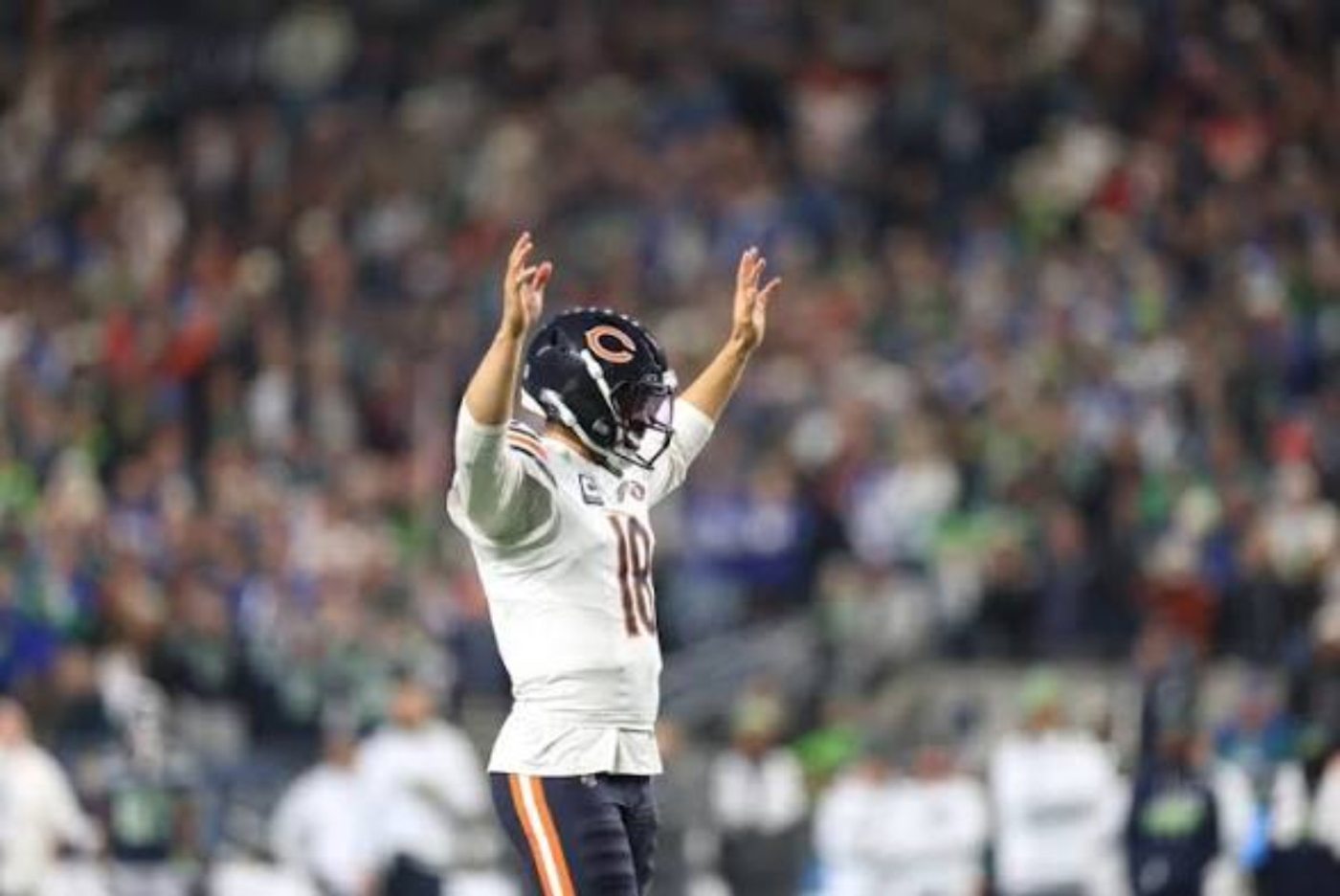
We came into Monday night looking for an answer about Chicago's ceiling. Against the defending champions in one of football's loudest buildings, the Bears provided one. This was not a game won on a single lucky bounce. Chicago opened with a 17-play, 80-yard touchdown drive, controlled possession and answered decisively when Seattle finally made it a one-score contest.
Caleb Williams completed 24 of 34 passes for 247 yards, one touchdown and no interceptions. He was sacked only once. That efficiency mattered against a defense built to force impatient quarterbacks into mistakes. Instead of hunting highlight throws, Williams took the available answers and kept Chicago on schedule.
SWIFT FINISHES THE DRIVES
D'Andre Swift scored three second-half rushing touchdowns, including two in the fourth quarter. His 69 yards on 27 carries were hardly an explosive rushing total, but his finishing work at the goal line converted Chicago's control into points. Rome Odunze supplied 87 receiving yards, while Colston Loveland added seven catches for 65 yards.
Williams' opening touchdown to Luther Burden III set the tone. From there, Chicago mixed patient possessions with enough explosive plays to punish Seattle when it overcommitted. The offense did not need perfection; it needed poise.
THE TURNING POINT: 20–17 WAS AS CLOSE AS IT GOT
Seattle threatened to steal the momentum after DeMarcus Lawrence forced a Loveland fumble. Sam Darnold found Cooper Kupp for a seven-yard touchdown, and the two-point conversion trimmed Chicago's lead to 20–17. Lumen Field was alive again.
Chicago's response defined the night. A penalty wiped away what would have been a third-down loss; on the next snap, Kalif Raymond broke free for 39 yards. Swift finished the drive from five yards out. Then Austin Booker deflected a Darnold pass into James Lynch's hands, and Swift scored again. A three-point game became a 17-point decision in minutes.
SIMMONS CHANGES THE DEFENSIVE EQUATION
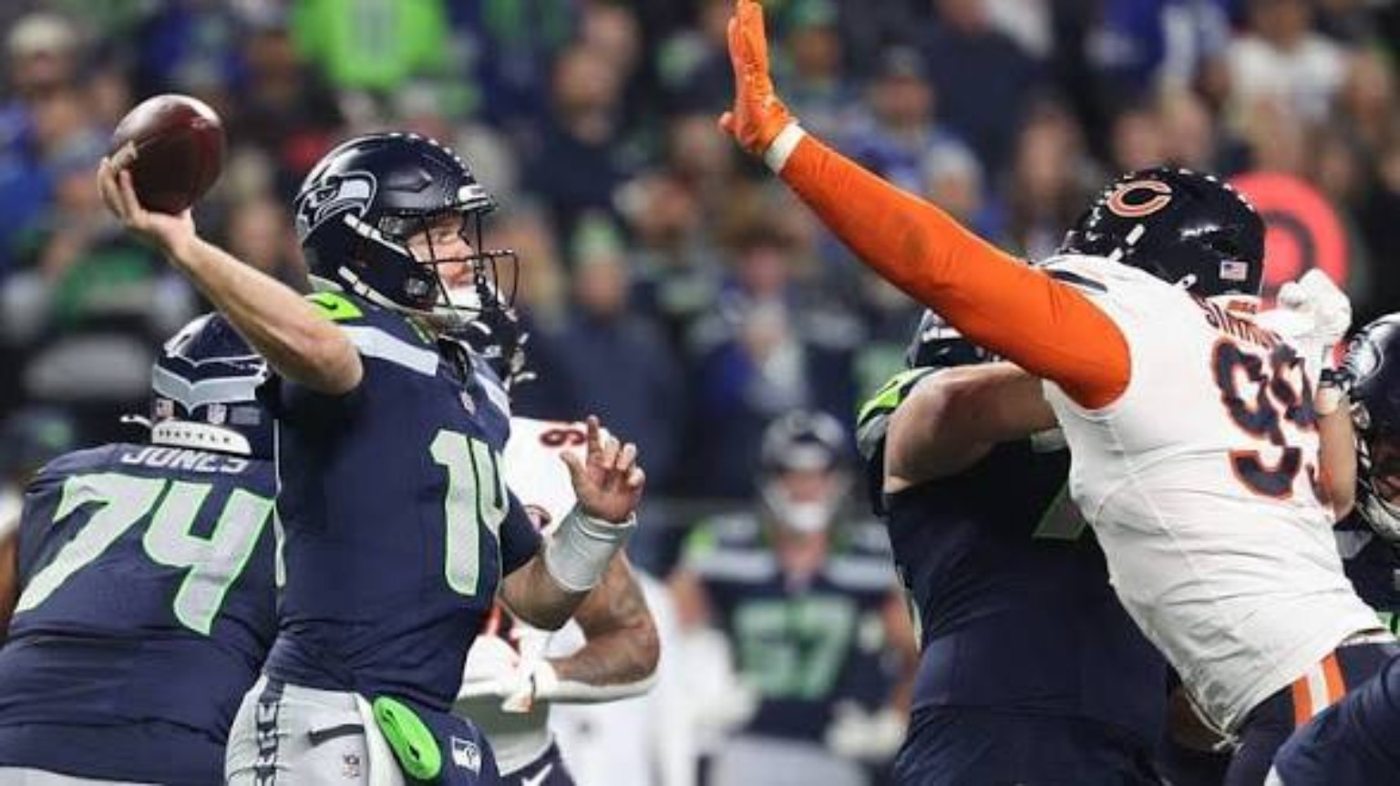
Jeffery Simmons made an immediate impact in his Chicago debut: six tackles, two tackles for loss, a sack and a pass breakup. His presence helped turn Seattle's offensive possessions into a parade of third-down problems. The Seahawks converted just one of 11 third downs and finished with 252 total yards.
Darnold went 17-of-34 for 188 yards, two touchdowns and an interception. Jaxon Smith-Njigba remained the bright spot with six catches for 118 yards and a score, but one outstanding receiver cannot carry an offense that fails to sustain drives. Seattle rushed for only 81 yards, leaving too much on the quarterback's shoulders.
INJURY WATCH: DEPTH WILL BE TESTED
Chicago defensive tackle Kentavius Street exited with a knee injury and was carted off; he was ruled out. Fellow defensive lineman Grady Jarrett sustained a groin injury and was listed as doubtful to return. Those losses are especially important given how much Chicago relied on its defensive front to control this matchup.
Seattle defensive tackle Leonard Williams exited with a stinger and did not return. Seahawks edge rusher Connor O'Toole also suffered a foot injury. None of these postgame reports establishes a definitive recovery timetable, so the next practice and medical updates will matter.
WHAT IT MEANS FOR CHICAGO
At 6–2, Chicago is building a case that extends beyond a hot streak. Williams looks increasingly comfortable directing a balanced attack, and Simmons gives the defense a disruptive interior force. More importantly, the Bears responded to adversity rather than letting one mistake dictate the finish.
We still have concerns about the 10 penalties for 85 yards, and injuries along the defensive front could complicate the coming weeks. But this was a legitimate road statement against a respected opponent. Chicago is playing like a team with January ambitions.
WHAT IT MEANS FOR SEATTLE
Seattle falls to 4–4 after losing three of its last four. The defending champions have the talent to recover, but the warning signs are difficult to dismiss: an unreliable rushing attack, third-down failures and a defense that could not get the decisive stop after pulling within three points.
Smith-Njigba's brilliance remains undeniable. But Seattle needs more than isolated explosives. It needs sustainable offense, cleaner execution and a defense that can get off the field when the game is hanging in the balance.
THE 4DK TAKEAWAY
Chicago did not just beat Seattle. It showed what a mature contender looks like when the momentum turns against it. Williams remained composed, Swift cashed in the scoring chances and the defense created the decisive turnover. That's complementary football, and it's why the Bears deserve to be taken seriously.
For Seattle, the championship pedigree is real, but it cannot be used as a substitute for this season's results. A 4–4 team with one third-down conversion has work to do. 4DK FINAL VERDICT: Chicago is ascending. Seattle is searching for answers.