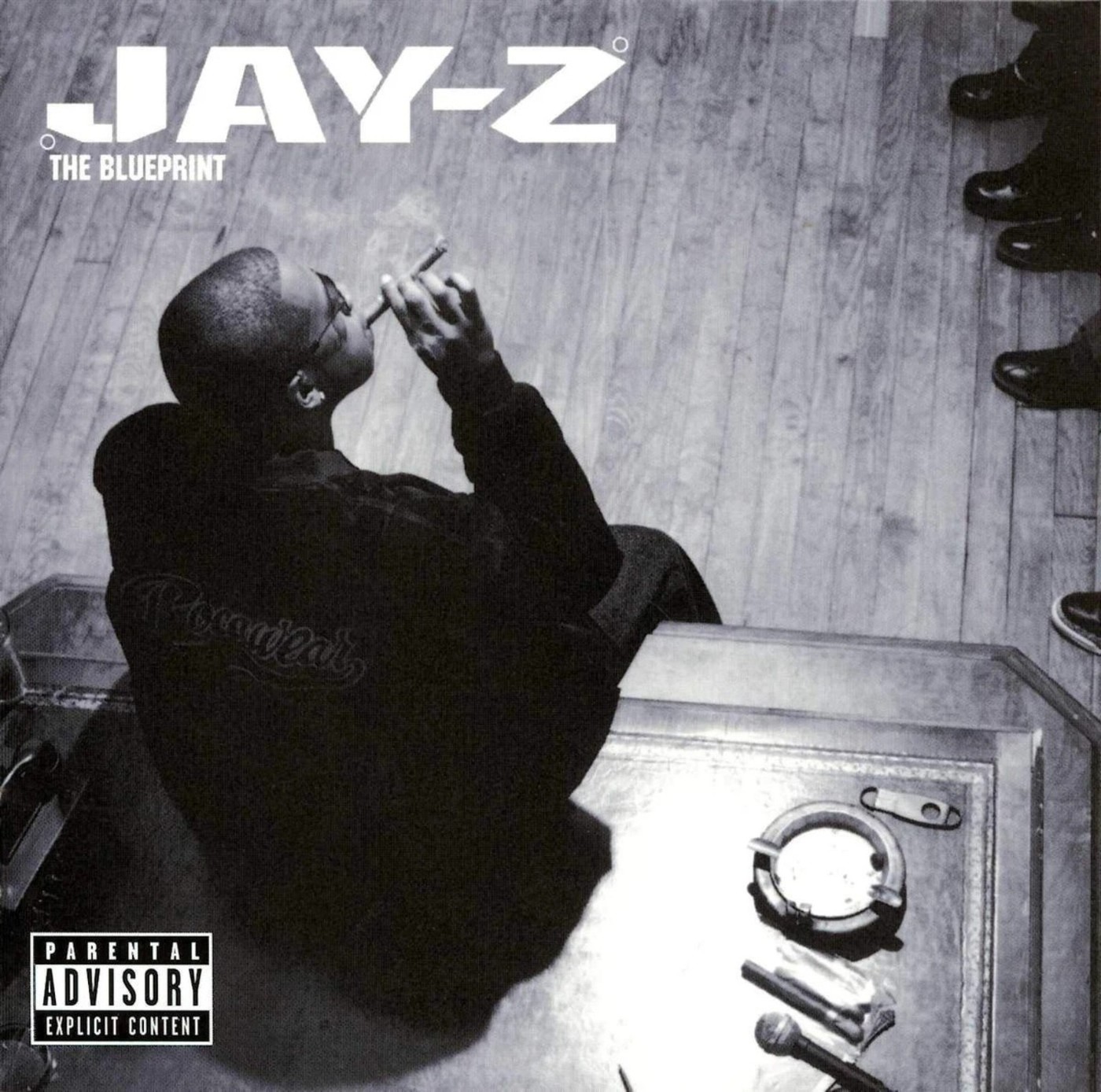
By 2001, Jay-Z was already top five in the game. This wasn't some coming-out party where he had to convince people he belonged. He had the hits, the singles, the catalog and the status. Hip-hop itself was going through a transformation, and Jay was right in the middle of his peak.
Then The Blueprint dropped on September 11, 2001.
That date is impossible to separate from the memory of the album. The country was dealing with something unimaginable, everything felt surreal, and for me the music almost became therapeutic. It was something familiar to lock into during a day that felt like anything but normal.
THE PRODUCTION HIT FIRST.
Jay already had singles. What separated The Blueprint was the album as a whole. From beginning to end, the production feels connected. The soul, the drums, the samples and the sequencing give the record an identity that still jumps out 25 years later.
There isn't one beat carrying the album. “Never Change,” “Jigga That Nigga” and “Song Cry” are three of my favorite productions on the record, but honestly every beat on here is fire. Kanye West, Just Blaze, Bink!, Trackmasters, Timbaland and Eminem all bring different textures without turning it into a compilation.
That's the key. The Blueprint sounds like an album. You can hear different producers, but you never lose the world the record created.
AND YOU CAN'T SKIP OVER “TAKEOVER.”
“Takeover” gave the album another layer because of everything surrounding Jay at the time. The Nas and Mobb Deep tension wasn't happening off to the side — Jay put it right in the middle of the album. That record made the project feel connected to the larger battle for rap supremacy happening in real time.
But the album isn't great just because of the battle records. “Song Cry” still resonates because the emotion doesn't expire. “Heart of the City” still sounds cinematic enough to drop into a movie soundtrack today. “All I Need” is a gem that doesn't always get mentioned with the obvious classics. And “U Don't Know,” my personal favorite, is Jay talking with the kind of confidence that only works when the music is big enough to hold it.
FROM BEGINNING TO END, THIS IS HIS BEST ALBUM.
I know the Reasonable Doubt argument. I know what The Black Album means to his catalog. But for me, there isn't much debate: The Blueprint is Jay-Z's best album by far.
A big reason is simple: this is probably the Jay album that has aged the best. Twenty-five years later, you can still pull records off this album and drop them straight into a playlist without them feeling like museum pieces. “Song Cry,” “Heart of the City,” “Never Change,” “U Don't Know,” “All I Need” — these songs still live outside of nostalgia.
The production is a huge part of that. Kanye West, Just Blaze, Timbaland, Bink! and the rest of the production team gave Jay a sound that felt polished, soulful and forward-moving without trapping the album inside one moment in time. That's why the record still breathes today.
It also feels like a rebrand compared with The Dynasty: Roc La Familia from 2000. Jay was already Jay. He didn't need an introduction. But The Blueprint sharpened the image, tightened the sound and made the whole presentation feel more focused. It wasn't a reinvention from scratch — it was Jay taking everything he already was and presenting the cleanest, strongest version of it.
And that's where the album becomes bigger than just another classic in the catalog. Jay was already one of the biggest rappers alive. The Blueprint is the album that pushed him into the GOAT conversation. After this, the question wasn't whether Jay belonged among the best of his era. The question became where he ranked among the best ever.